
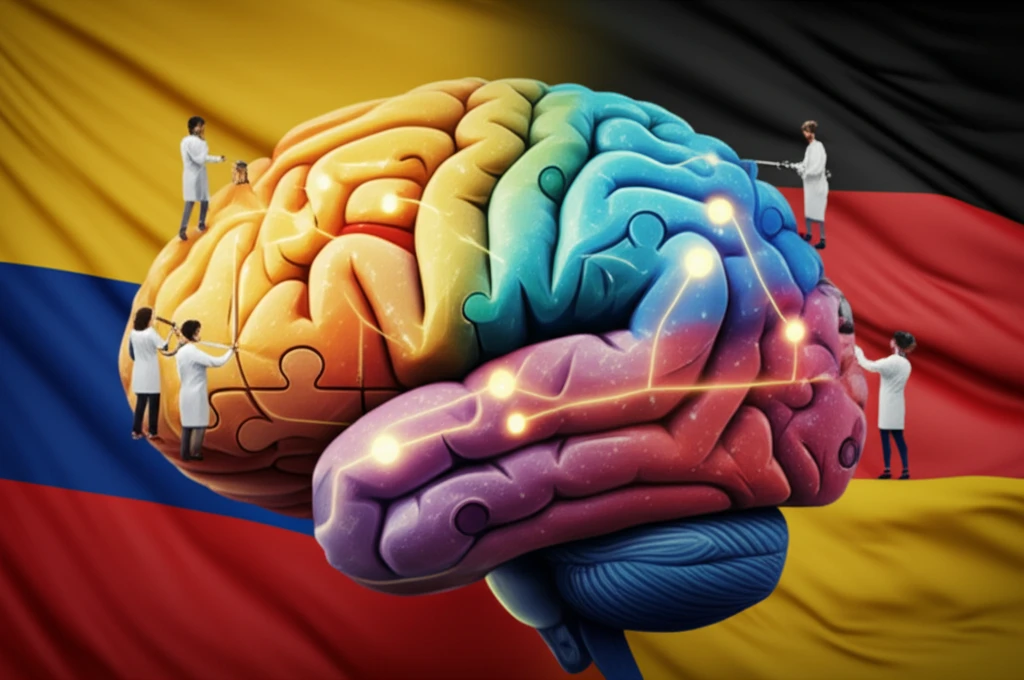
Digital illustration of a brain made of puzzle pieces with intertwined flags representing the Colombian-German collaboration for Alzheimer's research.

Unlocking the Secrets of Alzheimer's: How a Colombian-German Collaboration is Shaping the Future of Neurodegenerative Research

"From Medellín to the World: The groundbreaking work of the Colombian-German network in unraveling the complexities of Alzheimer's disease, offering hope for early detection and innovative treatments."


In a world grappling with the rising prevalence of neurodegenerative diseases, the quest for effective treatments and preventative measures has become more critical than ever. Amidst the challenges, a beacon of hope shines brightly – the Colombian-German network for neurodegenerative research, known as UndoAD. This collaborative effort is a testament to the power of international cooperation, bringing together the expertise of researchers from Colombia and Germany to tackle the complexities of Alzheimer's disease.

This article delves into the remarkable work of UndoAD, exploring its origins, key initiatives, and the groundbreaking research that is paving the way for a better understanding of Alzheimer's. We'll uncover the innovative methodologies employed, the significant discoveries made, and the profound impact this collaborative network is having on the global fight against neurodegenerative diseases. This will be achieved by exploring the research, data analysis, and findings of scientific experts, with emphasis on the importance of early detection and collaborative treatment.

UndoAD's work underscores the importance of international collaboration in advancing scientific progress. By uniting the expertise of researchers from diverse backgrounds, UndoAD is accelerating the pace of discovery and bringing us closer to a future where Alzheimer's disease is effectively managed and potentially eradicated. This article aims to showcase the network's dedication to providing early detection and comprehensive care.

The Genesis of UndoAD: A Collaborative Vision

Digital illustration of a brain made of puzzle pieces with intertwined flags representing the Colombian-German collaboration for Alzheimer's research.

The story of UndoAD began with a shared vision: to combine the strengths of Colombian and German research institutions to address the pressing challenges of Alzheimer's disease. Recognizing the importance of this, the network has focused on unraveling the genetic and environmental factors that contribute to the disease's development and progression. This cross-border partnership has fostered a rich exchange of knowledge and resources, enabling researchers to conduct cutting-edge studies and make significant strides in understanding the complexities of Alzheimer's.

One of the most significant aspects of UndoAD's work is its focus on the Colombian population, which has a high prevalence of early-onset familial Alzheimer's disease. By studying the genetic mutations and disease mechanisms in this population, researchers are gaining valuable insights into the underlying causes of Alzheimer's and identifying potential targets for therapeutic interventions. The network's research has provided crucial context that aids in understanding more effective care treatment.

  • Uncovering the genetic and environmental factors contributing to Alzheimer's.
  • Analyzing the genetic mutations and disease mechanisms in the Colombian population.
  • Identifying potential targets for therapeutic interventions.
  • Promoting scientific exchange and knowledge transfer between Colombian and German institutions.
The impact of UndoAD extends beyond scientific research. The network actively promotes knowledge transfer, and the development of infrastructure. This includes organizing educational programs, workshops, and conferences to share research findings and train the next generation of scientists. UndoAD is working on ways to provide treatment as early as possible and ensure families have access to comprehensive care, supporting families affected by the disease.

A Promising Future for Alzheimer's Research

UndoAD's achievements underscore the vital role of international collaboration and innovative research in the fight against Alzheimer's disease. As the network continues to expand its scope, it promises to make even more valuable contributions to the field of neurodegeneration. UndoAD's commitment to collaborative research, early detection, and comprehensive care is driving us closer to a future where the burden of Alzheimer's disease is significantly reduced. This pioneering work is making a real difference in the lives of countless individuals and families affected by Alzheimer's, offering a beacon of hope and a testament to the power of scientific collaboration.

About this Article -

This article was crafted using a human-AI hybrid and collaborative approach. AI assisted our team with initial drafting, research insights, identifying key questions, and image generation. Our human editors guided topic selection, defined the angle, structured the content, ensured factual accuracy and relevance, refined the tone, and conducted thorough editing to deliver helpful, high-quality information.See our About page for more information.

This article is based on research published under:

DOI-LINK: 10.1016/s1474-4422(18)30458-7, Alternate LINK

Title: The Colombian–German Network For Neurodegenerative Research: Undoad

Subject: Neurology (clinical)

Journal: The Lancet Neurology

Publisher: Elsevier BV

Authors: Diego Sepulveda-Falla, Andres Villegas, Francisco Lopera, Markus Glatzel

Published: 2019-01-01

Everything You Need To Know

1

What is UndoAD and what makes it unique in Alzheimer's research?

UndoAD is a Colombian-German research network focused on unraveling the complexities of Alzheimer's disease. What makes it unique is its international collaboration, combining the expertise of researchers from Colombia and Germany. This partnership allows for a rich exchange of knowledge and resources, enabling cutting-edge studies, particularly focusing on the genetic and environmental factors contributing to Alzheimer's, offering hope for early detection and innovative treatments.

2

Why does UndoAD focus on the Colombian population in its Alzheimer's research?

UndoAD focuses on the Colombian population because it has a high prevalence of early-onset familial Alzheimer's disease. By studying the genetic mutations and disease mechanisms in this population, UndoAD researchers gain valuable insights into the underlying causes of Alzheimer's. This approach helps in identifying potential targets for therapeutic interventions that could benefit a broader population, making it an invaluable asset in neurodegenerative research.

3

How does UndoAD promote knowledge transfer and support families affected by Alzheimer's disease?

UndoAD promotes knowledge transfer through educational programs, workshops, and conferences to share research findings and train the next generation of scientists. In addition to research, UndoAD actively supports families affected by Alzheimer's by working on ways to provide treatment as early as possible and ensure families have access to comprehensive care. While the precise methods of support aren't fully detailed, the commitment to early detection and comprehensive care highlights a patient-centric approach.

4

What are some of the specific areas of research that UndoAD is involved in to combat Alzheimer's disease?

UndoAD is involved in several key areas of research, including uncovering the genetic and environmental factors contributing to Alzheimer's, analyzing the genetic mutations and disease mechanisms in the Colombian population, and identifying potential targets for therapeutic interventions. These research areas are crucial for understanding the complexities of Alzheimer's and developing effective treatments.

5

What is the potential long-term impact of UndoAD's collaborative research efforts on the future of Alzheimer's treatment and care?

The potential long-term impact of UndoAD's collaborative research is significant in the fight against Alzheimer's. By uniting the expertise of researchers from diverse backgrounds, UndoAD is accelerating the pace of discovery and bringing us closer to a future where Alzheimer's disease is effectively managed and potentially eradicated. While the article doesn't detail specific clinical trials or treatment breakthroughs, the focus on early detection, collaborative treatment, and international cooperation suggest a promising future for improved Alzheimer's care.

Newsletter Subscribe

Subscribe to get the latest articles and insights directly in your inbox.