
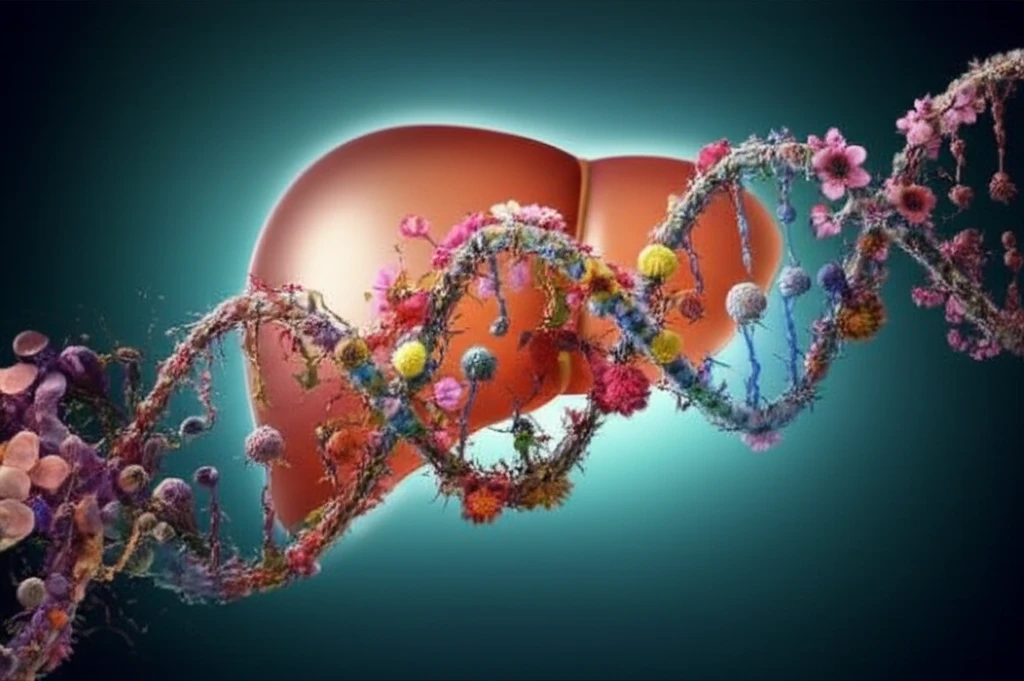
Conceptual illustration of cancer cells undergoing apoptosis and DNA transformation within a liver context.

Unlocking the Secrets: How TPX2 Silencing Could Revolutionize Liver Cancer Treatment

"New research sheds light on the potential of targeting TPX2 to inhibit cancer cell growth and promote apoptosis in human hepatoma cells."


Liver cancer stands as a formidable global health challenge, recognized as the second leading cause of cancer-related deaths worldwide. Despite advancements in medical treatments and surgical interventions, the complexities of tumor recurrence, metastasis, and associated complications continue to pose significant threats to patient survival and well-being. This pressing reality underscores the urgent need for innovative therapeutic strategies that can effectively combat liver cancer and improve patient outcomes.

In the pursuit of novel cancer treatments, scientists have turned their attention to Targeting Protein for Xklp2 (TPX2), a microtubule-associated protein integral to cell cycle regulation. TPX2 is known to stabilize the spindle structure during mitosis, a critical phase of cell division. Research indicates that TPX2 is frequently overexpressed in various human tumors, suggesting its potential role in cancer progression. Elevated levels of TPX2 protein have been linked to lymph node metastasis and the advancement of diverse tumor types, marking it as a key target for therapeutic intervention.

Recent studies have demonstrated that silencing the TPX2 gene can effectively block the S-phase of the cell cycle, inhibiting both cell proliferation and invasion. These findings position TPX2 as a promising diagnostic marker and a potential therapeutic target in cancer treatment. Now, a new study investigates the role of TPX2 in liver cancer, providing deeper insights into how TPX2 affects the development and progression of this deadly disease. The researchers' findings reveal that TPX2 gene expression is markedly increased in liver cancer tissues compared to adjacent normal tissues. Moreover, silencing TPX2 has shown promise in inhibiting proliferation and inducing apoptosis—programmed cell death—in hepatoma cells by modulating the Wnt signaling pathway and regulating cyclin and apoptosis-related proteins.

TPX2: A Novel Target for Liver Cancer Therapy?

Conceptual illustration of cancer cells undergoing apoptosis and DNA transformation within a liver context.

The study begins by confirming that TPX2 mRNA levels are significantly higher in liver cancer tissue samples and cell lines compared to their non-cancerous counterparts. This upregulation suggests that TPX2 may play a critical role in the development or progression of liver cancer.

To investigate the functional role of TPX2 in liver cancer cells, the researchers used lentiviral vectors to silence the TPX2 gene in HepG2 cells, a commonly used human liver cancer cell line. The lentiviral vector expressed short hairpin RNA (shRNA) specifically targeting TPX2 mRNA, effectively reducing TPX2 expression within the cells. The efficiency of this knockdown was then rigorously evaluated using quantitative real-time PCR (qRT-PCR).

  • Reduced Cell Proliferation: TPX2 knockdown significantly slowed down the proliferation of HepG2 cells.
  • Increased Apoptosis: Silencing TPX2 triggered a notable increase in apoptosis (programmed cell death) in the cancer cells.
  • Modulation of Key Proteins: The levels of c-Myc and cyclin D1, proteins associated with cell proliferation, decreased, while the level of caspase-3, a protein involved in apoptosis, increased.
The Wnt/β-catenin signaling pathway is crucial in regulating cell growth, differentiation, and survival. Aberrant activation of this pathway has been implicated in various cancers, including liver cancer. The study found that TPX2 knockdown inhibited the Wnt/β-catenin signaling pathway in HepG2 cells, as evidenced by decreased levels of phosphorylated glycogen synthase kinase-3β (p-GSK-3β) and β-catenin, two key components of this pathway.

Future Directions and Clinical Implications

This study provides compelling evidence that TPX2 is a promising therapeutic target for liver cancer. Silencing TPX2 inhibits cell proliferation, promotes apoptosis, and modulates the Wnt signaling pathway in human hepatoma cells. These findings suggest that developing therapies that target TPX2 could offer a new approach to treating liver cancer. Clinical trials and further investigations are essential to translate these findings into practical treatments, but the current research offers a beacon of hope for those affected by this devastating disease.

About this Article -

This article was crafted using a human-AI hybrid and collaborative approach. AI assisted our team with initial drafting, research insights, identifying key questions, and image generation. Our human editors guided topic selection, defined the angle, structured the content, ensured factual accuracy and relevance, refined the tone, and conducted thorough editing to deliver helpful, high-quality information.See our About page for more information.

Everything You Need To Know

1

What is TPX2 and why is it significant in the context of liver cancer?

TPX2, or Targeting Protein for Xklp2, is a microtubule-associated protein that plays a crucial role in cell cycle regulation, specifically during mitosis. Its significance in liver cancer stems from its overexpression in cancer cells, which has been linked to tumor progression, lymph node metastasis, and other advanced stages of the disease. In this context, TPX2 acts as a promising therapeutic target because silencing it has shown the potential to inhibit cancer cell proliferation and induce apoptosis.

2

How does silencing the TPX2 gene impact liver cancer cells, and what specific cellular processes are affected?

Silencing the TPX2 gene in liver cancer cells, specifically in HepG2 cells, has multiple beneficial effects. It leads to reduced cell proliferation and triggers apoptosis, which is programmed cell death. At the molecular level, TPX2 knockdown affects several key proteins, including a decrease in c-Myc and cyclin D1 (involved in proliferation) and an increase in caspase-3 (involved in apoptosis). Furthermore, silencing TPX2 modulates the Wnt signaling pathway, a pathway frequently dysregulated in cancers, which can influence cell growth, differentiation, and survival.

3

What is the role of the Wnt signaling pathway, and how is it connected to TPX2 in liver cancer?

The Wnt/β-catenin signaling pathway is a critical cellular pathway involved in cell growth, differentiation, and survival. In the context of liver cancer, aberrant activation of this pathway is often observed and contributes to cancer development and progression. The study indicates that silencing TPX2 inhibits the Wnt/β-catenin signaling pathway in HepG2 cells, as evidenced by decreased levels of phosphorylated glycogen synthase kinase-3β (p-GSK-3β) and β-catenin, two key components of this pathway. This modulation of the Wnt pathway by TPX2 silencing is an important mechanism behind the observed effects on cell proliferation and apoptosis.

4

What is the significance of using lentiviral vectors to silence TPX2 in HepG2 cells?

The use of lentiviral vectors to silence TPX2 in HepG2 cells is a crucial experimental technique. Lentiviral vectors are employed to deliver genetic material (in this case, short hairpin RNA or shRNA) into the cancer cells. The shRNA specifically targets and reduces the expression of the TPX2 gene. This method allows researchers to effectively 'knock down' or silence TPX2 within the cells, enabling them to study the gene's function and its impact on cancer cell behavior, such as proliferation, apoptosis, and the activation of certain signaling pathways.

5

What are the potential clinical implications of targeting TPX2 in liver cancer treatment, and what are the next steps in this research?

The study's findings suggest that targeting TPX2 holds significant promise for liver cancer treatment. Silencing TPX2 leads to decreased cell proliferation, increased apoptosis, and modulation of the Wnt signaling pathway in human hepatoma cells. These results highlight TPX2 as a potential therapeutic target. The next steps involve further research, including clinical trials, to translate these findings into practical treatments for patients. Such trials will assess the safety, efficacy, and optimal methods for targeting TPX2 in the fight against liver cancer, offering a beacon of hope for those affected by this devastating disease.

Newsletter Subscribe

Subscribe to get the latest articles and insights directly in your inbox.