
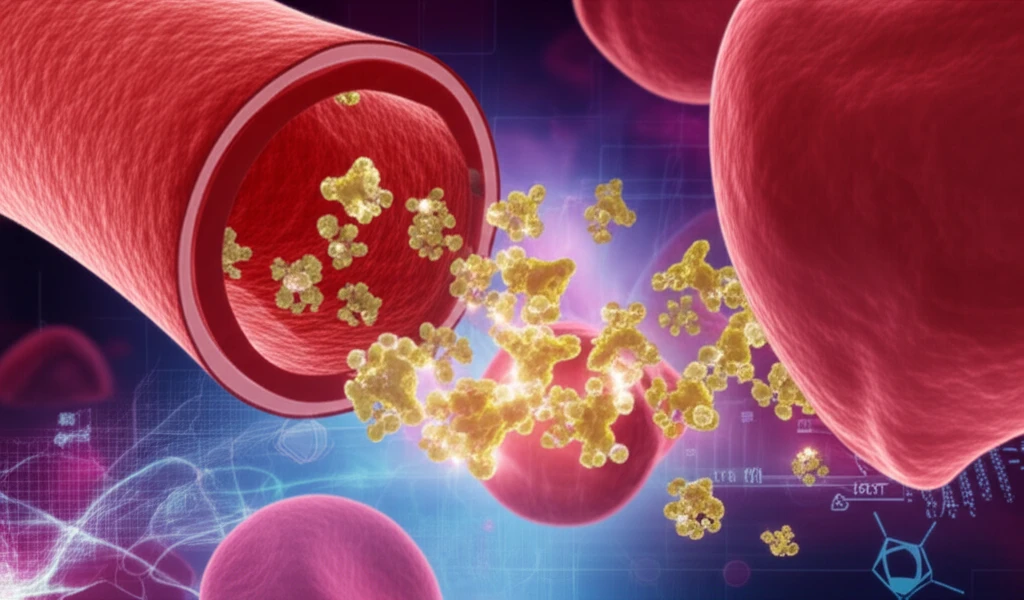
Unlocking the Power Within: Lipid Modification and Its Revolutionary Impact on Blood Clot Treatment

"Scientists are revolutionizing the treatment of blood clots by modifying staphylokinase with lipids, leading to more effective and targeted therapies."
In the relentless pursuit of medical advancements, scientists are constantly seeking innovative ways to combat life-threatening conditions. One such area of intense focus is the treatment of blood clots, a critical challenge in modern medicine. Stroke, myocardial infarction, and deep vein thrombosis are just a few of the devastating consequences of these clots, demanding effective and timely interventions. Now, groundbreaking research into lipid modification of staphylokinase is opening up new avenues for more targeted and efficient therapies.
Staphylokinase, a protein produced by certain bacteria, has shown remarkable promise in dissolving blood clots. However, its effectiveness has been somewhat limited by factors such as its relatively short lifespan in the body. This is where lipid modification comes into play, a cutting-edge technique designed to enhance the protein's properties and improve its therapeutic potential. By attaching lipid molecules to staphylokinase, researchers aim to boost its stability and increase its activity.
This article will explore the intricate details of lipid modification, its impact on staphylokinase, and the potential implications for revolutionizing the treatment of blood clots. We'll dive into the science behind this innovative approach, its current applications, and the exciting prospects it holds for future advancements in healthcare. This research could offer a new hope for those at risk of blood clot-related diseases.
The Science Behind Lipid Modification: A Closer Look
Lipid modification is a sophisticated process that involves attaching lipid molecules to proteins. These lipids can dramatically alter the protein's characteristics, particularly its stability, how it interacts with the body, and where it goes within the body. This technique is not new, but its application to staphylokinase represents a significant step forward in the fight against blood clots. The process focuses on enhancing the protein's existing capabilities while overcoming some of its limitations.
- Enhanced Stability: Lipids can protect the protein from degradation, extending its lifespan in the body.
- Improved Activity: The modification can increase the protein's ability to dissolve blood clots.
- Targeted Delivery: Lipids can help direct the protein to the site of the clot, increasing its effectiveness.
- Reduced Immunogenicity: Lipid modifications may lower the risk of immune responses.
The Future of Blood Clot Treatment
The research into lipid modification of staphylokinase marks a turning point in the treatment of blood clots. By improving the protein's stability, activity, and targeting capabilities, scientists have opened the door to more effective and patient-friendly therapies. As we move forward, the findings are a promising step towards a future where conditions like stroke and thrombosis can be treated more rapidly and efficiently. This innovative approach has the potential to save lives and significantly improve the quality of life for countless individuals affected by blood clot-related diseases.