
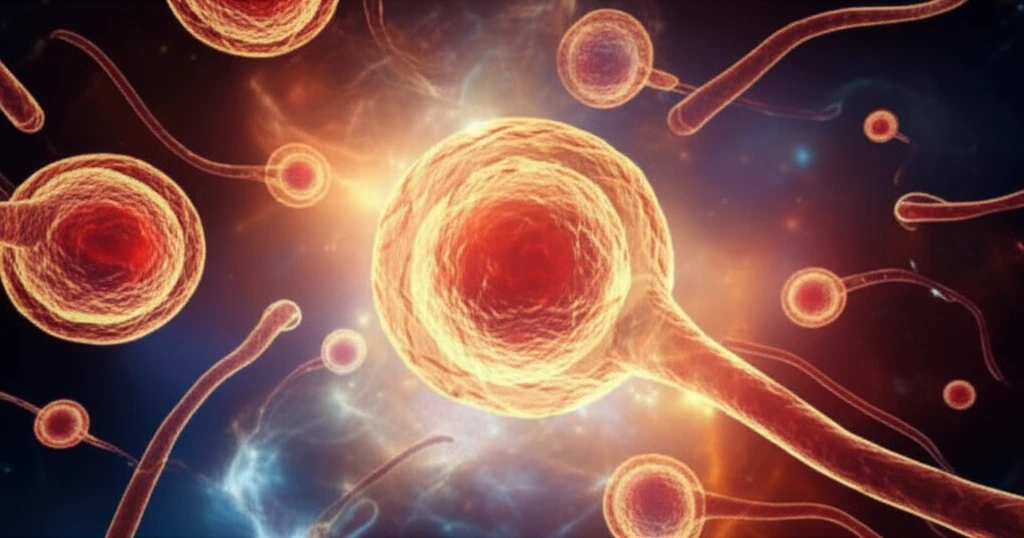
Illustration of stem cells being treated with PRP in a laboratory setting, signifying regenerative potential.

Unlocking the Potential: How Platelet-Rich Plasma Could Revolutionize Stem Cell Therapy

"Exploring the Promising Combination of PRP and Umbilical Cord Stem Cells for Future Medical Breakthroughs"


Stem cells, the body's remarkable building blocks, possess the extraordinary ability to regenerate and differentiate into various specialized cell types. This unique capability has positioned them at the forefront of medical innovation, offering potential treatments for a wide array of conditions. Among the most promising sources of these versatile cells is the human umbilical cord, a rich reservoir of stem cells easily accessible after birth.

Cryopreservation, or the process of freezing cells for future use, is a crucial step in stem cell therapy. It allows researchers and medical professionals to store and utilize these cells when needed. However, traditional cryopreservation methods often rely on supplements like Fetal Bovine Serum (FBS), which can pose challenges due to potential immune responses and other safety concerns. Therefore, finding safe and effective alternatives is of paramount importance.

This is where Platelet-Rich Plasma (PRP) enters the scene. Rich in growth factors and other beneficial components, PRP has shown great promise in various medical applications. This article explores how PRP is being investigated as a supplement in cryopreservation media for human umbilical cord stem cells, potentially enhancing the viability, morphology, and proliferation of these valuable cells.

The Science Behind PRP and Stem Cells: A Closer Look

Illustration of stem cells being treated with PRP in a laboratory setting, signifying regenerative potential.

At the heart of this innovative approach lies the synergy between PRP and stem cells. PRP, derived from a patient's own blood, is concentrated with platelets that release a cascade of growth factors when activated. These growth factors play a pivotal role in cell growth, tissue repair, and regeneration. When combined with human umbilical cord stem cells, PRP acts as a supportive agent, promoting cell survival, maintaining cell structure, and boosting their ability to multiply.

The study delves into the effects of PRP on human umbilical cord stem cells during cryopreservation. Researchers compared the outcomes of using PRP and FBS, the conventional supplement, across different protocols. They analyzed cell viability (the percentage of living cells), cell morphology (the cells' shape and appearance), and cell proliferation (the rate at which the cells multiply). The results offered significant insights into PRP's potential.

  • Cell Viability: The study found that PRP-supplemented media maintained a high level of cell viability, comparable to FBS, indicating that PRP effectively protected the stem cells during the freezing and thawing process.
  • Cell Morphology: The researchers observed that PRP-treated cells retained their healthy, elongated shape, a sign that PRP helps preserve the cells' structural integrity.
  • Cell Proliferation: PRP-supplemented media showed a superior performance in cell size and proliferation.
These findings suggest that PRP can be a valuable alternative to FBS in the cryopreservation of human umbilical cord stem cells. By providing a safe and effective environment, PRP may enhance the quality and therapeutic potential of these cells for future medical applications.

The Future of Stem Cell Therapy: Promising Avenues

The findings of this research offer a glimpse into the exciting future of stem cell therapy. As scientists and medical professionals continue to explore and refine methods to optimize stem cell preservation and functionality, the potential for transformative treatments grows stronger. With PRP showing great promise, the door is open for even more effective and safer stem cell-based therapies, offering hope for a wide range of conditions and improving the lives of countless individuals.

About this Article -

This article was crafted using a human-AI hybrid and collaborative approach. AI assisted our team with initial drafting, research insights, identifying key questions, and image generation. Our human editors guided topic selection, defined the angle, structured the content, ensured factual accuracy and relevance, refined the tone, and conducted thorough editing to deliver helpful, high-quality information.See our About page for more information.

Everything You Need To Know

1

What is Platelet-Rich Plasma (PRP) and why is it being considered for stem cell therapy?

Platelet-Rich Plasma, or PRP, is a concentrated component derived from a patient's own blood. It's rich in platelets, which release growth factors when activated. These growth factors play a vital role in cell growth, tissue repair, and regeneration. PRP is being explored in stem cell therapy, specifically with human umbilical cord stem cells, because it shows promise in enhancing cell viability, maintaining cell structure, and boosting cell proliferation. This makes it a potentially valuable supplement in cryopreservation media, offering a safer alternative to traditional supplements like Fetal Bovine Serum (FBS).

2

How do human umbilical cord stem cells contribute to medical advancements?

Human umbilical cord stem cells are valuable because of their unique ability to regenerate and differentiate into various specialized cell types. This capability makes them promising for treating a wide array of conditions through regenerative medicine. The umbilical cord is a rich and easily accessible source of these stem cells after birth, making it a prime resource for medical innovation. Furthermore, research is being done to improve how these cells are stored via cryopreservation for future use.

3

What role does cryopreservation play in stem cell therapy, and what are the limitations of traditional methods?

Cryopreservation, which is the process of freezing cells for future use, is crucial in stem cell therapy. It allows for the storage and utilization of stem cells when needed. However, traditional methods often rely on supplements like Fetal Bovine Serum (FBS), which can present challenges due to potential immune responses and other safety concerns. Finding safer and more effective alternatives for cryopreservation, such as Platelet-Rich Plasma (PRP), is therefore of paramount importance to enhance the therapeutic potential of stem cells.

4

How does Platelet-Rich Plasma (PRP) compare to Fetal Bovine Serum (FBS) in the cryopreservation of human umbilical cord stem cells?

Research indicates that Platelet-Rich Plasma (PRP) maintains a high level of cell viability comparable to Fetal Bovine Serum (FBS) during cryopreservation of human umbilical cord stem cells. PRP-treated cells also retain their healthy, elongated shape, suggesting that PRP helps preserve the cells' structural integrity. In some cases, PRP-supplemented media has shown superior performance in cell size and proliferation when compared to FBS. These findings suggest that PRP can be a valuable and potentially superior alternative to FBS in the cryopreservation process, enhancing the quality and therapeutic potential of human umbilical cord stem cells for future medical applications.

5

What are the potential future implications of using Platelet-Rich Plasma (PRP) in conjunction with human umbilical cord stem cells?

The use of Platelet-Rich Plasma (PRP) with human umbilical cord stem cells opens promising avenues for the future of stem cell therapy. By optimizing stem cell preservation and functionality, the potential for transformative treatments grows stronger. With PRP demonstrating great promise in enhancing cell viability, morphology, and proliferation, there is hope for more effective and safer stem cell-based therapies. This could lead to improved treatments for a wide range of conditions and ultimately improve the lives of countless individuals.

Newsletter Subscribe

Subscribe to get the latest articles and insights directly in your inbox.