
Unlocking the Mystery of t(6;11) Renal Cell Carcinoma: What You Need to Know

"A Deep Dive into This Rare Kidney Cancer Subtype"
Kidney cancer, or renal cell carcinoma (RCC), isn't just one disease. It encompasses a variety of subtypes, each with its own unique characteristics. One such subtype, RCC with t(6;11)(p21;q12) translocation, is particularly interesting because it often affects younger individuals and presents diagnostic challenges.
Recently, the World Health Organization (WHO) recognized this specific type of RCC as a distinct entity, highlighting its importance in the landscape of kidney cancers. This classification underscores the need for urologists and pathologists to be aware of its existence and unique features. Knowing the markers and aggressive factors can lead to earlier diagnosis and potentially more effective treatment strategies.
This article will explore the key aspects of t(6;11) RCC, drawing on a recent clinicopathological study of five Japanese cases. We'll delve into its clinical presentation, diagnostic methods, and potential treatment approaches. Our goal is to provide a clear and accessible overview of this rare kidney cancer subtype.
Decoding t(6;11) RCC: What Makes it Different?
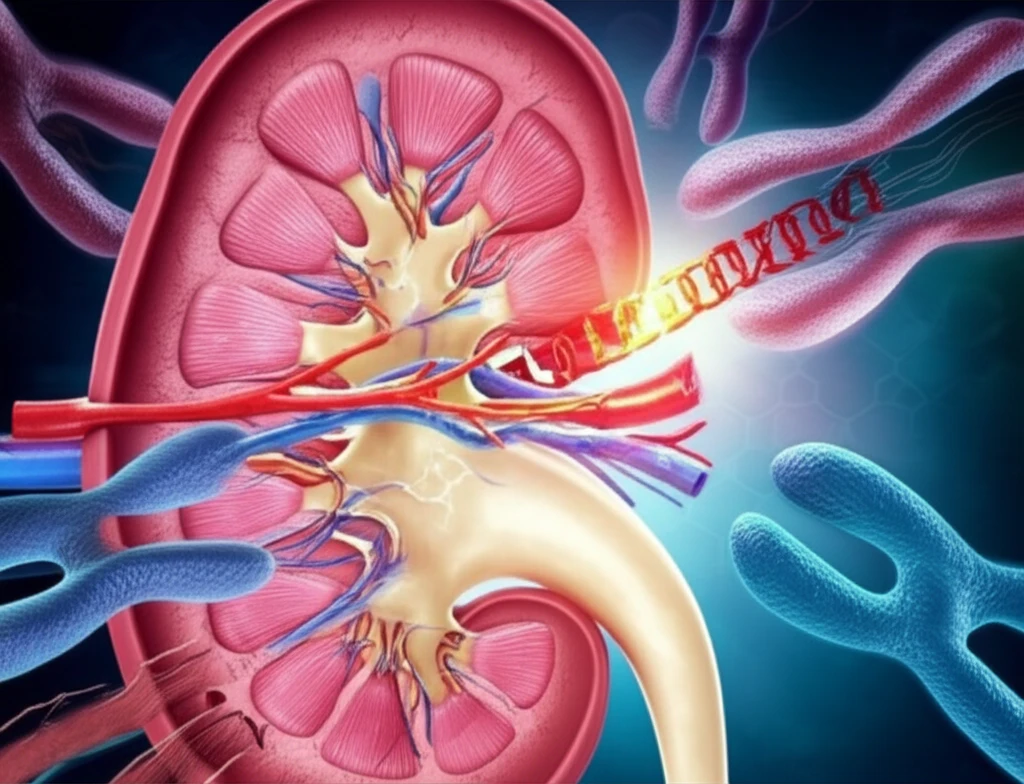
RCC with t(6;11)(p21;q12) is defined by a specific genetic abnormality: a translocation between chromosomes 6 and 11. This translocation results in the fusion of the Alpha gene to the TFEB gene. This fusion leads to the overexpression of the TFEB protein, which plays a significant role in the development and progression of this type of cancer.
- Age: Tends to occur in younger patients, often children and young adults, though cases in older adults have been reported.
- Symptoms: Presentation can vary, from acute abdominal pain to incidental discovery during imaging for other reasons.
- Macroscopic Appearance: Tumors often exhibit a grayish-white color on the cut surface, with potential for hemorrhage, cysts, and daughter nodules.
- Microscopic Features: Characterized by two cell populations: large cells with clear cytoplasm and small cells forming rosette-like structures around basement membrane-like material.
- Immunohistochemistry: Tumor cells consistently show positive staining for TFEB protein.
Navigating the Challenges and Future Directions
While t(6;11) RCC generally has a favorable prognosis, some cases can exhibit aggressive behavior, including recurrence and metastasis. Therefore, ongoing monitoring and tailored treatment strategies are essential.
Targeted therapies, such as mTOR inhibitors, may be effective in certain cases, particularly those with metastatic disease. Immunotherapy and VEGF/PDGF inhibitors are also potential treatment options.
Continued research is crucial to better understand the underlying biology of t(6;11) RCC and to develop more effective therapies. Further studies are needed to identify predictive biomarkers and to refine treatment algorithms for this unique kidney cancer subtype. Awareness among urologists and pathologists, coupled with advanced diagnostic techniques, remains the cornerstone of improved outcomes for patients with t(6;11) RCC.