
Unlocking the Mystery of Pulmonary Fibrosis: How Early Detection Can Change Everything

"Groundbreaking research highlights the critical role of telomerase and endothelin-1 in vascular dysfunction linked to idiopathic pulmonary fibrosis, offering new hope for early intervention and improved patient outcomes."
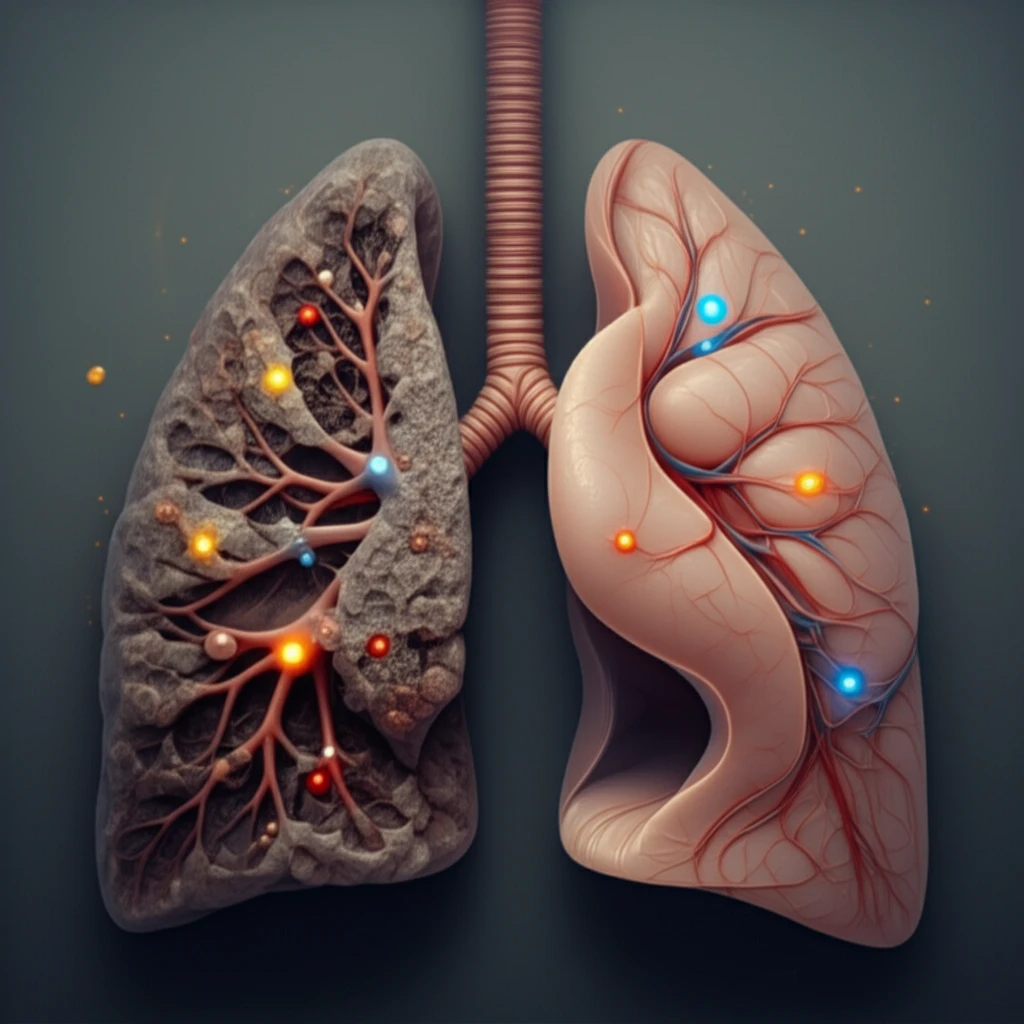
Idiopathic pulmonary fibrosis (IPF) is a chronic and progressive lung disease characterized by scarring of the lung tissue, leading to shortness of breath and reduced quality of life. Affecting thousands worldwide, IPF has long been a puzzle for medical researchers, with its causes not fully understood and treatment options limited. However, new research is shedding light on the early stages of the disease, offering potential pathways for earlier detection and more effective interventions.
Recent studies published in the Brazilian Journal of Medical and Biological Research have focused on the role of vascular dysfunction in IPF, specifically examining the involvement of myofibroblast activation and its prognostic significance. The research delves into the intricate relationships between key markers such as telomerase and endothelin-1 (ET-1), and their impact on the progression of pulmonary fibrosis. These findings offer a promising avenue for understanding how IPF develops and how it can be managed more effectively.
This article explores the groundbreaking research, explaining the key findings in simple terms and highlighting the potential implications for patients and healthcare professionals. Understanding the mechanisms behind vascular dysfunction in IPF could pave the way for new diagnostic tools and therapeutic strategies that target the disease in its earliest stages.
What is Vascular Dysfunction in Pulmonary Fibrosis, and Why Does It Matter?
Vascular dysfunction refers to abnormalities in the blood vessels of the lungs, which can disrupt the normal flow of oxygen and nutrients to the lung tissue. In IPF, this dysfunction is closely linked to the activation of myofibroblasts, specialized cells that contribute to the excessive scarring characteristic of the disease. When these cells become activated, they can lead to the thickening and stiffening of the blood vessels, further impairing lung function.
- Telomerase: An enzyme that maintains the length of telomeres, which protect the ends of chromosomes. In IPF, telomerase expression can indicate cell activity and potential for proliferation.
- Endothelin-1 (ET-1): A potent vasoconstrictor, meaning it narrows blood vessels. Elevated levels of ET-1 can contribute to vascular dysfunction and fibrosis.
- Myofibroblasts: Specialized cells that play a key role in wound healing. In IPF, these cells become excessively activated, leading to the deposition of collagen and the formation of scar tissue.
Looking Ahead: The Future of IPF Treatment
The findings suggest that strategies aimed at preventing the effects of telomerase and ET-1 might have a greater impact on patient outcomes. This could involve developing new drugs that specifically target these molecules or using existing therapies in a more strategic way. Ultimately, the goal is to slow down or even halt the progression of IPF by addressing the underlying vascular dysfunction and preventing the excessive scarring that characterizes the disease. Early detection and intervention are key to improving the lives of those affected by this devastating condition.