
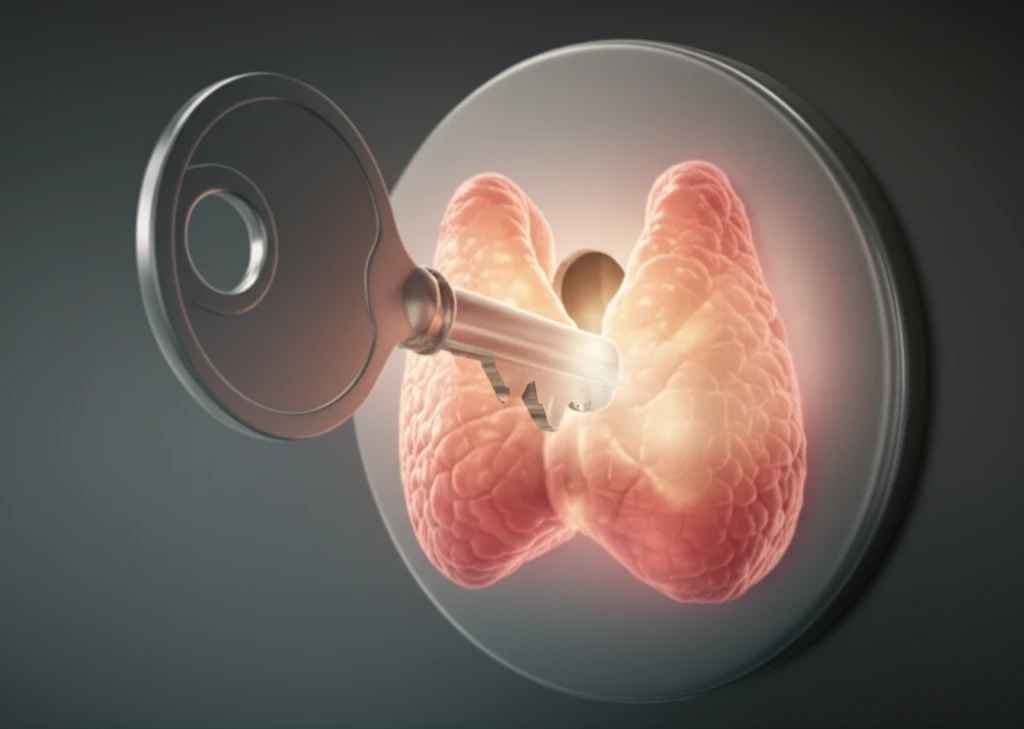
Key unlocking the Thymus - Symbolizing Myasthenia Gravis treatment

Unlocking the Mystery of Myasthenia Gravis: How IFNG-AS1 Holds the Key to New Treatments

"A groundbreaking study reveals the crucial role of the IFNG-AS1 gene in regulating immune responses in Myasthenia Gravis, opening new avenues for targeted therapies."


Myasthenia Gravis (MG) is an autoimmune disease where the immune system mistakenly attacks the connections between nerves and muscles, leading to muscle weakness and fatigue. While current treatments can help manage symptoms, scientists are still working to fully understand the disease and develop more effective therapies.

A new study published in 'Clinical Immunology' sheds light on a particular gene called IFNG-AS1 and its role in MG. The research team, led by Mengchuan Luo and Huan Yang, has found that IFNG-AS1 affects the activity of key immune cells involved in MG, offering potential new targets for treatment.

This article explores the findings of this study, explaining how IFNG-AS1 influences the immune system in MG patients and why this discovery could lead to innovative approaches for managing and potentially treating this challenging condition.

What is IFNG-AS1 and How Does It Affect Myasthenia Gravis?

Key unlocking the Thymus - Symbolizing Myasthenia Gravis treatment

IFNG-AS1 is a gene that produces a long non-coding RNA (lncRNA), meaning it creates a RNA molecule that doesn't code for a protein but still has important functions. This particular lncRNA plays a role in regulating the immune system, specifically by influencing the activity of T cells. These T cells are vital components of the immune system that can either help fight off infections or, in the case of autoimmune diseases like MG, mistakenly attack the body's own tissues.

The researchers discovered that IFNG-AS1 is abnormally expressed in MG patients, meaning it's not functioning at its normal levels. This abnormal expression seems to be linked to the severity of the disease and the presence of certain antibodies that attack the nerve-muscle connections. The study also found that IFNG-AS1 can influence the balance between different types of T cells, particularly Th1 cells (which promote inflammation) and regulatory T cells (Tregs, which suppress inflammation).

  • The research team examined blood samples from MG patients and healthy individuals, measuring the levels of IFNG-AS1.
  • They also studied how IFNG-AS1 affects T cells in a laboratory setting, using both human cells and an experimental model of MG in mice.
  • The results showed that IFNG-AS1 can alter the expression of other genes involved in the immune response, particularly those related to a molecule called HLA-DRB1, which plays a key role in immune cell interactions.
Importantly, the researchers found that IFNG-AS1 can impact the production of cytokines, which are signaling molecules that help immune cells communicate. By influencing cytokine production and T cell activity, IFNG-AS1 appears to play a significant role in the development and progression of Myasthenia Gravis.

Hope for New Therapies: Targeting IFNG-AS1 in Myasthenia Gravis

This research provides valuable insights into the complex mechanisms behind Myasthenia Gravis. By identifying IFNG-AS1 as a key regulator of the immune response in MG, scientists have opened the door to new therapeutic strategies. Future research may focus on developing treatments that can modulate IFNG-AS1 activity, potentially restoring balance to the immune system and alleviating the symptoms of MG.

About this Article -

This article was crafted using a human-AI hybrid and collaborative approach. AI assisted our team with initial drafting, research insights, identifying key questions, and image generation. Our human editors guided topic selection, defined the angle, structured the content, ensured factual accuracy and relevance, refined the tone, and conducted thorough editing to deliver helpful, high-quality information.See our About page for more information.

Everything You Need To Know

1

What is Myasthenia Gravis (MG) and how does the immune system contribute to its development?

Myasthenia Gravis (MG) is an autoimmune disease where the immune system mistakenly attacks the connections between nerves and muscles. This leads to muscle weakness and fatigue. The immune system's role is central; normally, it protects the body, but in MG, immune cells, specifically, mistakenly target the body's own tissues. Understanding this immune system malfunction is crucial for developing effective treatments.

2

How does the IFNG-AS1 gene affect the immune system in Myasthenia Gravis patients?

The IFNG-AS1 gene produces a long non-coding RNA (lncRNA) that regulates the immune system, particularly influencing T cell activity. In MG patients, IFNG-AS1 is abnormally expressed, affecting the balance between Th1 cells (which promote inflammation) and regulatory T cells (Tregs, which suppress inflammation). This imbalance contributes to the severity of MG by altering the expression of other genes involved in the immune response and impacting the production of cytokines, which are signaling molecules that help immune cells communicate.

3

What is the significance of the research finding that IFNG-AS1 can influence HLA-DRB1?

The research revealed that IFNG-AS1 can alter the expression of genes related to HLA-DRB1, a molecule that plays a key role in immune cell interactions. This is significant because HLA-DRB1 is involved in presenting antigens to T cells, which triggers an immune response. By influencing HLA-DRB1, IFNG-AS1 can impact how the immune system recognizes and responds to the body's tissues, thereby affecting the progression of Myasthenia Gravis.

4

What are the potential therapeutic implications of targeting IFNG-AS1 in the treatment of Myasthenia Gravis?

By identifying IFNG-AS1 as a key regulator of the immune response in MG, scientists have opened the door to new therapeutic strategies. Future research may focus on developing treatments that modulate IFNG-AS1 activity. The goal is to restore balance to the immune system. This approach could potentially alleviate the symptoms of MG by reducing the abnormal immune response that attacks the nerve-muscle connections and by re-establishing the proper balance between the immune cells, like Th1 cells and Tregs.

5

How did the researchers investigate the role of IFNG-AS1 in Myasthenia Gravis, and what were the main methods used in the study?

The researchers examined blood samples from MG patients and healthy individuals, measuring the levels of IFNG-AS1. They also studied how IFNG-AS1 affects T cells in a laboratory setting, using both human cells and an experimental model of MG in mice. They measured the levels of IFNG-AS1 and also studied how IFNG-AS1 affects T cells in a laboratory setting. The researchers assessed how IFNG-AS1 impacts the immune response, including its effects on cytokines and the balance between different types of T cells like Th1 cells and Tregs, to understand its role in the development and progression of Myasthenia Gravis.

Newsletter Subscribe

Subscribe to get the latest articles and insights directly in your inbox.