
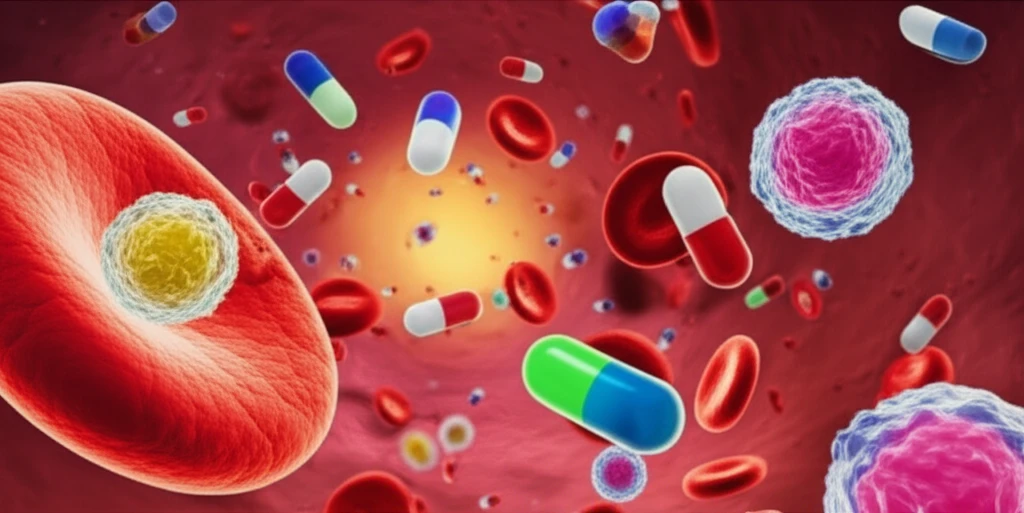
Illustration of medical molecules interacting with blood cells

Unlocking the Mystery: New Research Reveals How to Fight Infections

"Groundbreaking study explores a new method for treating infections, offering hope for better patient outcomes."


In the relentless battle against bacterial infections, medical professionals and researchers are constantly seeking innovative solutions. Recent advancements in mass spectrometry have opened up new avenues for understanding how to effectively treat infections. A groundbreaking study published in the International Journal of Antimicrobial Agents sheds light on an innovative method to combat infections, offering hope for improved patient outcomes.

The focus of the study is on unbound colistin, a drug used as a last resort treatment, and its role in clinical samples. By developing a method to isolate and quantify unbound colistin, researchers aim to improve therapeutic strategies and patient care. This study delves into the complexities of treating infections and the potential of this new method.

This article delves into the key findings of the study, exploring the method, its implications, and the future of infection treatment. We will explore the importance of this research and its potential to impact clinical practice.

Unveiling the New Method: Ultrafiltration and Mass Spectrometry

Illustration of medical molecules interacting with blood cells

The core of the study centers around a new method for analyzing unbound colistin in clinical samples. The researchers used a method called ultrafiltration to isolate the unbound colistin. This method, combined with mass spectrometry, allows for a precise measurement of the drug's concentration in the samples. Ultrafiltration is a technique that separates molecules based on size, while mass spectrometry identifies and quantifies the drug molecules.

The study's authors emphasize the importance of this method due to the limitations of existing techniques. Traditional methods often require lengthy processes that can lead to inaccurate results. The innovative approach developed by the researchers offers a faster and more accurate way to measure colistin levels. This helps in the rapid analysis of the drug's activity.

  • The method involves ultrafiltration to isolate unbound colistin.
  • Mass spectrometry is used to precisely measure the drug's concentration.
  • This approach offers a faster and more accurate alternative to traditional methods.
The researchers also investigated the relationship between unbound colistin and various biological parameters, such as total protein, albumin, and creatinine. The goal was to determine whether these factors could influence the drug's effectiveness. The study found significant variations in unbound colistin levels among individuals, highlighting the need for personalized treatment approaches. These findings underscore the complexity of treating infections and the importance of tailored therapies.

Looking Ahead: The Future of Infection Treatment

The study's findings provide valuable insights into the treatment of infections and the potential of using unbound colistin. As researchers continue to refine and apply this method, patients can expect to benefit from more effective and personalized treatment plans. The study has the potential to improve outcomes for patients battling infections. By understanding how drugs interact within the body, healthcare professionals can provide more targeted therapies, leading to a healthier future for all.

About this Article -

This article was crafted using a human-AI hybrid and collaborative approach. AI assisted our team with initial drafting, research insights, identifying key questions, and image generation. Our human editors guided topic selection, defined the angle, structured the content, ensured factual accuracy and relevance, refined the tone, and conducted thorough editing to deliver helpful, high-quality information.See our About page for more information.

Everything You Need To Know

1

What is the main focus of this groundbreaking study on combating infections?

The primary focus is on unbound colistin, a last-resort drug, and developing a method to isolate and quantify it in clinical samples. The goal is to enhance therapeutic strategies and improve patient care by precisely measuring unbound colistin levels using ultrafiltration and mass spectrometry, offering a more accurate alternative to traditional methods. The study also seeks to understand the relationship between unbound colistin and biological parameters like total protein, albumin, and creatinine to personalize treatment approaches.

2

How does the new method using ultrafiltration and mass spectrometry work to analyze unbound colistin?

The method uses ultrafiltration to isolate the unbound colistin from clinical samples. Ultrafiltration separates molecules based on size. Then, mass spectrometry is employed to precisely identify and quantify the concentration of the unbound colistin molecules. This combined approach allows for a faster and more accurate measurement of the drug's concentration, addressing the limitations of existing techniques that can be lengthy and yield inaccurate results. This rapid analysis helps in assessing the drug's activity more effectively.

3

Why is it important to measure unbound colistin instead of total colistin in clinical samples?

Measuring unbound colistin is crucial because only the unbound portion of the drug is pharmacologically active and able to exert its antimicrobial effects. Total colistin measurements may include the drug bound to proteins or other molecules, which renders it inactive. By quantifying unbound colistin, clinicians can gain a more accurate understanding of the drug's effectiveness and adjust dosages accordingly to optimize treatment outcomes. This precision is essential for personalized therapies and improving patient care.

4

What are the limitations of traditional methods for measuring drug concentrations, and how does the new method address them?

Traditional methods for measuring drug concentrations often involve lengthy processes that can lead to inaccurate results, making it difficult to obtain a precise measurement of the active drug concentration. The new method, combining ultrafiltration and mass spectrometry, offers a faster and more accurate alternative. Ultrafiltration quickly isolates the unbound drug, and mass spectrometry precisely quantifies it. This rapid and precise analysis helps in quickly assessing the drug's activity and enables timely adjustments to treatment plans.

5

What implications does this research have for personalized treatment plans for patients battling infections?

This research underscores the importance of personalized treatment approaches by revealing significant variations in unbound colistin levels among individuals. The findings suggest that factors like total protein, albumin, and creatinine can influence the drug's effectiveness. By understanding these individual differences and how drugs interact within the body, healthcare professionals can tailor therapies more effectively. This personalized approach can lead to more targeted treatments, improved patient outcomes, and a more efficient use of antimicrobial agents, ultimately contributing to a healthier future for patients battling infections. Further research in this area may lead to even more refined treatment strategies based on individual patient characteristics.

Newsletter Subscribe

Subscribe to get the latest articles and insights directly in your inbox.