
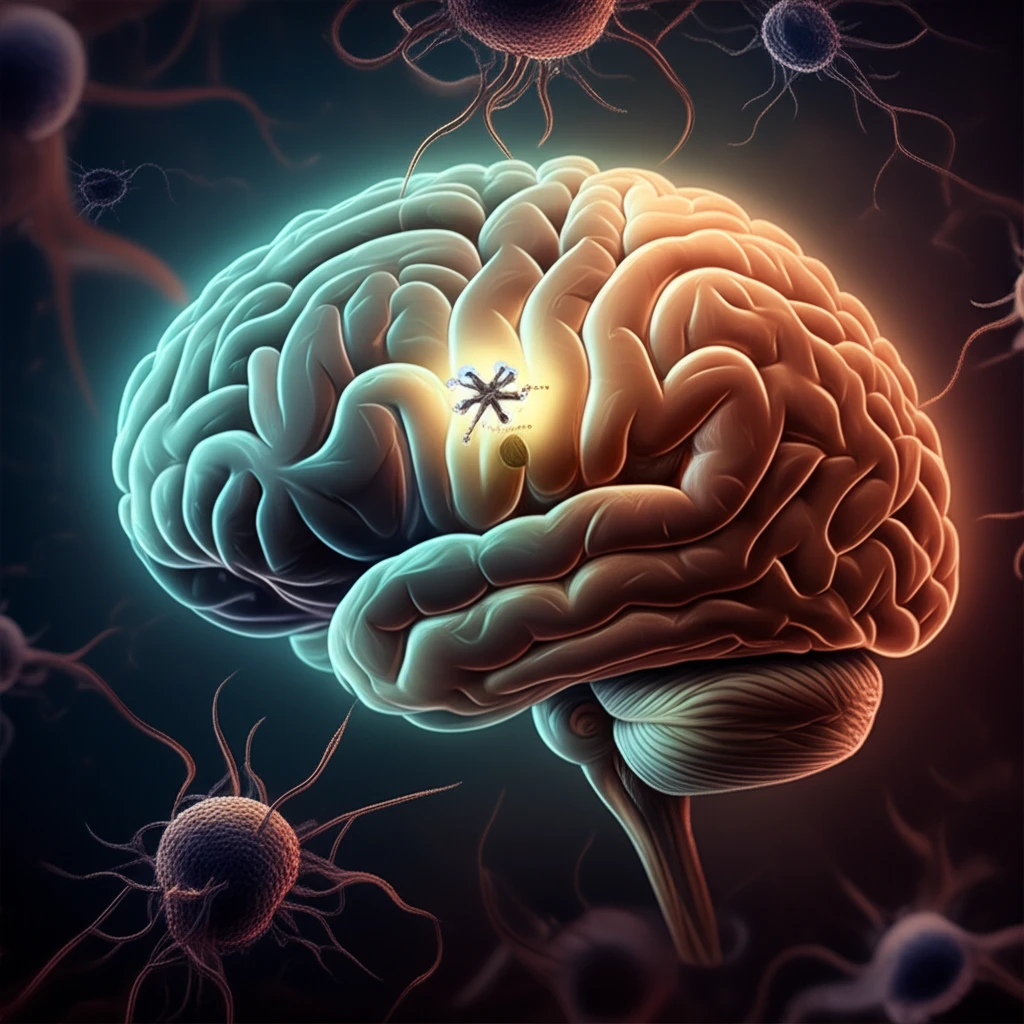
Unlocking the Mystery: How a Tiny Brain Receptor Could Revolutionize Alzheimer's Treatment

"Delving into the Role of Alpha-7 Nicotinic Receptors in Alzheimer's Disease and Promising New Therapeutic Avenues."
Alzheimer's disease (AD), a devastating neurodegenerative disorder, affects millions of people worldwide. Characterized by progressive memory loss, cognitive decline, and behavioral changes, AD slowly robs individuals of their memories, identities, and independence. While the exact causes of AD are still under investigation, researchers are making groundbreaking discoveries that could pave the way for more effective treatments and interventions. One such discovery centers around a specific brain receptor, the alpha-7 nicotinic acetylcholine receptor (a7 nAChR), and its intriguing connection to AD pathology.
The a7 nAChR is a protein found on the surface of brain cells, where it plays a crucial role in various cognitive functions, including memory, learning, and attention. Recent research has revealed a significant link between this receptor and the accumulation of amyloid-beta (Aβ) plaques, a hallmark of AD. These plaques disrupt normal brain function, contributing to the cognitive decline seen in the disease. Understanding the role of a7 nAChRs in the context of Aβ accumulation is therefore crucial in developing effective treatments.
This article will explore the structure and function of the a7 nAChR, its distribution in the brain, and its connection to AD. We will examine the latest research on how this receptor influences Aβ accumulation and the potential for targeting a7 nAChRs in AD therapies. Moreover, we'll discuss the promising therapeutic strategies that are being explored to harness the power of this receptor to combat AD.
The Alpha-7 Nicotinic Acetylcholine Receptor: A Closer Look
The a7 nAChR belongs to a family of receptors known as nicotinic acetylcholine receptors (nAChRs). These receptors are activated by the neurotransmitter acetylcholine (ACh), which plays a vital role in communication between nerve cells. The a7 nAChR stands out due to its unique structure and function, which make it a particularly interesting target for AD research. The a7 nAChR is a ligand-gated ion channel, meaning that when ACh binds to it, the receptor opens a channel that allows ions, such as calcium, to flow into the cell. This influx of ions can trigger a cascade of events that influence cellular processes. The receptor is composed of five identical subunits, making it a homopentameric receptor.
- Structure: Composed of five identical subunits forming a channel.
- Function: Activated by acetylcholine, allowing calcium ions to enter the cell.
- Location: Found in areas of the brain critical for memory and cognition.
- Significance: Plays a role in cognitive functions like memory and learning.
A New Era for Alzheimer's Treatment?
The research on the a7 nAChR is providing new hope in the fight against Alzheimer's disease. While there are many challenges ahead, the discoveries offer exciting avenues for future therapies. As scientists continue to unravel the intricate details of this receptor, we move closer to developing more effective ways to prevent, slow down, and even reverse the effects of this devastating disease.