
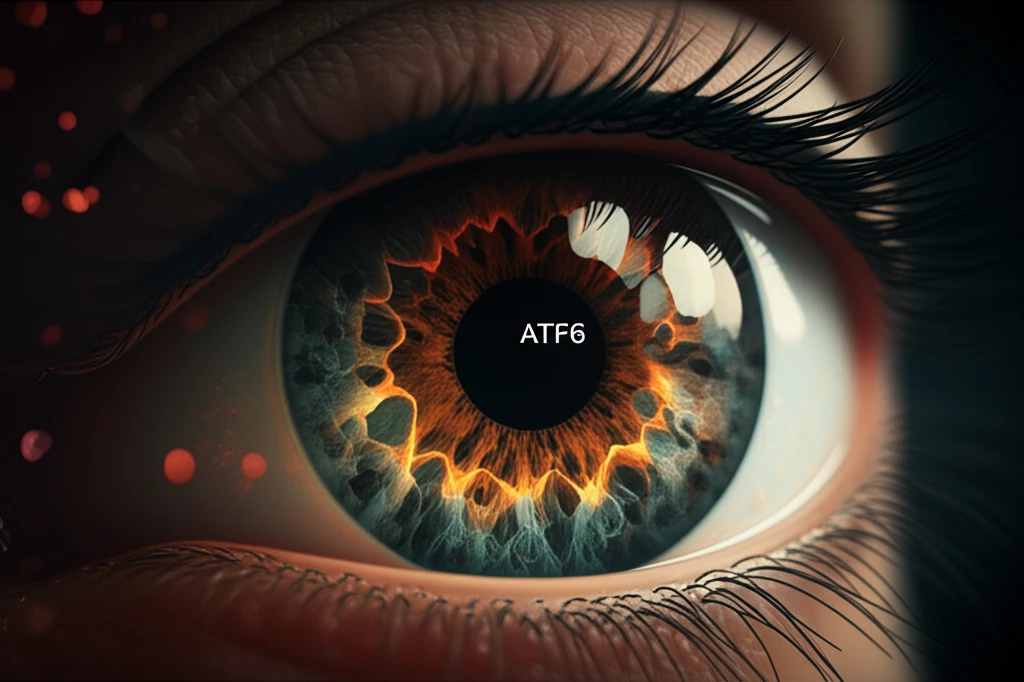
Illustration of an eye with glowing photoreceptor cells, symbolizing the ATF6 gene's role in protecting vision and retinal health.

Unlocking the Mysteries of Sight: How a Genetic Mutation Reveals Secrets of Vision and Disease

"Groundbreaking research sheds light on a rare genetic mutation linked to early-onset photoreceptor degeneration and offers new insights into potential treatments."


Our eyes are marvels of biological engineering, allowing us to perceive the world in vibrant detail. However, for some, the gift of sight is threatened by a range of conditions that can lead to vision loss. One such condition, photoreceptor degeneration (PRD), involves the progressive deterioration of the photoreceptor cells in the retina – the very cells responsible for capturing light and sending visual signals to the brain.

While the genetic basis of many forms of PRD remains a mystery, recent research has made a significant breakthrough. A team of scientists has identified a rare genetic mutation, ATF6, as a key player in early-onset photoreceptor degeneration with macular involvement. This discovery not only sheds light on the causes of vision loss but also opens new avenues for potential treatments.

This article delves into the groundbreaking research, exploring the complexities of the ATF6 mutation and its implications for understanding, diagnosing, and treating vision-related disorders. We'll examine the research findings, understand the role of ATF6 in the eye, and discuss the potential impact on the future of vision care.

Unraveling the Science: What is Photoreceptor Degeneration?

Illustration of an eye with glowing photoreceptor cells, symbolizing the ATF6 gene's role in protecting vision and retinal health.

Photoreceptor degeneration encompasses a group of inherited retinal disorders that lead to the progressive loss of vision. The retina, located at the back of the eye, is a complex structure composed of several layers of cells. Among these are photoreceptor cells, which are specialized cells responsible for converting light into electrical signals that the brain interprets as images.

In PRD, these photoreceptor cells gradually deteriorate, leading to a gradual loss of vision. The initial symptoms and the speed at which the disease progresses vary depending on the specific type of PRD and the underlying genetic factors. Macular involvement, as seen in this study, suggests that the central part of the retina, called the macula, is also affected, leading to more significant vision impairment.

  • Retinitis Pigmentosa (RP): A common form of PRD, often characterized by night blindness and tunnel vision.
  • Leber Congenital Amaurosis (LCA): A severe form of PRD that typically presents in infancy, often leading to profound vision loss.
  • Cone-Rod Dystrophy: A group of disorders that affect both cone cells (responsible for color vision and detailed vision) and rod cells (responsible for night vision).
Understanding the genetic basis of PRD is crucial for developing effective treatments. While some forms of PRD are associated with mutations in specific genes, many cases remain unexplained. The identification of the ATF6 mutation represents a significant step forward in unraveling the genetic puzzle of vision loss and offers hope for developing targeted therapies.

Looking Ahead: The Future of Vision Research and Treatment

The discovery of the ATF6 mutation opens exciting new possibilities for vision research and treatment. By understanding the role of ATF6 in retinal health, scientists can develop targeted therapies to slow down or even reverse the progression of photoreceptor degeneration. This research highlights the importance of continued investigation into the genetic underpinnings of vision loss and the potential for personalized medicine approaches in ophthalmology. As we unlock more secrets of the eye, the future of vision looks brighter than ever.

About this Article -

This article was crafted using a human-AI hybrid and collaborative approach. AI assisted our team with initial drafting, research insights, identifying key questions, and image generation. Our human editors guided topic selection, defined the angle, structured the content, ensured factual accuracy and relevance, refined the tone, and conducted thorough editing to deliver helpful, high-quality information.See our About page for more information.

Everything You Need To Know

1

What is photoreceptor degeneration (PRD), and how does it impact vision?

Photoreceptor degeneration (PRD) is a group of inherited retinal disorders characterized by the progressive deterioration of photoreceptor cells in the retina. These cells are essential for converting light into electrical signals that the brain interprets as images. As these cells deteriorate, individuals experience a gradual loss of vision. The macula may also become involved, leading to more significant vision impairment. Specific types of PRD include Retinitis Pigmentosa (RP), Leber Congenital Amaurosis (LCA), and Cone-Rod Dystrophy, each affecting vision differently based on which photoreceptor cells are primarily impacted.

2

How does the ATF6 mutation contribute to early-onset photoreceptor degeneration?

The recent research identifies a rare genetic mutation, ATF6, as a key player in early-onset photoreceptor degeneration. The discovery of the ATF6 mutation offers new possibilities for vision research and treatment. Further research can develop targeted therapies to slow down or even reverse the progression of photoreceptor degeneration. Understanding the role of ATF6 in retinal health enables scientists to develop targeted therapies to slow down or even reverse the progression of photoreceptor degeneration.

3

What are some specific types of photoreceptor degeneration mentioned, and how do their symptoms differ?

Several specific types of photoreceptor degeneration are identified. Retinitis Pigmentosa (RP) is characterized by night blindness and tunnel vision. Leber Congenital Amaurosis (LCA) is a severe form presenting in infancy and often leading to profound vision loss. Cone-Rod Dystrophy affects both cone cells (for color and detailed vision) and rod cells (for night vision), impacting both daytime and nighttime sight. The symptoms and progression vary depending on the specific type and the underlying genetic factors.

4

How might understanding the ATF6 mutation impact the future of vision care and treatment?

Understanding the role of the ATF6 mutation in retinal health allows scientists to develop targeted therapies to slow down or even reverse the progression of photoreceptor degeneration. This research highlights the importance of continued investigation into the genetic underpinnings of vision loss and the potential for personalized medicine approaches in ophthalmology. By unlocking more secrets of the eye, the future of vision looks brighter than ever and can potentially lead to the development of targeted therapies for those affected by this specific genetic mutation.

5

What does macular involvement mean in the context of photoreceptor degeneration, and why is it significant?

Macular involvement in photoreceptor degeneration signifies that the central part of the retina, known as the macula, is also affected. The macula is responsible for central vision, which is crucial for tasks requiring high visual acuity, such as reading, driving, and facial recognition. When the macula is involved in PRD, it leads to more significant vision impairment, as the central, detailed vision is compromised. The study identifies a rare genetic mutation, ATF6, as a key player in early-onset photoreceptor degeneration with macular involvement.

Newsletter Subscribe

Subscribe to get the latest articles and insights directly in your inbox.