
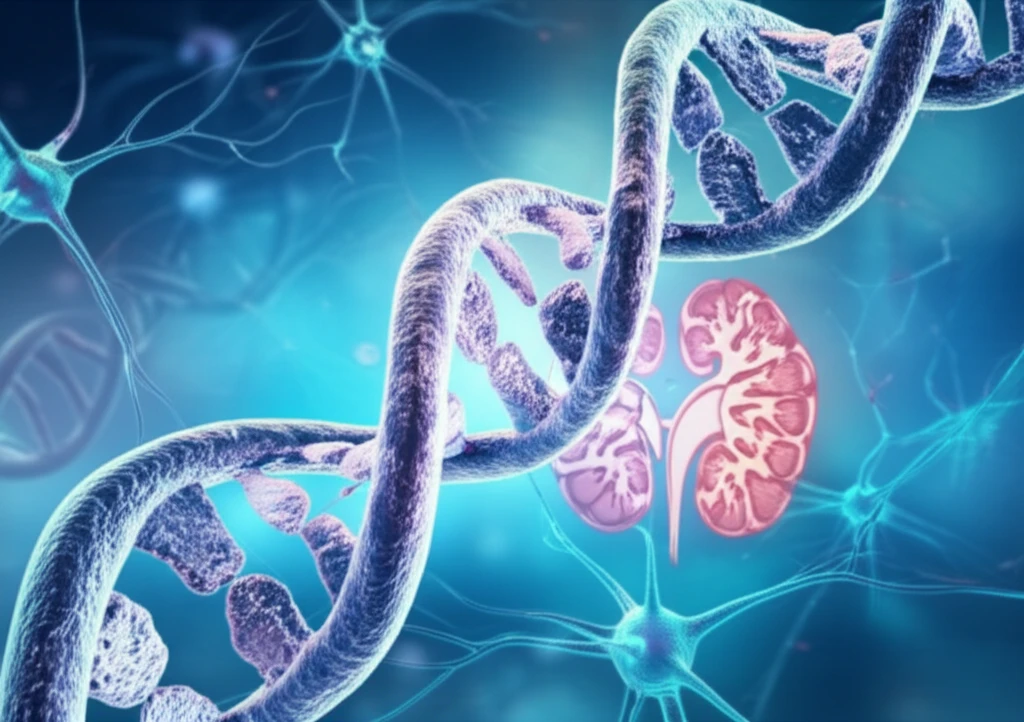
DNA strands intertwined with nerve cells, symbolizing NF1

Unlocking the Mysteries of Neurofibromatosis Type 1 (NF1): What You Need to Know

"A Deep Dive into NF1, Pheochromocytoma, and the Quest for Genotype-Phenotype Correlations"


Neurofibromatosis type 1 (NF1) is a relatively common genetic disorder that affects the nervous system. It's characterized by a variety of symptoms, but primarily by the growth of tumors along nerves anywhere in the body. NF1 is an autosomal dominant disorder, meaning it only takes one copy of the mutated gene to cause the condition. This makes it more likely to be passed on from parent to child.

The root cause of NF1 lies in mutations of the NF1 gene, which is found on chromosome 17. This gene provides instructions for making neurofibromin, a protein that acts as a tumor suppressor. When the NF1 gene is mutated, neurofibromin function is impaired, leading to uncontrolled cell growth and the development of tumors. These tumors, called neurofibromas, can appear on the skin, in the brain, and throughout the body.

While neurofibromas are the hallmark of NF1, the condition can also be associated with other health issues, including learning disabilities, bone abnormalities, and an increased risk of certain cancers. One less common, but significant, association is with pheochromocytoma, a rare tumor of the adrenal glands that can cause high blood pressure and other serious problems. Understanding the genetic basis of NF1 and its varied manifestations is crucial for effective diagnosis and management.

The NF1 Gene and Its Role: How Mutations Lead to NF1

DNA strands intertwined with nerve cells, symbolizing NF1

The NF1 gene is a large and complex gene, containing 57 exons and spanning approximately 300 kb of genomic DNA. This complexity means there are many places where mutations can occur, leading to a wide range of effects on neurofibromin production and function. These mutations can include:

Mutations in the NF1 gene disrupt the function of neurofibromin, a protein crucial for regulating cell growth. Neurofibromin acts as a GTPase-activating protein (GAP), which helps to control the activity of Ras proteins. Ras proteins are involved in cell signaling pathways that regulate cell division, differentiation, and growth. When neurofibromin is deficient, Ras activity becomes hyperactive, leading to uncontrolled cell proliferation and tumor formation.

  • Deletions: Entire sections of the gene are missing.
  • Insertions: Extra DNA is inserted into the gene.
  • Point Mutations: Single nucleotide changes that can alter the amino acid sequence of the protein.
  • Splice Site Mutations: Mutations that affect how the gene is spliced, leading to abnormal mRNA and non-functional protein.
The GAP-related domain (GRD), encoded by exons 20-27a, is a critical region of neurofibromin. Mutations in this area are particularly impactful because they directly affect neurofibromin's ability to regulate Ras activity. However, mutations outside the GRD can also disrupt neurofibromin function and contribute to NF1.

The Future of NF1 Research: Unraveling the Complexities

Research into NF1 continues to evolve, with ongoing efforts to understand the genotype-phenotype correlations and develop targeted therapies. Further investigation of the C-terminal region of the NF1 gene and its role in NF1-related conditions is essential. By unraveling these complexities, researchers aim to improve the diagnosis, management, and treatment of NF1, offering hope for those affected by this challenging disorder.

About this Article -

This article was crafted using a human-AI hybrid and collaborative approach. AI assisted our team with initial drafting, research insights, identifying key questions, and image generation. Our human editors guided topic selection, defined the angle, structured the content, ensured factual accuracy and relevance, refined the tone, and conducted thorough editing to deliver helpful, high-quality information.See our About page for more information.

Everything You Need To Know

1

What exactly is Neurofibromatosis Type 1 (NF1), and what are its primary characteristics?

Neurofibromatosis Type 1 (NF1) is a genetic disorder impacting the nervous system. Its main feature is the development of tumors, known as neurofibromas, along nerves throughout the body. NF1 is an autosomal dominant disorder, meaning that only one copy of the mutated NF1 gene is needed to cause the condition.

2

How do mutations in the NF1 gene lead to the development of Neurofibromatosis Type 1 (NF1)?

Mutations in the NF1 gene, located on chromosome 17, disrupt the production of neurofibromin, a protein that acts as a tumor suppressor. When the NF1 gene is mutated, neurofibromin's ability to regulate cell growth is impaired, leading to uncontrolled cell proliferation and the formation of tumors, called neurofibromas. These mutations can include deletions, insertions, point mutations, and splice site mutations, all affecting neurofibromin function.

3

Besides neurofibromas, what other health issues are commonly associated with Neurofibromatosis Type 1 (NF1)?

While neurofibromas are the most recognizable feature of Neurofibromatosis Type 1 (NF1), the condition is also linked to other health problems. These can include learning disabilities, bone abnormalities, and an increased risk of certain cancers. Additionally, NF1 is sometimes associated with pheochromocytoma, a rare tumor of the adrenal glands that can lead to high blood pressure and other serious complications. Understanding these varied manifestations is important for effective management of NF1.

4

Why is the GAP-related domain (GRD) of neurofibromin so critical, and how do mutations in this area affect the development of Neurofibromatosis Type 1 (NF1)?

The GAP-related domain (GRD), encoded by exons 20-27a of the NF1 gene, is a crucial region of neurofibromin because it directly affects neurofibromin's ability to regulate Ras activity. Neurofibromin acts as a GTPase-activating protein (GAP), controlling Ras proteins involved in cell signaling pathways that regulate cell division, differentiation, and growth. Mutations in the GRD impair neurofibromin's function, leading to hyperactive Ras activity, uncontrolled cell proliferation, and tumor formation, which are hallmarks of Neurofibromatosis Type 1 (NF1).

5

What is the focus of current research into Neurofibromatosis Type 1 (NF1), and what potential advancements are researchers hoping to achieve?

Current research into Neurofibromatosis Type 1 (NF1) is focused on understanding the genotype-phenotype correlations to develop targeted therapies. Researchers are particularly interested in the C-terminal region of the NF1 gene and its role in NF1-related conditions. The ultimate goal is to improve the diagnosis, management, and treatment of NF1, providing better outcomes for individuals affected by this complex disorder. This includes efforts to develop therapies that can specifically target the dysregulation of Ras proteins caused by neurofibromin deficiency.

Newsletter Subscribe

Subscribe to get the latest articles and insights directly in your inbox.