
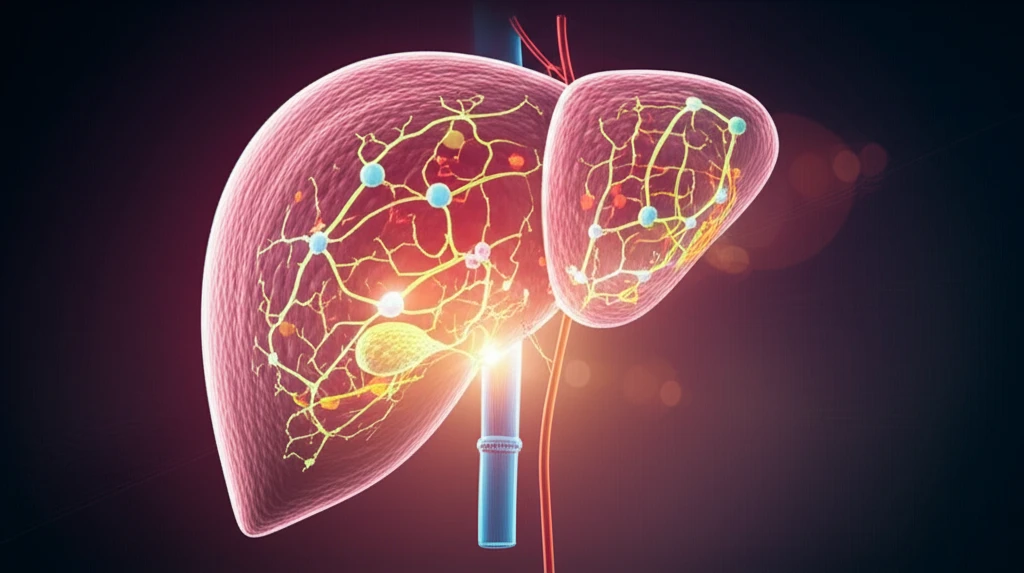
Unlocking the Liver's Secret: How This Enzyme Could Revolutionize Fatty Liver Disease Treatment

"Discover how Them2, a key enzyme in liver metabolism, could be the next big target for treating NAFLD and improving overall metabolic health."
Non-alcoholic fatty liver disease (NAFLD) is a growing health concern, characterized by the accumulation of triglycerides within the liver. This occurs when the rate of fat accumulation, through uptake from the plasma and synthesis within the liver, exceeds the rate at which it is broken down or secreted. Understanding the mechanisms that regulate this balance is crucial for developing effective treatments.
A key player in this process is Thioesterase superfamily member 2, or Them2, an enzyme that helps to regulate how fatty acids are used in the body. Them2 is found in high concentrations in the liver and other tissues that require a lot of energy, influencing the breakdown of fatty acyl-CoAs into free fatty acids and CoASH. This process is essential for maintaining metabolic health, and imbalances can contribute to diseases like NAFLD.
Recent studies have delved into the specific role of Them2 in the liver. By creating models with and without Them2, researchers have been able to pinpoint how this enzyme affects fat metabolism, VLDL secretion, and overall liver health. These findings suggest that Them2 could be a crucial target for managing NAFLD and improving metabolic function.
Them2: A Central Regulator of Liver Fat Metabolism
Researchers have discovered that Them2 plays a vital role in directing how fatty acids are processed in the liver. Specifically, Them2 appears to channel fatty acids towards the synthesis of triglycerides, which are then incorporated into very low-density lipoprotein (VLDL) particles for secretion. This process helps to manage fat levels in the liver and prevent the buildup that leads to NAFLD.
- Reduced VLDL Secretion: L-Them2 models exhibited lower rates of VLDL secretion, suggesting that Them2 facilitates the movement of fats out of the liver.
- Increased Fatty Acid Oxidation: In the absence of Them2, the liver compensated by increasing the rate at which it burned fatty acids, preventing fat buildup.
- Decreased Lipogenesis: The models also showed a decrease in the production of new fats, further aiding in the prevention of hepatic steatosis.
Implications for Future Treatments
Given the significant role of Them2 in liver fat metabolism, it represents a promising target for the development of new treatments for NAFLD and related metabolic disorders. By modulating the activity of Them2, researchers hope to find ways to restore healthy fat metabolism, reduce liver fat accumulation, and improve overall metabolic health. As research continues, Them2 may well become a cornerstone in the fight against fatty liver disease, offering new hope for those affected by this widespread condition.