
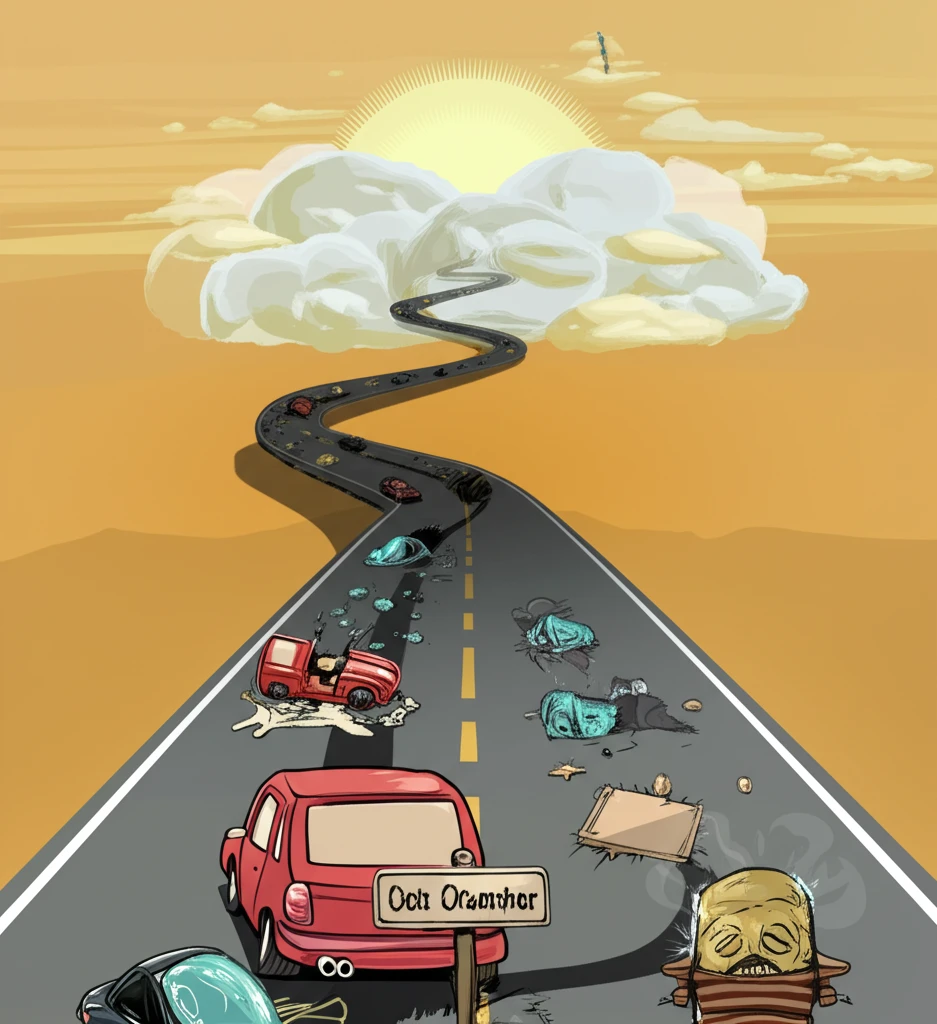
Illustration of a distribution tail representing unexpected travel delays.

Unlocking the Hidden Costs of Your Commute: Are You Paying Too Much for Travel Time Reliability?

"New research reveals the unexpected financial impact of distribution tails on travel time, urging a rethink of how we value our time on the road."


We've all been there: stuck in traffic, late for a meeting, or anxiously watching the clock as our carefully planned schedule crumbles. Travel time variability—the unpredictable nature of our commutes—is a constant source of stress and expense. While we often focus on average travel times, new research is shedding light on the hidden costs lurking in the 'distribution tail,' the unexpected delays that can dramatically impact our budgets and well-being.

For years, studies have shown that the consequences of unexpected delays hit harder than moderate, expected ones. But surprisingly, the valuation of these extreme delays hasn't received the attention it deserves. This article delves into groundbreaking research that quantifies the value of this 'distribution tail,' offering fresh insights into how we perceive and manage travel time variability.

Imagine you're deciding between two routes: one is usually faster but prone to occasional major delays, while the other is consistently slower but reliable. How do you weigh the potential benefits of speed against the risk of being severely late? Understanding the concepts presented in this research can empower you to make more informed decisions, optimizing not just your travel time but also your peace of mind.

The Hidden Cost: Understanding the Distribution Tail

Illustration of a distribution tail representing unexpected travel delays.

The research introduces the concept of the 'value of travel time distribution tail' (VODT), which focuses on those unexpected delays caused by the long tail of travel time distribution. Think of it as the cost associated with those rare but impactful events that make you significantly late – a major accident, unexpected road work, or a sudden weather event. This is different from more common congestion which may be anticipated.

Traditionally, travel time variability has been measured using standard deviation or percentiles, focusing on average conditions. However, these measures often fail to capture the true impact of the distribution tail. The new method highlights the ‘unreliability area,’ quantifying the sum of all unexpected delays and establishing it as a key component in evaluating travel time costs.

  • Reliable Aspect of Travel Time: Expected delays that travelers plan for, such as normal rush-hour congestion.
  • Unreliable Aspect of Travel Time: Unexpected delays from events like accidents or severe weather, falling within the distribution tail.
The research uses an illustrative network example to showcase how considering the distribution tail impacts route choices. For example, a route that seems optimal based on average travel time might become less attractive when factoring in the potential for significant, unexpected delays. This approach aligns with studies on network performance, hazardous materials routing, and route guidance systems, emphasizing the importance of including this cost in travel planning.

Making Smarter Choices: Balancing Punctuality and Cost

Ultimately, understanding the value of the distribution tail empowers us to make more informed decisions about our travel choices. By considering not just the average travel time, but also the potential for unexpected delays and their associated costs, we can strive for a better balance between punctuality, reliability, and overall travel expenses. Whether you're a daily commuter or an occasional traveler, recognizing this hidden cost can lead to more efficient and less stressful journeys.

About this Article -

This article was crafted using a human-AI hybrid and collaborative approach. AI assisted our team with initial drafting, research insights, identifying key questions, and image generation. Our human editors guided topic selection, defined the angle, structured the content, ensured factual accuracy and relevance, refined the tone, and conducted thorough editing to deliver helpful, high-quality information.See our About page for more information.

Everything You Need To Know

1

What is 'value of travel time distribution tail' (VODT), and why is it important to consider when planning my commute?

The 'value of travel time distribution tail' (VODT) represents the cost associated with rare but impactful events that cause significant delays, such as major accidents or unexpected road work. It's important because traditional measures of travel time variability, like standard deviation, often fail to capture the true impact of these 'distribution tail' events. By considering VODT, you can make more informed decisions that balance average travel time with the potential for unexpected delays, leading to less stressful and more efficient journeys. Ignoring the 'distribution tail' can lead to underestimating the true cost of a route prone to occasional, but significant, delays.

2

How does focusing solely on average travel times affect my commuting decisions, and what am I missing?

Focusing solely on average travel times overlooks the 'unreliable aspect of travel time' found in the 'distribution tail.' This means you're not accounting for the potential financial and emotional costs of unexpected delays caused by events like accidents or severe weather. Routes that appear optimal based on average travel time might become less attractive when factoring in the potential for significant, unexpected delays. By only focusing on the 'reliable aspect of travel time', you are missing the complete picture.

3

What is the 'unreliability area,' and how does it help in evaluating travel time costs?

The 'unreliability area' quantifies the sum of all unexpected delays, establishing it as a key component in evaluating travel time costs. It highlights the impact of the 'distribution tail' by measuring the overall cost of those rare, but significant, delays that traditional measures like standard deviation often miss. This area, related to the 'value of travel time distribution tail' (VODT) helps to provide a more comprehensive understanding of potential travel time costs, enabling better route choices that consider both average travel time and the risk of significant delays.

4

Can you provide an example of how understanding the 'distribution tail' might influence my route choice?

Imagine choosing between two routes: Route A is typically faster but occasionally experiences major delays due to accidents, representing a significant 'distribution tail.' Route B is consistently slower but more reliable. Without considering the 'value of travel time distribution tail' (VODT), Route A might seem like the better option based on average travel time. However, if you factor in the potential cost of those significant, unexpected delays on Route A – the 'unreliability area' – Route B might become the more appealing choice, even though it's slower on average. This is because you're accounting for the potential financial and emotional costs of being severely late.

5

How does the concept of 'value of travel time distribution tail' (VODT) relate to fields like network performance and hazardous materials routing?

The concept of 'value of travel time distribution tail' (VODT) aligns with studies in network performance, hazardous materials routing, and route guidance systems by emphasizing the importance of including the cost of unexpected delays in travel planning. In network performance, understanding VODT can help optimize traffic flow by accounting for the impact of 'unreliable aspect of travel time'. For hazardous materials routing, where delays can have severe consequences, considering the 'distribution tail' is crucial for minimizing risk. Similarly, route guidance systems can leverage this concept to provide more informed route recommendations that balance speed and reliability.

Newsletter Subscribe

Subscribe to get the latest articles and insights directly in your inbox.