
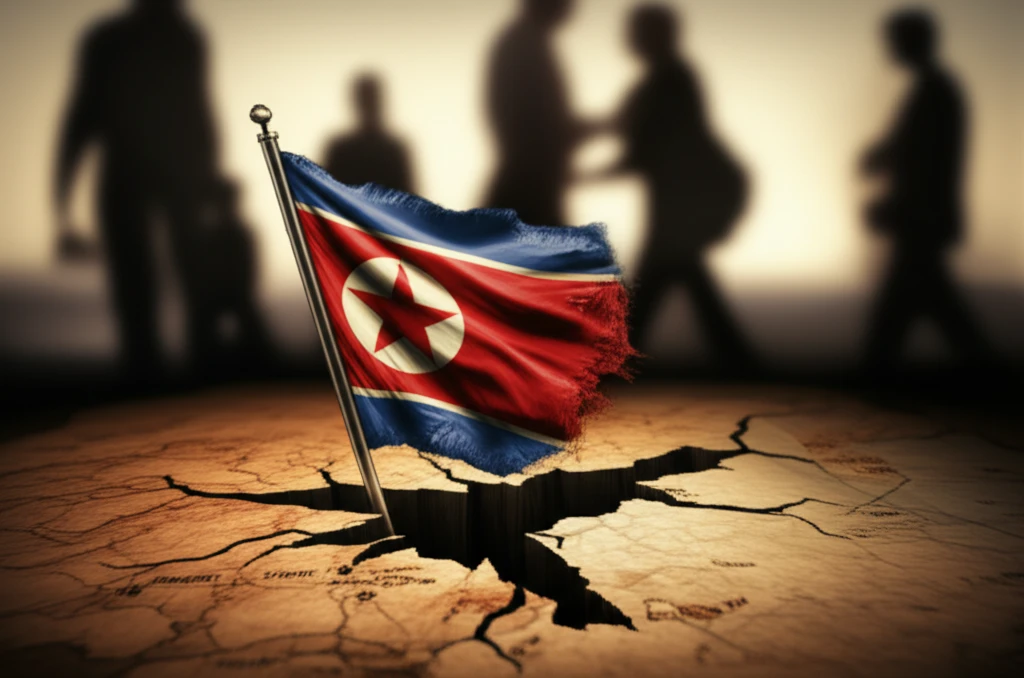
North Korean flag emerging from an ancient map of Korea, symbolizing tourism potential.

Unlocking the Hermit Kingdom: Can Nostalgia and Novelty Draw Tourists to North Korea?

"Explore how historical nostalgia and the thrill of the unknown could shape the future of tourism in one of the world's most isolated countries."


For decades, North Korea has remained shrouded in mystery, a country more often associated with headlines about politics and security than travel brochures. Yet, beneath the surface of international relations lies a fascinating question: Could tourism ever take root in this isolated nation? A recent study published in the International Journal of Tourism Sciences explores this very idea, diving into the minds of South Koreans to uncover what might motivate them to visit their northern neighbor.

The study, led by Na Young Mun, Wangoo Lee, and Chul Jeong, investigates the power of historical nostalgia—a longing for a past experienced through stories and media rather than direct memory—and novelty seeking, the innate human desire for the new and unknown. These motivations, the researchers suggest, could be key to unlocking tourism potential in North Korea, particularly among South Koreans.

But can a country so often portrayed as dangerous and secretive truly become a tourist destination? And how do you market a place defined by its inaccessibility? Let's delve into the study's findings and explore the surprising possibilities that lie within the Hermit Kingdom.

What's the Psychology Behind a Trip to North Korea?

North Korean flag emerging from an ancient map of Korea, symbolizing tourism potential.

The researchers hypothesized that historical nostalgia and novelty seeking could significantly influence South Koreans' attitudes toward visiting North Korea. To test this, they surveyed 200 South Koreans, examining the relationships between these psychological factors and their cognitive (beliefs and knowledge), affective (emotional responses), and behavioral (intentions to visit) attitudes.

Here's a breakdown of the study's key findings:

  • Nostalgia Fuels Curiosity: Historical nostalgia positively influences novelty seeking. The longing for a shared past, even one not directly experienced, sparks a desire to explore the unknown aspects of North Korea.
  • Novelty Bridges the Gap: Novelty seeking acts as a crucial link between historical nostalgia and attitudes. It fully mediates the relationship, meaning that the desire for new experiences is the mechanism through which nostalgia translates into positive feelings about visiting North Korea.
  • Emotions Drive Beliefs: Affective attitude (emotional response) positively affects cognitive attitude (beliefs). How someone feels about North Korea shapes what they think about it.
  • Attitudes Shape Intentions: Both cognitive and affective attitudes significantly influence behavioral attitude. Positive thoughts and feelings translate into a greater willingness to visit.
These findings suggest that the allure of North Korea isn't just about the destination itself, but also about the internal psychological landscape of potential tourists. For South Koreans, a trip to North Korea could represent a unique opportunity to connect with a shared history, satisfy a thirst for the unknown, and ultimately, challenge their own perceptions.

Turning Curiosity into Reality: Practical Implications for North Korea Tourism

While the political landscape remains complex, the study offers valuable insights for firms and governments interested in potentially developing North Korea as a tourist destination. The key, the researchers suggest, is to tap into the power of curiosity and shared heritage:

About this Article -

This article was crafted using a human-AI hybrid and collaborative approach. AI assisted our team with initial drafting, research insights, identifying key questions, and image generation. Our human editors guided topic selection, defined the angle, structured the content, ensured factual accuracy and relevance, refined the tone, and conducted thorough editing to deliver helpful, high-quality information.See our About page for more information.

Everything You Need To Know

1

What specific psychological factors did the study identify as potential drivers of tourism to North Korea among South Koreans?

The study, led by Na Young Mun, Wangoo Lee, and Chul Jeong, identified two primary psychological factors: historical nostalgia and novelty seeking. Historical nostalgia refers to the longing for a shared past, even if not directly experienced, while novelty seeking is the innate human desire for new and unknown experiences. The researchers hypothesized that these factors could significantly influence South Koreans' attitudes toward visiting North Korea and, ultimately, their intention to travel there.

2

How does novelty seeking mediate the relationship between historical nostalgia and attitudes towards visiting North Korea, according to the research?

The study found that novelty seeking acts as a crucial link between historical nostalgia and attitudes toward visiting North Korea. It fully mediates the relationship, meaning that the desire for new experiences is the mechanism through which nostalgia translates into positive feelings about visiting. In essence, the longing for a shared past (nostalgia) sparks a desire to explore the unknown (novelty seeking), which then leads to more positive beliefs and feelings about a potential trip to North Korea.

3

What are the practical implications of the study's findings for those interested in developing tourism in North Korea?

The study offers valuable insights for firms and governments interested in developing North Korea as a tourist destination. The key, the researchers suggest, is to tap into the power of curiosity and shared heritage. This could involve curating tourism experiences that emphasize North Korea's unique cultural aspects, historical sites related to the shared Korean past, and offering opportunities for interactions and novel experiences that appeal to South Koreans' desire for the new and the unknown.

4

In the context of the study, how do emotional responses (affective attitude) influence cognitive attitudes and behavioral intentions regarding travel to North Korea?

The research showed that affective attitude (emotional responses) positively affects cognitive attitude (beliefs). How someone feels about North Korea shapes what they think about it. Furthermore, both cognitive and affective attitudes significantly influence behavioral attitude. Positive thoughts and feelings translate into a greater willingness to visit North Korea. This highlights the importance of shaping positive perceptions, potentially through storytelling, media portrayals, and curated experiences to increase tourism interest.

5

Besides historical nostalgia and novelty seeking, are there any other factors that were considered in the research that could influence tourism to North Korea?

The study focused primarily on historical nostalgia and novelty seeking. The research examined how these two psychological factors influenced South Koreans' attitudes toward visiting North Korea, including their beliefs, emotional responses, and intentions. While these were the central focuses, the study indirectly considered that the political landscape and the country's portrayal in the media could influence overall perceptions and willingness to visit, though these were not explicitly measured as independent variables.

Newsletter Subscribe

Subscribe to get the latest articles and insights directly in your inbox.