
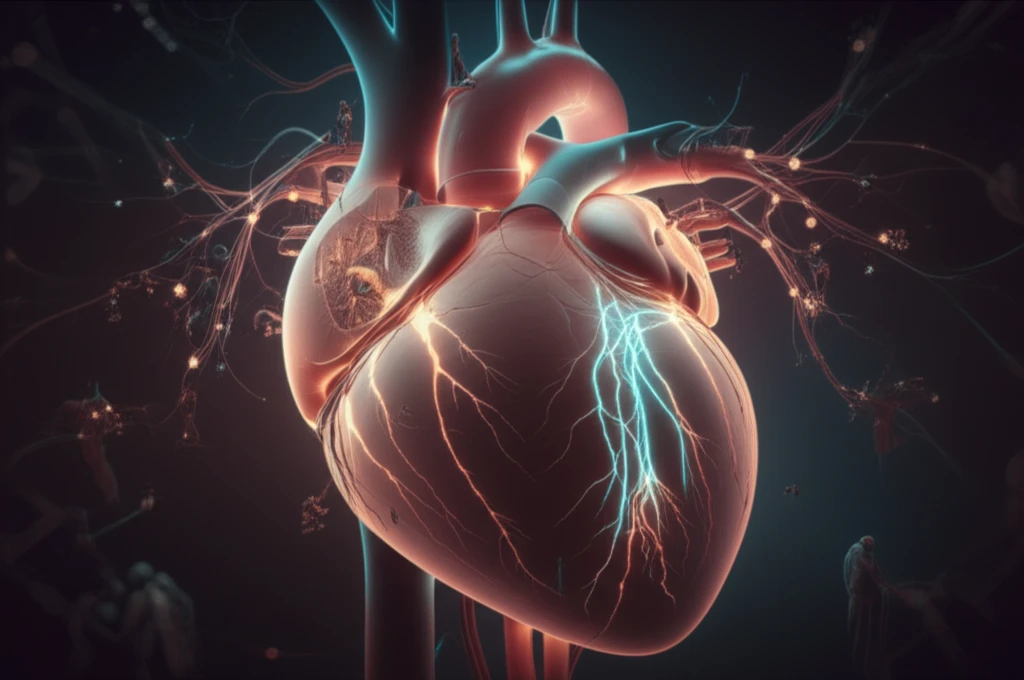
Illustration of a heart with glowing pathways and miniature figures representing pacemaker cells.

Unlocking the Heart's Secrets: How Scientists Are Exploring the Mysteries of Our Tiniest Pacemakers

"New research dives into the intricate world of the heart's natural rhythm-makers, uncovering the secrets of how our hearts beat and what happens when things go wrong."


Our hearts, the tireless engines of our bodies, beat ceaselessly from the moment we're born until our final breath. But have you ever stopped to consider the remarkable mechanisms behind this rhythmic pulsing? At the heart of it all are tiny, specialized cells called pacemaker cells, the heart's natural rhythm-makers. These cells, no bigger than a speck, orchestrate the complex dance of contractions and relaxations that keep us alive.

Recent research, published in the American Journal of Physiology-Regulatory, Integrative and Comparative Physiology, offers a fascinating glimpse into the inner workings of these crucial cells. Scientists are diligently exploring how these cells function, what controls their activity, and what happens when their delicate balance is disrupted. This research not only expands our understanding of basic heart function but also sheds light on potential avenues for treating heart diseases.

This article delves into this cutting-edge research, offering a clear and accessible explanation of the heart's pacemakers, the latest scientific findings, and the implications for our health. We'll unravel the mysteries of the 'funny current,' explore the role of specific channels, and discover how these tiny components are essential to our well-being.

Decoding the Pacemaker: What Are These Tiny Powerhouses?

Illustration of a heart with glowing pathways and miniature figures representing pacemaker cells.

Pacemaker cells are located in a specific region of the heart called the sinoatrial (SA) node. This node is the heart's natural pacemaker, generating electrical signals that spread throughout the heart, triggering the coordinated contractions that pump blood. These specialized cells are like tiny conductors, setting the tempo for the entire cardiac orchestra.

The SA node isn't just a collection of cells; it's a complex network that involves various ion channels, which are specialized proteins that allow ions (charged particles) to pass through the cell membrane. These ion channels are fundamental to how pacemaker cells generate their rhythmic electrical signals. The interplay of these channels creates the characteristic 'beat' of the heart.

  • Ion Channels: Proteins that control the movement of ions (like sodium, potassium, and calcium) across the cell membrane.
  • 'Funny Current' (If): A unique current found in pacemaker cells, vital for regulating heart rate.
  • Sinoatrial (SA) Node: The heart's natural pacemaker, where these specialized cells reside.
Understanding these components is essential to understanding how the heart functions and what can go wrong. The research being done delves deep into these elements to uncover the complexities of heart health.

The Future of Heart Health: A Path Forward

The research into heart pacemaker cells is a continuous journey, with each discovery paving the way for improved diagnostics, treatments, and preventative strategies. As scientists continue to unravel the complexities of the heart's natural rhythm-makers, the hope for a healthier future for all of us grows stronger. By embracing new insights and technologies, the field of cardiology is poised to make significant strides in the years to come, ensuring that our hearts, and our lives, continue to beat strong.

About this Article -

This article was crafted using a human-AI hybrid and collaborative approach. AI assisted our team with initial drafting, research insights, identifying key questions, and image generation. Our human editors guided topic selection, defined the angle, structured the content, ensured factual accuracy and relevance, refined the tone, and conducted thorough editing to deliver helpful, high-quality information.See our About page for more information.

Everything You Need To Know

1

What exactly are pacemaker cells, and where are they located in the heart?

Pacemaker cells are specialized cells located in the sinoatrial (SA) node of the heart. This node is the heart's natural pacemaker. These cells generate electrical signals that spread throughout the heart, triggering the coordinated contractions responsible for pumping blood. They essentially set the tempo for the entire heart. Further research is needed to fully understand the complex network that facilitates the SA node's function, including the roles of various ion channels and their interactions.

2

Can you elaborate on the role of ion channels in pacemaker cells, and how do they contribute to generating rhythmic electrical signals?

Ion channels are specialized proteins that control the movement of ions, such as sodium, potassium, and calcium, across the cell membrane of pacemaker cells. The interplay of these ion channels is fundamental to how pacemaker cells generate their rhythmic electrical signals. They work together to create the characteristic 'beat' of the heart, allowing the heart to function correctly. Research continues to explore the specific mechanisms by which these channels interact and how disruptions in their function can lead to heart rhythm disorders.

3

What is the 'funny current' (If), and why is it so important in the context of heart function?

The 'funny current' (If) is a unique current found in pacemaker cells and is vital for regulating heart rate. It contributes to the rhythmic electrical activity of these cells, helping to control how frequently the heart beats. This current is a key factor in maintaining a normal heart rhythm. Future studies are aimed at fully understanding how the 'funny current' is modulated and how it can be targeted to treat heart rate abnormalities.

4

How does research into pacemaker cells contribute to advancements in treating heart diseases?

Research into heart pacemaker cells helps improve diagnostics, treatments, and preventative strategies for heart diseases. By unraveling the complexities of the heart's natural rhythm-makers, scientists can gain a better understanding of what goes wrong in various heart conditions. This knowledge can then be applied to develop targeted therapies that address the root causes of these diseases. The ongoing research is poised to make significant strides in cardiology, ultimately leading to improved heart health outcomes.

5

What are the potential future implications of understanding the function of the sinoatrial (SA) node and its components like ion channels and the 'funny current'?

A deeper understanding of the sinoatrial (SA) node, including the roles of ion channels and the 'funny current', could lead to innovative therapies for heart rhythm disorders. For example, if scientists can precisely control the activity of specific ion channels or modulate the 'funny current', they may be able to correct irregular heartbeats or prevent them from occurring in the first place. These advancements could reduce the need for invasive procedures like artificial pacemakers and offer more personalized and effective treatments for individuals with heart rhythm problems. Future research may also uncover new drug targets that can improve overall heart health by optimizing the function of the heart's natural pacemaker.

Newsletter Subscribe

Subscribe to get the latest articles and insights directly in your inbox.