
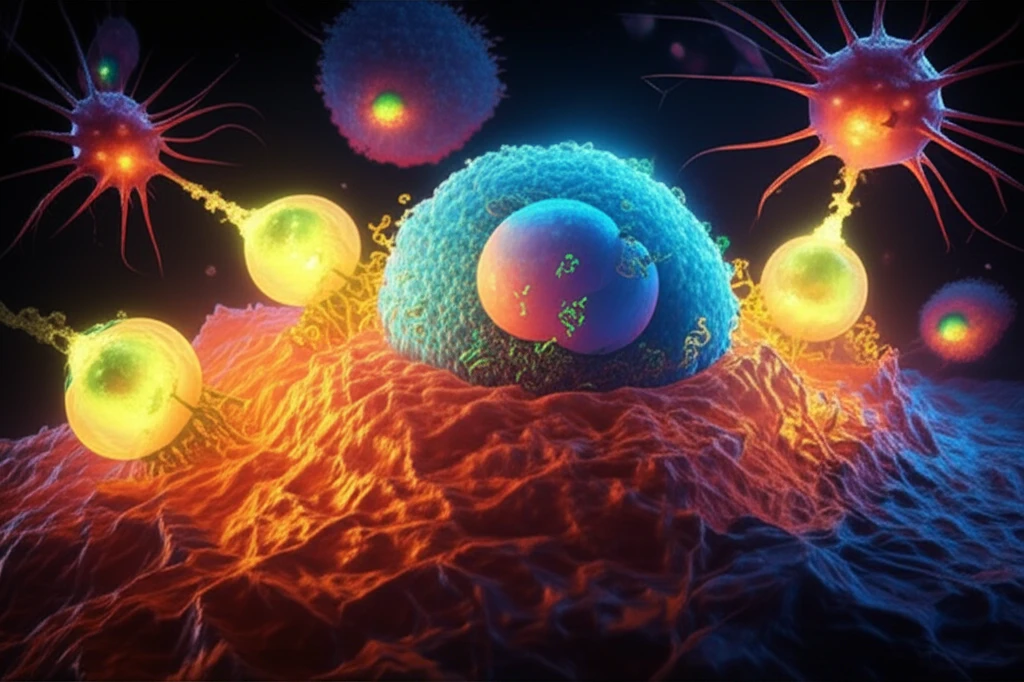
Illustration of immunological cell death with immune cells attacking a cancer cell displaying CRT.

Unlocking the Future of Cancer Treatment: How Immunological Death of Tumor Cells is Revolutionizing Therapy

"A groundbreaking study explores a new approach to fighting cancer by harnessing the power of the body's immune system."


Cancer, a disease that touches the lives of millions, has long been a formidable challenge for medical science. Traditional treatments like chemotherapy and radiation, while effective, often come with harsh side effects and can struggle to eradicate cancer cells completely. But a new frontier in cancer treatment is emerging, one that leverages the body's own immune system to fight back. This innovative approach, known as immunological cell death, is showing promise in selectively targeting and destroying tumor cells.

Immunological cell death represents a paradigm shift in how we approach cancer treatment. Unlike traditional methods that directly attack cancer cells, this method stimulates the body's immune system to recognize and eliminate cancerous cells. This approach not only offers the potential for more effective treatment but also aims to reduce the harmful side effects often associated with conventional therapies.

In this article, we delve into the groundbreaking research on immunological cell death, exploring how it works, the promising results it has shown in various cancer cell lines, and what this could mean for the future of cancer treatment. We'll examine the key players involved, the mechanisms at play, and the potential of this innovative approach to offer new hope to cancer patients worldwide.

The Science Behind Immunological Cell Death: A Closer Look

Illustration of immunological cell death with immune cells attacking a cancer cell displaying CRT.

Immunological cell death is a sophisticated process that involves the interplay of several key elements. It begins with the identification of cancer cells by the immune system. This recognition is often triggered by specific signals displayed on the surface of the cancer cells. These signals, like 'eat-me' signals, alert the immune system to the presence of the cancerous cells.

One of the critical players in this process is a protein called calreticulin (CRT). CRT, when expressed on the surface of tumor cells, acts as a signal, marking the cells for destruction by the immune system. This process is often initiated by certain types of chemotherapy drugs, which can trigger the translocation of CRT to the cell surface.

  • Calreticulin (CRT): A protein that, when displayed on the surface of cancer cells, signals the immune system to eliminate them.
  • Cytokine Secretion: Immune cells release cytokines, such as IFN-y and IL-12, which play a key role in stimulating the immune response against cancer cells.
  • 'Eat-Me' Signals: These signals, displayed on the surface of cancer cells, alert the immune system to the presence of cancerous cells.
  • Immune Cell Activation: The process activates immune cells to recognize, attack, and destroy cancer cells.
The research also highlighted the role of cytokines, such as IFN-y and IL-12, which are released by immune cells. These cytokines play a key role in stimulating the immune response against cancer cells, further enhancing the effectiveness of the treatment. The study demonstrated the potential of a chemotherapeutic candidate, EY-6, to induce immunological cell death in various human tumor cell lines, including colon, gastric, and myeloma cancers. The study's findings suggest that EY-6 could be a new type of immuno-chemotherapeutic agent.

The Future of Cancer Treatment: Hope and Innovation

The research on immunological cell death represents a significant step forward in the fight against cancer. By harnessing the power of the body's immune system, this approach offers the potential for more effective and less toxic treatments. The ongoing research and clinical trials in this field hold great promise for the future, potentially changing the landscape of cancer care and offering new hope to patients and their families. As we continue to explore the intricacies of the immune system and its interaction with cancer cells, we move closer to a future where cancer is not only treatable but potentially curable.

About this Article -

This article was crafted using a human-AI hybrid and collaborative approach. AI assisted our team with initial drafting, research insights, identifying key questions, and image generation. Our human editors guided topic selection, defined the angle, structured the content, ensured factual accuracy and relevance, refined the tone, and conducted thorough editing to deliver helpful, high-quality information.See our About page for more information.

This article is based on research published under:

DOI-LINK: 10.4110/in.2012.12.2.66, Alternate LINK

Title: Chemotherapeutic Candidate Inducing Immunological Death Of Human Tumor Cell Lines

Subject: Infectious Diseases

Journal: Immune Network

Publisher: The Korean Association of Immunobiologists

Authors: Su-Jin Oh, Chung-Kyu Ryu, Inhak Choi, So-Young Baek, Hyunah Lee

Published: 2012-01-01

Everything You Need To Know

1

What is immunological cell death, and how does it differ from traditional cancer treatments like chemotherapy and radiation?

Immunological cell death is a novel approach to cancer treatment that stimulates the body's immune system to recognize and eliminate cancerous cells. Unlike traditional methods like chemotherapy and radiation, which directly attack cancer cells and often come with harsh side effects, immunological cell death leverages the immune system to selectively target and destroy tumor cells, potentially leading to more effective treatment with fewer side effects. The approach hinges on triggering specific signals on cancer cells that alert the immune system to their presence, initiating an immune response.

2

What role does Calreticulin (CRT) play in immunological cell death, and how is it triggered?

Calreticulin (CRT) is a crucial protein in immunological cell death. When CRT is expressed on the surface of tumor cells, it acts as an 'eat-me' signal, marking the cells for destruction by the immune system. Certain types of chemotherapy drugs can initiate the translocation of CRT to the cell surface, thereby making the cancer cells visible and vulnerable to immune attack. Without CRT on the cell surface, the immune system is less likely to recognize the cancer cells as a threat.

3

How do cytokines like IFN-y and IL-12 contribute to the effectiveness of immunological cell death?

Cytokines such as IFN-y and IL-12, released by immune cells, play a key role in stimulating the immune response against cancer cells. These cytokines enhance the effectiveness of immunological cell death by further activating and directing the immune system to target and eliminate cancer cells. They act as messengers, amplifying the immune response and promoting a more robust attack on the tumor. Without sufficient cytokine release, the immune response might be too weak to effectively eradicate the cancer.

4

Can you elaborate on the potential implications of inducing immunological cell death in various human tumor cell lines, such as colon, gastric, and myeloma cancers?

Inducing immunological cell death in various human tumor cell lines, like colon, gastric, and myeloma cancers, suggests a broad applicability of this approach. The chemotherapeutic candidate EY-6 has demonstrated the potential to induce immunological cell death across these different cancer types, suggesting that it could be a new type of immuno-chemotherapeutic agent with the ability to treat a variety of cancers. This would represent a significant advancement, as many cancer treatments are specific to certain types of cancer.

5

What are 'Eat-Me' signals, and why are they important in the context of immunological cell death?

'Eat-Me' signals are specific signals displayed on the surface of cancer cells that alert the immune system to the presence of cancerous cells. These signals, like Calreticulin (CRT), are crucial because they enable the immune system to recognize and target the cancer cells for destruction. Without these signals, the immune system may not be able to distinguish cancer cells from healthy cells, preventing an effective immune response. The display of 'Eat-Me' signals is a key step in initiating immunological cell death and ensuring that the immune system effectively eliminates the cancerous cells.

Newsletter Subscribe

Subscribe to get the latest articles and insights directly in your inbox.