
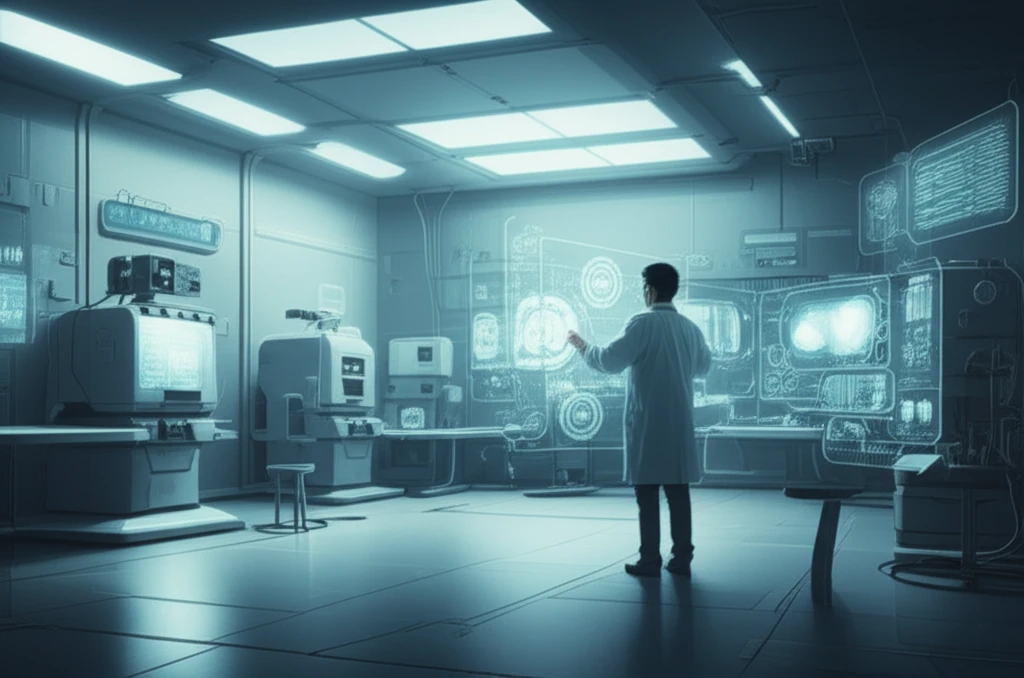
Illustration of an AI-powered Pathology PACS system.

Unlocking the Future: How AI and User Experience are Revolutionizing Pathology PACS

"From Workflow Efficiency to Enhanced Diagnostics: A Deep Dive into the AI-Powered Revolution in Pathology Picture Archiving and Communication Systems"


The field of medicine is undergoing a profound transformation, driven by rapid advancements in information technology and computer science. At the forefront of this revolution are systems like Pathology Picture Archiving and Communication Systems (PACS), which are vital for managing and interpreting medical images. However, the true potential of these systems is unlocked not just through technological prowess, but through a deep understanding of user experience (UX) and the integration of artificial intelligence (AI).

This article dives into the intersection of AI and UX in pathology PACS, exploring how these elements are reshaping the landscape of medical imaging and diagnostics. We will examine how user-centered design principles, combined with AI's capabilities, are enhancing workflow efficiency, diagnostic accuracy, and the overall quality of healthcare. The focus will be on how to make these complex system more intuitive and easier to use for the medical professionals using them daily.

This is a significant trend, as the focus of medical technology shifts from pure functionality to a more holistic approach. That approach takes in to consideration the user's interactions, experiences, and the effectiveness of the tools. This shift is crucial for creating technology that truly benefits both the medical professionals and the patients.

The Evolution of Pathology PACS: From Basic Storage to Intelligent Systems

Illustration of an AI-powered Pathology PACS system.

Traditionally, PACS have served as repositories for medical images, offering storage, retrieval, and basic viewing capabilities. The older systems were designed to streamline the process of accessing and managing images. They did not take into account how the users experienced the system. The focus was primarily on the functionality of storing and retrieving images. However, as technology has evolved, so has the vision for PACS. The modern systems are moving towards becoming integrated platforms. These platforms feature AI-driven tools to enhance diagnostic capabilities and improve workflow efficiency. AI algorithms can now analyze images. They can also provide automated assistance to pathologists, leading to more accurate and efficient diagnoses.

The core of this evolution lies in the integration of AI and machine learning (ML) into the PACS infrastructure. The AI algorithms are trained to recognize patterns, anomalies, and other key features in medical images that might be invisible to the human eye. These algorithms can assist pathologists in making faster and more accurate diagnoses. Modern PACS can also be integrated with other healthcare systems, such as electronic health records (EHRs), to provide a more comprehensive view of the patient's medical history. The ability to combine information is essential. It helps to provide a more complete picture of a patient's health.

  • Automated Image Analysis: AI algorithms analyze images to detect anomalies, speeding up the diagnostic process.
  • Enhanced Workflow: AI-driven tools streamline tasks, reducing manual effort and improving efficiency.
  • Integration with EHRs: Seamless integration provides a comprehensive patient view, improving decision-making.
  • Improved Diagnostic Accuracy: AI assists in identifying subtle patterns, leading to more accurate diagnoses.
The integration of AI into PACS represents a paradigm shift in medical imaging. It has the potential to dramatically improve the quality of patient care and enhance the productivity of healthcare professionals. The evolution is not just about technological advancements; it is about creating a more intelligent, efficient, and patient-centered healthcare ecosystem.

The Future of Pathology PACS: A Path Toward Smarter, User-Centric Healthcare

The evolution of Pathology PACS, driven by AI and UX, is just the beginning. The integration of these technologies is set to continue, with the goal of creating more intelligent, user-centric, and efficient healthcare systems. The focus on user experience ensures that these advancements not only enhance diagnostic capabilities but also improve the overall workflow and satisfaction of healthcare professionals. As the technology advances, we can anticipate even greater innovations that will further transform medical imaging and diagnostics, ultimately leading to better patient outcomes and a more efficient healthcare ecosystem.

About this Article -

This article was crafted using a human-AI hybrid and collaborative approach. AI assisted our team with initial drafting, research insights, identifying key questions, and image generation. Our human editors guided topic selection, defined the angle, structured the content, ensured factual accuracy and relevance, refined the tone, and conducted thorough editing to deliver helpful, high-quality information.See our About page for more information.

This article is based on research published under:

DOI-LINK: 10.4258/hir.2014.20.1.45, Alternate LINK

Title: Study On User Interface Of Pathology Picture Archiving And Communication System

Subject: Health Information Management

Journal: Healthcare Informatics Research

Publisher: The Korean Society of Medical Informatics

Authors: Dasueran Kim, Peter Kang, Jungmin Yun, Sung-Hye Park, Jeong-Wook Seo, Peom Park

Published: 2014-01-01

Everything You Need To Know

1

What role do Pathology Picture Archiving and Communication Systems (PACS) play in modern medicine?

Pathology Picture Archiving and Communication Systems (PACS) are essential for managing and interpreting medical images. Modern systems, enhanced with AI-driven tools, improve diagnostic capabilities and workflow efficiency, representing a significant advancement from older systems that primarily focused on storage and retrieval.

2

How does Artificial Intelligence (AI) enhance the capabilities of Pathology Picture Archiving and Communication Systems (PACS)?

Artificial Intelligence (AI) algorithms analyze medical images within Pathology Picture Archiving and Communication Systems (PACS) to detect anomalies and patterns potentially invisible to the human eye. This leads to automated image analysis, enhanced workflow through streamlined tasks, and improved diagnostic accuracy, which assists pathologists in making faster and more accurate diagnoses. The AI functionality integrated into Pathology Picture Archiving and Communication Systems (PACS) also improves the overall quality of patient care and enhances the productivity of healthcare professionals.

3

In what ways does the integration of user experience (UX) principles impact the effectiveness of Pathology Picture Archiving and Communication Systems (PACS)?

The integration of user experience (UX) principles into Pathology Picture Archiving and Communication Systems (PACS) ensures that these systems are more intuitive and easier for medical professionals to use daily. By focusing on user-centered design, Pathology Picture Archiving and Communication Systems (PACS) not only enhance diagnostic capabilities but also improve the overall workflow and satisfaction of healthcare professionals. User experience (UX) design helps shift the focus of medical technology from pure functionality to a more holistic approach that considers the user's interactions, experiences, and the effectiveness of the tools.

4

How does the integration of Pathology Picture Archiving and Communication Systems (PACS) with Electronic Health Records (EHRs) improve patient care?

The integration of Pathology Picture Archiving and Communication Systems (PACS) with Electronic Health Records (EHRs) provides a comprehensive view of a patient's medical history. This combination of information is essential for providing a more complete picture of a patient's health, leading to improved decision-making and better patient outcomes. Seamless integration allows healthcare professionals to access a unified set of data, enhancing the quality and efficiency of care.

5

What are the future trends anticipated for Pathology Picture Archiving and Communication Systems (PACS) regarding AI and user-centric design?

The future of Pathology Picture Archiving and Communication Systems (PACS) is set to continue evolving with greater integration of Artificial Intelligence (AI) and a stronger focus on user-centric design. This path aims to create more intelligent, user-friendly, and efficient healthcare systems. We can anticipate greater innovations in medical imaging and diagnostics, leading to better patient outcomes and a more efficient healthcare ecosystem. Further advancements will continue to transform medical imaging and diagnostics to improve patient outcomes.

Newsletter Subscribe

Subscribe to get the latest articles and insights directly in your inbox.