
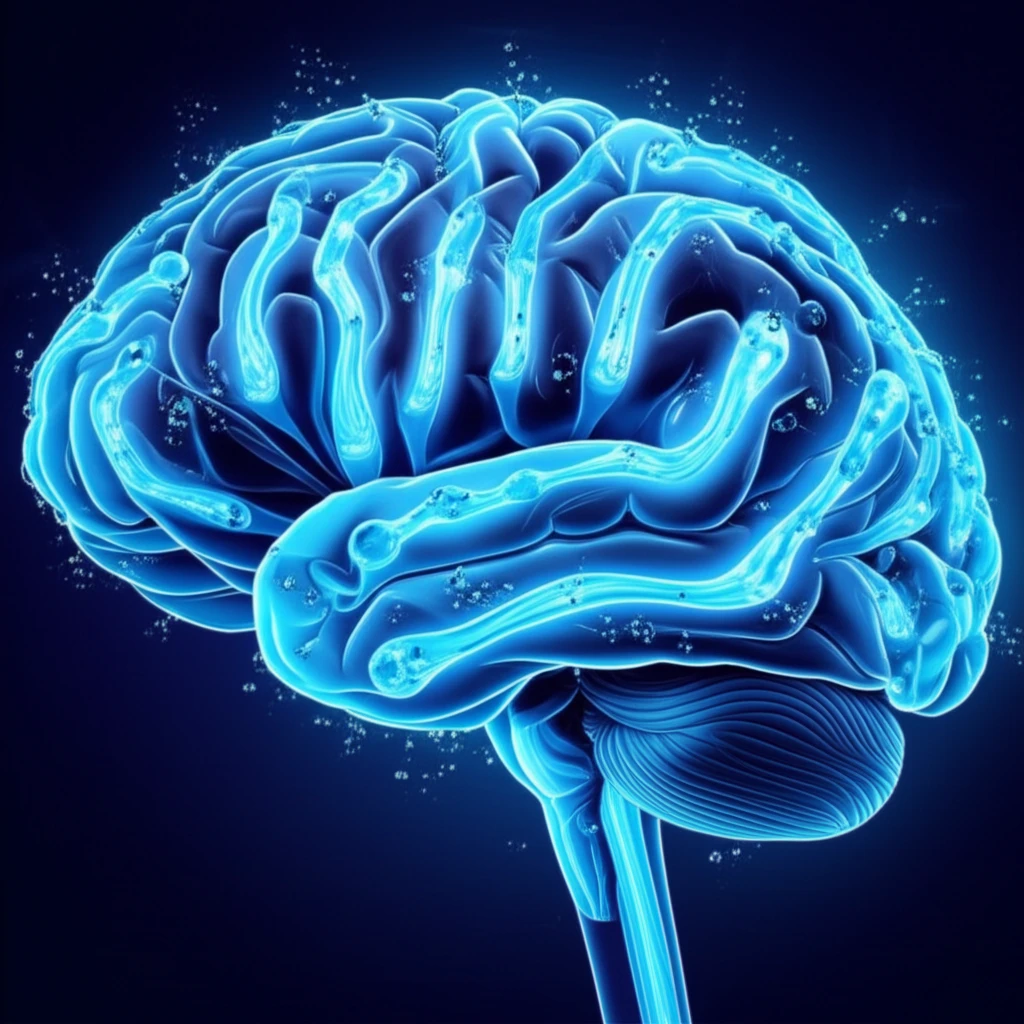
Brain with glowing aquaporins illustrating fluid regulation after traumatic injury.

Unlocking the Brain's Response: How Aquaporin 9 Could Revolutionize TBI Treatment

"New research sheds light on the critical role of Aquaporin 9 in managing brain swelling and energy balance after traumatic brain injury, offering potential avenues for innovative therapies."


Traumatic brain injury (TBI) remains a leading cause of death and disability, particularly among younger adults. The cascade of events following a TBI—including energy metabolism disturbances, ionic imbalances, and water homeostasis disruptions—presents significant challenges for effective treatment.

Recent studies have focused on the role of aquaporins (AQPs), a family of water channel proteins, in managing brain edema and maintaining neuronal function. Among these, Aquaporin 9 (AQP9) has garnered attention for its unique ability to transport water, glycerol, and lactate—key players in brain homeostasis and energy metabolism.

A new study investigates the expression and function of AQP9 in a rat model of severe TBI, revealing its dynamic role in both clearing excess fluid in the early stages and potentially contributing to cellular edema in later stages. These findings offer valuable insights into the complex mechanisms underlying TBI and highlight AQP9 as a potential therapeutic target.

AQP9: A Double-Edged Sword in TBI Recovery

Brain with glowing aquaporins illustrating fluid regulation after traumatic injury.

The study employed a comprehensive approach to assess the role of AQP9 after severe TBI in rats. Researchers measured brain water content (BWC), assessed blood-brain barrier (BBB) integrity using Evans blue staining, and evaluated tissue damage with tetrazolium chloride staining. They also used immunohistochemistry, immunofluorescence, Western blot, and real-time PCR to analyze AQP9 expression at various time points after injury.

The results revealed a complex picture of AQP9's involvement in TBI:

  • Early Stage (up to 12 hours): Brain water content increased significantly, indicating edema formation. AQP9 expression also increased, suggesting it was helping to clear excess water.
  • BBB Disruption: The blood-brain barrier was severely compromised in the early stages, allowing blood components to leak into the brain tissue.
  • Later Stage (24-72 hours): Brain ischemia worsened, and AQP9 expression continued to rise. However, in this phase, AQP9-positive astrocytes were widespread, potentially contributing to cellular edema by facilitating lactate transport into neurons.
  • Neuronal AQP9: AQP9 was also detected in neurons, suggesting a role in neuronal energy balance after TBI.
These findings indicate that AQP9 plays a dual role in TBI. Initially, it may help clear excess water and metabolic byproducts like lactate and glycerol, reducing swelling. However, in later stages, its presence in astrocytes and neurons might exacerbate cellular edema and contribute to further damage.

Future Directions: Targeting AQP9 for TBI Therapy

This study provides valuable insights into the dynamic role of AQP9 in TBI and suggests that targeting this water channel protein could offer new therapeutic strategies. However, the complex and seemingly contradictory roles of AQP9 necessitate a nuanced approach.

Future research should focus on:

<ul><li><b>Developing selective AQP9 inhibitors:</b> To prevent the exacerbation of cellular edema in the later stages of TBI.</li><li><b>Enhancing AQP9 activity in the early stages:</b> To promote fluid clearance and reduce initial swelling.</li><li><b>Investigating the role of AQP9 in neuronal energy metabolism:</b> To better understand how it affects neuronal survival and recovery.</li></ul> <br>By unraveling the precise mechanisms of AQP9 action in TBI, scientists can pave the way for targeted therapies that improve patient outcomes and reduce the long-term consequences of this devastating injury.

About this Article -

This article was crafted using a human-AI hybrid and collaborative approach. AI assisted our team with initial drafting, research insights, identifying key questions, and image generation. Our human editors guided topic selection, defined the angle, structured the content, ensured factual accuracy and relevance, refined the tone, and conducted thorough editing to deliver helpful, high-quality information.See our About page for more information.

This article is based on research published under:

DOI-LINK: 10.1590/s0004-282x2012000300012, Alternate LINK

Title: Aquaporin 9 In Rat Brain After Severe Traumatic Brain Injury

Subject: Neurology

Journal: Arquivos de Neuro-Psiquiatria

Publisher: FapUNIFESP (SciELO)

Authors: Hui Liu, Mei Yang, Guo-Ping Qiu, Fei Zhuo, Wei-Hua Yu, Shan-Quan Sun, Yun Xiu

Published: 2012-03-01

Everything You Need To Know

1

What role do aquaporins play after a traumatic brain injury?

Following a traumatic brain injury (TBI), disruptions in energy metabolism, ionic balance, and water levels occur. Aquaporins, particularly Aquaporin 9 (AQP9), play a role in managing brain swelling and maintaining neuronal function after TBI. AQP9 uniquely transports water, glycerol, and lactate, which are crucial for brain homeostasis and energy metabolism.

2

Is Aquaporin 9 always beneficial after a traumatic brain injury, or can it have negative effects?

During the early stages of TBI, Aquaporin 9 (AQP9) appears to help clear excess water, thus reducing swelling. However, in later stages (24-72 hours), AQP9, particularly in astrocytes, may worsen cellular edema by facilitating lactate transport into neurons. This suggests a dual role where AQP9 is initially beneficial but later potentially harmful.

3

What methods were used to assess the role of Aquaporin 9 after a traumatic brain injury?

The study used a rat model of severe traumatic brain injury (TBI) to investigate Aquaporin 9 (AQP9). Researchers measured brain water content (BWC), assessed blood-brain barrier (BBB) integrity using Evans blue staining, and evaluated tissue damage. They also analyzed AQP9 expression using immunohistochemistry, immunofluorescence, Western blot, and real-time PCR.

4

How does the disruption of the blood-brain barrier relate to Aquaporin 9 after a traumatic brain injury?

The blood-brain barrier (BBB) is severely compromised after a traumatic brain injury (TBI), allowing blood components to leak into the brain tissue. At the same time, Aquaporin 9's (AQP9) expression increases to help clear the excess water. As the BBB breaks down, this disrupts the tightly controlled environment necessary for optimal brain function and recovery, complicating the management of edema and further impacting neuronal health.

5

Given Aquaporin 9's complex role, how might it be targeted for therapeutic intervention in traumatic brain injury?

The research indicates Aquaporin 9 (AQP9) could be a therapeutic target for treating traumatic brain injury (TBI). However, because of its dual roles, a nuanced therapeutic approach is needed. Strategies might focus on modulating AQP9 activity to maximize its beneficial effects during the early phase of TBI while minimizing its potential to exacerbate edema in later stages. This might involve developing drugs that selectively inhibit AQP9 in specific cell types or at certain time points after injury.

Newsletter Subscribe

Subscribe to get the latest articles and insights directly in your inbox.