
Unlocking the Brain's Code: Can Analyzing Speech Patterns Predict Stuttering?

"New Research Explores How Brainstem Responses to Speech Could Offer Early Insights and Improved Understanding of Developmental Stuttering"
Stuttering, also known as stammering, is a speech disorder that affects millions worldwide. It's characterized by disruptions in the flow of speech, such as repetitions of sounds, syllables, or words, prolongations of sounds, and blocks, where speech is momentarily stopped. These disfluencies can impact communication and self-esteem, leading to social and emotional challenges.
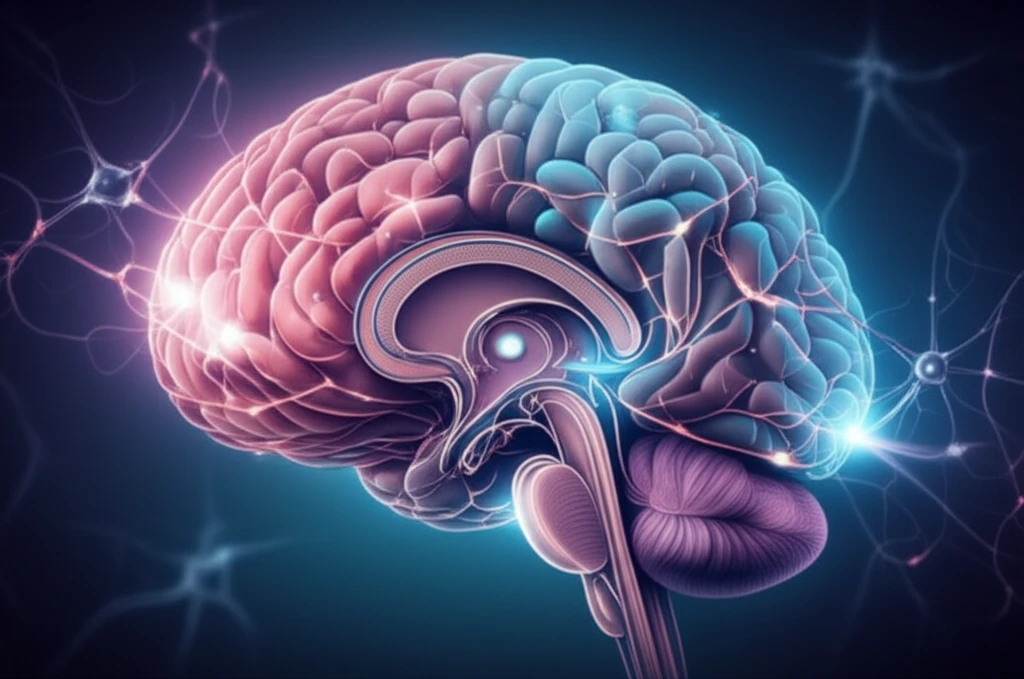
While the exact cause of stuttering isn't fully understood, research suggests a combination of genetic, neurological, and developmental factors play a role. Brain imaging studies have revealed differences in brain structure and function between people who stutter and those who don't, particularly in areas involved in speech production, auditory processing, and motor control.
Now, a new study is diving deep into the brain's response to speech sounds in people with persistent developmental stuttering (PDS). By using a technique called visibility graph analysis (VG) on speech-evoked auditory brainstem responses (s-ABR), researchers are hoping to uncover subtle patterns that could help us better understand and potentially predict stuttering.
What is Visibility Graph Analysis (VG) and How Can It Help?
Visibility Graph Analysis (VG) is a method used to translate data into a network or graph. Imagine each data point in a time series as a 'node' in a network. Two nodes are connected if you can draw a straight line between them without crossing any other nodes. This creates a network that reflects the underlying structure of the data.
- Complexity Measurement: VG helps to quantify the complexity of the brain's response. More complex responses might indicate differences in how the brain processes speech in people who stutter.
- Pattern Recognition: VG can reveal patterns that are not easily visible in the raw s-ABR data. These hidden patterns may be linked to the neural mechanisms underlying stuttering.
- Discrimination: VG can potentially differentiate between the brain responses of people who stutter and those who don't, serving as a diagnostic tool.
The Future of Stuttering Research
This research opens doors to new ways of understanding stuttering, with the VG method showing promise as a tool to help research potential new treatment. By understanding the brain function we can develop more accurate treatments.