
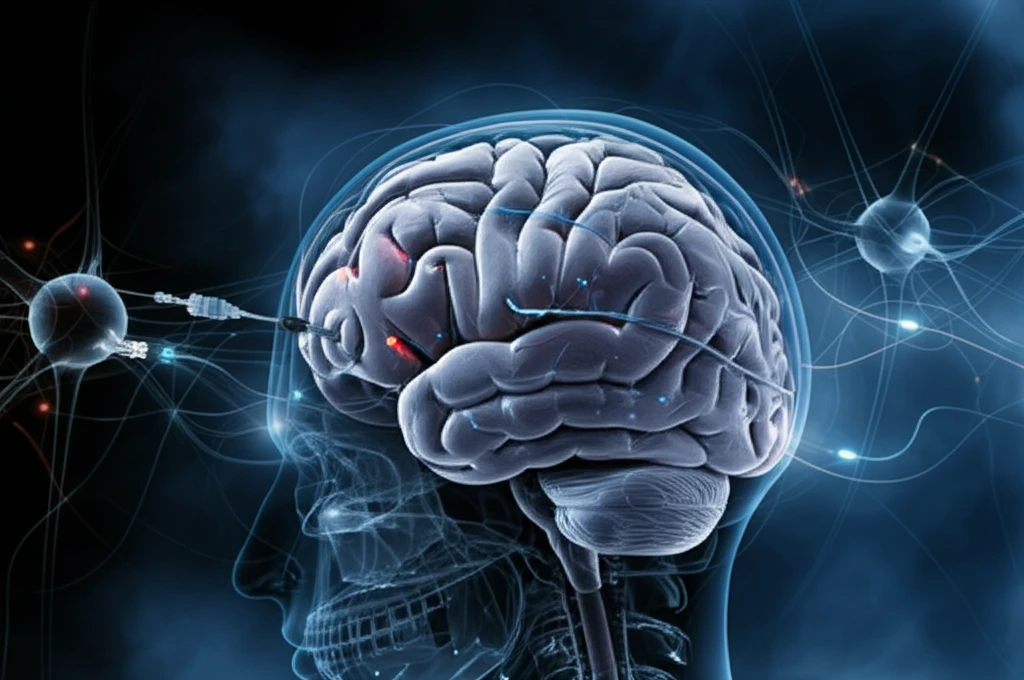
Unlocking the Brain: Innovations in Stroke Treatment and Prevention

"A Deep Dive into Cutting-Edge Research on Intracranial Support, Stenting, and Reocclusion"
Stroke remains a leading cause of disability and mortality worldwide, necessitating continuous advancements in treatment and prevention strategies. Recent research has focused on refining techniques for intracranial support, emergency stenting, and managing the complexities of reocclusion after mechanical thrombectomy. These innovations hold promise for improving patient outcomes and reducing the long-term impact of stroke.
The field of neurointervention is rapidly evolving, with new devices and techniques emerging to address the challenges of acute stroke management. Understanding these advancements is crucial for healthcare professionals, patients, and caregivers alike. This article delves into the latest findings presented at the SNIS 12th Annual Meeting, providing a comprehensive overview of the cutting-edge research shaping the future of stroke care.
From quantifying the stiffness of intracranial support catheters to exploring the efficacy of emergency stenting and addressing the issue of delayed reocclusion, this article aims to break down the complexities of these studies into accessible insights. By examining the methodologies, results, and conclusions of these investigations, we can better appreciate the potential impact on clinical practice and patient well-being.
Uneven Stroke Burden and Data-Driven Awareness
Stroke does not strike communities evenly: remote and regional residents are more likely to carry stroke risk factors and face a 17% higher stroke incidence than those in major cities. Ischemic stroke, the most common type, occurs when blood flow to part of the brain is blocked, making it a central focus of public-health surveillance. Public stroke-prediction datasets are now widely used in data science to model who is at risk and to sharpen awareness efforts. Separate public-health surveillance tracks climate-related cerebrovascular emergencies such as heat stroke, illustrating how stroke monitoring spans multiple conditions.
Restoring Flow Fast: The Cornerstone of Acute Care
The most important part of treating an embolic stroke is restoring blood flow to the brain as quickly as possible, since prompt reperfusion reduces the risk of permanent brain damage and death. Providers rely on two of the most common acute treatments, including tissue plasminogen activator (tPA), a protein-based drug streamed through an IV that dissolves the clot and was the only FDA-approved stroke treatment when it arrived in 1995. Because these interventions work best when begun early, public health efforts emphasize recognizing the signs of stroke in men and women and seeking emergency care without delay. Emerging adjuncts, such as mesenchymal stem cells for stroke and spinal cord injury recovery, are being explored but are not part of the standard first-line approach.
Foundations of Modern Stroke Science
The foundational understanding that an ischemic stroke occurs when a blocked blood vessel cuts off blood and oxygen to part of the brain remains the cornerstone of diagnosis and treatment. Stroke has long been recognized as one of the world's top killers, and the burden is especially heavy in countries like India, which suffers a leaping burden of the disease. Historical observation also identified higher-risk groups, including women who may suffer stroke during pregnancy or immediately after giving birth, along with risk factors tied to race, ethnicity, and family history. Modern imaging advances, such as automated MRI systems, build directly on these foundations by aiming to speed treatment delivery.
Innovations in Intracranial Support Catheters
One critical aspect of neurointerventional procedures is the use of intracranial support catheters, which facilitate the navigation of microcatheters through the intricate cerebral vasculature. Researchers have sought to quantify the stiffness of these catheters to better understand their impact on the risk of arterial dissection. A study presented at the SNIS 12th Annual Meeting (E-001) focused on quantifying the tip stiffness of various intracranial support catheters, hypothesizing that catheter tip stiffness is a significant factor in the risk of arterial wall damage during navigation.
- Sofia distal access catheter: Least force required to bend.
- 044 DAC, 053 Neuron, 058 Navien, 5MAX: Similar forces required.
- DAC: Most force required among intermediate-sized catheters.
- 070 Neuron: Largest force required overall, almost twice as much to deflect 45 degrees over a 2 cm bend.
New Agents and Expanding Treatment Teams
Recent clinical research has focused on neuroprotective agents given soon after symptom onset: in one study, stroke patients treated intravenously with loberamisal, a novel neuroprotective medication, daily for 10 days and starting within 48 hours of symptoms had better recovery than patients receiving a placebo. In endovascular care, retrospective reviews of consecutive patients treated from mid-2012 through 2020 have examined clinical outcomes when acute endovascular stroke treatment is performed by cardiologists. Meanwhile, ongoing research into stroke in women continues to examine sex-specific causes, risk factors, and warning signs, as well as lifestyle changes that can reduce risk. Health systems in several countries report integrating these newer treatments and a strong research-and-development focus into routine stroke care.
When Stroke Care Fails: Misdiagnosis and Delay
A recurring failure in stroke care is delay: because a stroke interrupts blood flow and deprives brain cells of oxygen, fast treatment is critical and every lost minute raises the chance of permanent harm. Reviews of stroke misdiagnosis document how failing to involve a neurologist promptly can delay both diagnosis and treatment decisions. Some patients are also sent home prematurely with unresolved symptoms, only to return later with severe neurological damage. These cases highlight the serious consequences of delayed stroke treatment and the importance of recognizing warning signs quickly.
Comparing Recovery Paths and Care Models
Comparative research on stroke recovery has produced mixed findings: comparison studies of recovery outcomes in ischemic versus hemorrhagic stroke have yielded mixed results, according to a retrospective observational study of consecutive patients of both types. In rehabilitation, comparisons of integrated behavioral physical therapy with traditional physical therapy programs draw on earlier pilot work with EMG biofeedback, which concluded that both the elapsed time since the acute stroke and the severity of residual disability are particularly important factors. Cost and access comparisons have also entered the care market, with some providers advertising stem cell therapy for stroke in Mexico as an affordable option for patients from regions such as California.
Looking Ahead: The Future of Stroke Intervention
The advancements discussed in these abstracts represent a significant step forward in the ongoing effort to improve stroke treatment and outcomes. By continuing to refine our understanding of catheter mechanics, stenting techniques, and the factors contributing to reocclusion, we can pave the way for more effective and personalized interventions. As research progresses, it is essential to translate these findings into clinical practice, ensuring that patients receive the best possible care in the fight against stroke. Further studies should focus on long-term outcomes and the broader application of these techniques across diverse patient populations to validate their efficacy and safety.
Speed, AI, and the Failure Points Before Treatment
Expert commentary converges on a simple message: quick treatment is the strongest driver of improved quality of life after stroke. Emergency medicine leaders increasingly bring artificial intelligence tools into stroke care, including AI-assisted imaging and decision support for frontline physicians. Yet experts also catalogue the failures that can occur before treatment even begins, including strokes that are never recognized and stroke mimics that are incorrectly treated as strokes. Understanding where the decision-making process fails is seen as essential to improving patient outcomes.
Mobile Units, Personalization, and Market Growth
The stroke treatment market is projected to grow through 2030, driven by emerging technologies, new regulatory approvals, and predicted shifts in treatment patterns. Mobile stroke units represent one of the most visible frontier technologies, enabling on-site brain imaging and immediate clinical decision-making so that clot-busting drugs can be administered faster and neurological damage reduced. Advances in medical imaging and telemedicine are expected to extend specialist care into underserved areas. The outlook also points toward personalized medicine and minimally invasive procedures, while growing consumer awareness of stroke symptoms and early intervention fuels demand for rapid diagnostic and treatment solutions.
The Economic and Classification Backbone
Beyond individual patients, stroke imposes a large systemic burden: financial modeling of the economic impact of stroke in Australia in 2020 estimated both direct health system costs and the broader impact of short- and long-term disability on the community. Standardized classification systems, such as the TOAST (Trial of Org 10172 in Acute Stroke Treatment) criteria, which define five pathogenetic types of ischemic stroke, help researchers and systems compare cases and treatments across settings. Together, these economic analyses and classification tools underpin arguments for greater investment in prevention and equitable access to care.
Real-World Results, Patient Stories, and Differences
Real-world evidence shows how new tools change everyday stroke care: an independent evaluation commissioned by the UK government assessed the Brainomix 360 AI platform across five stroke networks over three years and found it transformed stroke treatment. Individual cases also reveal diverse care pathways, such as the reported case of a 62-year-old male stroke patient whose conventional therapy was augmented with a structured natural medicine protocol. Sex differences matter as well, with several studies reporting that treatment and outcomes differ between women and men for general stroke care, possibly due to social factors, age, or true biological differences. These examples underscore that stroke recovery is shaped by technology, treatment choices, and patient characteristics alike.