
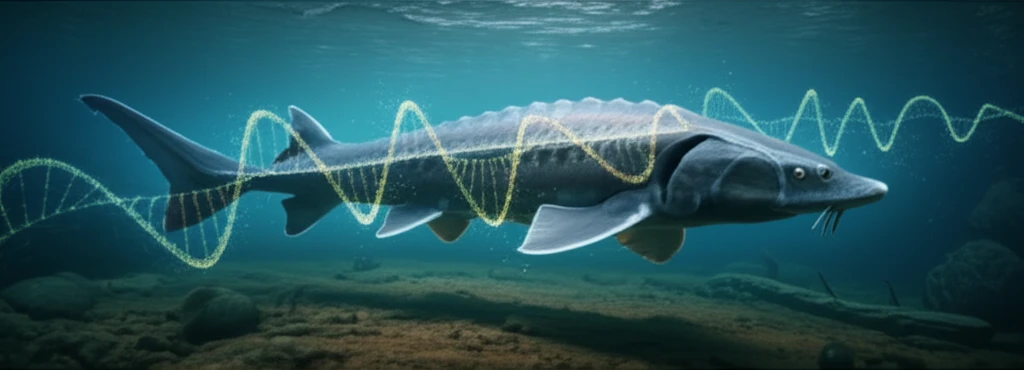
A sturgeon surrounded by DNA strands, representing the role of genetics in conservation.

Unlocking Sturgeon Secrets: How 'Bucky Ball' Genes Shape Fertility

"A deep dive into the genetic factors influencing fertility in Dabry's Sturgeon offers crucial insights for conservation and assisted reproduction efforts."


In the world of genetics, certain genes hold the keys to life's most fundamental processes. Among these, the 'bucky ball' gene—named after its resemblance to the geodesic structure of a buckminsterfullerene molecule—plays a pivotal role in germ cell development and fertility. This gene is particularly crucial in species like the Dabry's sturgeon (Acipenser dabryanus), a critically endangered fish native to the Yangtze River basin.

Recent research has illuminated the precise function of the bucky ball gene, offering promising insights into the reproductive biology of this species. Understanding how this gene operates opens new avenues for conservation efforts, potentially revolutionizing the way we approach species preservation and assisted reproduction.

This article explores the groundbreaking findings about the bucky ball gene in Dabry's sturgeon, revealing its expression patterns, its role in germ cell development, and the implications for sturgeon conservation. Delving into this genetic landscape will provide a fresh perspective on how genetic research can directly impact and improve species preservation strategies.

What does the 'bucky ball' gene do?

A sturgeon surrounded by DNA strands, representing the role of genetics in conservation.

The 'bucky ball' gene, scientifically referred to as 'buc', is essential for the creation of germ plasm, a special material in cells that determines whether they will turn into germ cells (like eggs or sperm). Studies show the gene acts as a master controller during the early stages of embryonic development.

In Dabry's sturgeon, the buc gene exhibits specific expression patterns that shed light on its function: it's highly active in the ovaries, particularly during oogenesis (the egg production process). The gene's activity increases as the ovaries develop. It interacts closely with mitochondria, which are key for cell energy and function.

  • Essential for germ cell formation.
  • Highly active in sturgeon ovaries.
  • Activity increases with ovarian development.
  • Interacts with mitochondria.
In a recent study, researchers delved deeper into the 'bucky ball' gene within Dabry's sturgeon, mapping its presence across various tissues and embryonic stages. Their work pinpointed the gene's critical role during oogenesis, the process of egg cell formation. This gene ensures that the cells properly develop to support future generations.

Implications for Sturgeon Conservation

Understanding the function of the bucky ball gene in Dabry's sturgeon opens up possibilities for improving conservation efforts. With the knowledge of key genetic factors, scientists can develop methods to boost fertility in captive breeding programs. This is essential for an endangered species where every individual counts.

Future research could explore how environmental factors affect the bucky ball gene. This could help understand why sturgeon populations are declining. It may reveal ways to protect these fish from environmental threats.

In the long run, this research is not only important for sturgeon but may also have effects for other species facing extinction. Learning how genes like bucky ball operate in basic reproduction and species health can inform broader conservation strategies.

About this Article -

This article was crafted using a human-AI hybrid and collaborative approach. AI assisted our team with initial drafting, research insights, identifying key questions, and image generation. Our human editors guided topic selection, defined the angle, structured the content, ensured factual accuracy and relevance, refined the tone, and conducted thorough editing to deliver helpful, high-quality information.See our About page for more information.

This article is based on research published under:

DOI-LINK: 10.1016/j.gep.2018.02.003, Alternate LINK

Title: Molecular Characterization, Tissue Distribution, Localization And Mrna Expression Of The Bucky Ball Gene In The Dabry'S Sturgeon ( Acipenser Dabryanus ) During Oogenesis

Subject: Developmental Biology

Journal: Gene Expression Patterns

Publisher: Elsevier BV

Authors: Huan Ye, Huamei Yue, Xiaoge Yang, Chuangju Li, Qiwei Wei

Published: 2018-06-01

Everything You Need To Know

1

What is the main function of the 'bucky ball' gene in Dabry's sturgeon?

The 'bucky ball' gene, also known as 'buc', is crucial for forming germ plasm, which determines if cells become germ cells like eggs or sperm. It acts as a master controller in early embryonic development, especially during oogenesis (egg production) in Dabry's sturgeon. This gene is highly active in the ovaries and interacts closely with mitochondria, essential for cell energy and function, ensuring the cells properly develop to support future generations.

2

Where is the 'bucky ball' gene most active in the Dabry's sturgeon, and why is this significant?

The 'bucky ball' gene is particularly important in the ovaries of the Dabry's sturgeon. Its activity increases as the ovaries develop, especially during oogenesis. This precise timing and location highlight its direct involvement in the egg production process, making it essential for the sturgeon's reproductive success.

3

How can understanding the 'bucky ball' gene help in conserving the Dabry's sturgeon?

Understanding the 'bucky ball' gene can significantly improve conservation efforts for the Dabry's sturgeon by developing methods to boost fertility in captive breeding programs. By understanding these key genetic factors, scientists can improve reproduction rates in a species where every individual counts. This knowledge is crucial for the preservation of this endangered species.

4

Besides its role in germ cell formation, what other cellular processes does the 'bucky ball' gene influence?

The 'bucky ball' gene’s role extends to mitochondrial interaction, essential for providing energy and supporting cellular functions during germ cell development. This aspect is vital because proper mitochondrial function ensures that developing eggs have enough energy to mature and be viable for fertilization. Further research could explore other genes interacting with the 'bucky ball' gene in germ cell development, offering a comprehensive view of fertility.

5

Why is the 'bucky ball' gene named as such, and what does this signify about its role in genetics?

The 'bucky ball' gene, due to its role in germ cell development, is named after its structural similarity to a buckminsterfullerene molecule. This signifies the gene's fundamental and intricate function, highlighting the connection between molecular structure and biological function in genetics. Understanding such genes not only aids species conservation but also advances our broader knowledge of genetic controls in reproduction.

Newsletter Subscribe

Subscribe to get the latest articles and insights directly in your inbox.