
Unlocking Stroke Risk: Are You Overlooking This Key Factor?

"New Study Reveals the Surprising Role of Plaque Ulceration and How It Impacts Your Health"
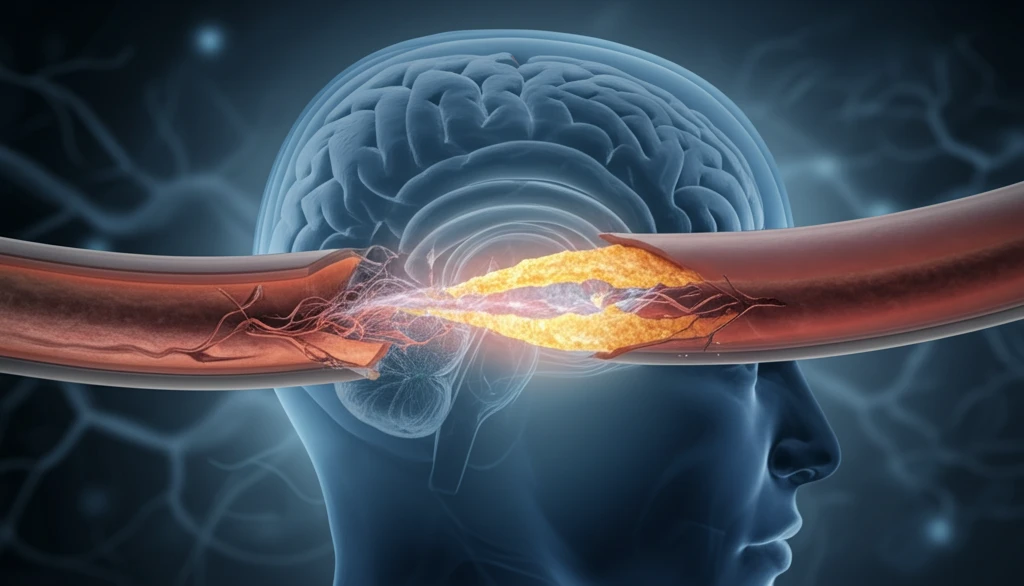
Atherosclerosis, the insidious buildup of plaque in our arteries, is a silent threat to our health. It begins subtly, with endothelial dysfunction leading to intimal thickening, eventually culminating in lipid accumulation and calcification. These plaques, especially the vulnerable ones, can rupture, triggering a cascade of events that lead to thrombus formation and, potentially, a devastating ischemic stroke.
For years, scientists have sought to unravel the intricate mechanisms underlying stroke risk. One area of intense investigation has been the role of von Willebrand Factor (VWF), a plasma glycoprotein crucial for platelet adhesion and thrombus formation. Elevated VWF levels have been linked to an increased risk of ischemic stroke, but the precise interplay between atherosclerotic plaque, hemostatic changes, and stroke remained unclear.
New imaging techniques like Computed Tomography Angiography (CTA) and Magnetic Resonance Imaging (MRI) enable to scrutinize plaque composition, identifying lipid-rich necrotic cores, intraplaque hemorrhage, and calcifications with remarkable precision. Also plaque ulceration, which is an independent predictor of ischemic stroke, can be detected with CTA and MRI as well.
Stroke's Toll: Smoking, Age, and Stress Under the Microscope
Smoking is a leading modifiable contributor to stroke risk: World Stroke Organization data indicate that smoking causes inflammation and damage to the blood vessels, promotes plaque buildup in the arteries, and makes it harder for the heart to pump blood. In the United States, first ischemic stroke incidence reaches 1,049 per 100,000 person-years among people aged 65 to 74, while globally those aged 85 and older account for 12 percent of all deaths. Chronic stress has also been investigated as a contributor to stroke risk, with experts pointing to stress management as part of risk reduction. Clinical research continues to examine how combinations of risk factors such as diabetes and smoking relate to stroke subtypes and mortality.
From Warning Signs to Risk Scoring: How Stroke Risk Is Assessed
Standard stroke-risk assessment relies on recognizing warning signs and managing well-established risk factors. Sudden weakness, confusion, and headache are among the stress-induced stroke symptoms patients should watch for and respond to quickly. Physical activity is part of the accepted prevention toolkit, as reports indicate that exercise, even at relatively low levels, is linked to lower stroke and death risk in people with atrial fibrillation, a group whose stroke rates may be more than five times higher depending on concomitant risk factors. Newer tools, such as the Carotid Plaque-RADS classification system, aim to refine risk assessment beyond what current clinical methods capture.
Building the Risk Tools: From CHADS2 to ABC Scores
Stroke risk stratification has evolved through several foundational tools. The CHA₂DS₂-VASc score was developed to calculate stroke risk for patients with atrial fibrillation and is considered possibly better than the earlier CHADS2 score. Later, the ABC stroke risk score, which combines age, biomarkers, and clinical history, performed better than the clinically based risk score then in use and may improve decision support in atrial fibrillation. Recognition of early warning signs has also shaped the field, as warning signs can in some cases appear hours, or even up to a day or more, before a major stroke, particularly when a transient ischemic attack occurs. Stroke remains a leading cause of death, and experts emphasize that small, consistent daily habits, including nighttime routines, can reduce risk.
The Plaque Ulceration Puzzle
In a recent study published in 'Thrombosis Research', researchers delved deeper into the relationship between plaque ulceration in the carotid artery and VWF levels. Plaque ulceration, characterized by the erosion of the plaque surface, is considered a critical step in the pathophysiology of ischemic stroke. The study aimed to determine whether a direct link exists between plaque ulceration and VWF levels in patients who have experienced a transient ischemic attack (TIA) or ischemic stroke.
- The distributions of VWF levels and calcification volumes in the carotid arteries were normalized by logarithmic transformation.
- Linear regression analysis was used to analyze the relationship between ulceration, calcification volume and cardiovascular risk factors and VWF levels.
- Model I was adjusted for age, sex and ABO blood group. Model II was additionally adjusted for calcification volume, and for cardiovascular risk factors with a p value < 0.05 in model I.
New Frontiers in Stroke Risk Research
Recent research has expanded the understanding of stroke risk in under-recognized populations. In an analysis of data from more than 600,000 women, a history of infertility, pregnancy loss, and stillbirth was linked to a higher later risk of both nonfatal and fatal stroke. Meanwhile, the role of cholesterol treatment remains contested, with some authors, including Kendrick and Ravnskov, documenting that the theory that lowering LDL cholesterol reduces stroke risk does not hold. Research hubs continue to track these and other developments in stroke risk as new evidence emerges.
Where Current Methods Fall Short
Accepted screening methods carry important limitations. Electrocardiograms are key in diagnosing atrial fibrillation, yet they have critical limitations in what they can detect, meaning some stroke risks can be missed. Clinical trials also reveal how risk classification must account for additional factors: the COMPASS stroke trial identified diabetes, renal insufficiency (eGFR <60), heart failure, prior ischemic stroke, and current smoking as additional risk factors in younger patients with coronary or peripheral artery disease, while excluding those at high bleeding risk. Newer classification systems such as Carotid Plaque-RADS are being developed to capture risk that conventional scoring may overlook.
Risk Across Populations: Diet, Blood Type, and Sex
Comparing populations highlights striking differences in stroke risk. Two studies from Taiwan that followed tens of thousands of vegetarians for up to ten years found they had only about half the stroke risk of nonvegetarians, including a 64 percent lower risk of hemorrhagic stroke specifically. Blood type also appears to matter, with research suggesting that people carrying one specific group A blood type face a higher likelihood of stroke before age 60. Sex is another major variable, with reports indicating that 55,000 more women than men suffer a stroke each year.
What This Means for You
While the study did not find a direct link between plaque ulceration and VWF levels, it underscores the complexity of stroke risk and the importance of addressing multiple risk factors. Managing cardiovascular health through lifestyle modifications, such as a healthy diet, regular exercise, and smoking cessation, remains crucial. Consulting with your healthcare provider to assess your individual risk factors and develop a personalized prevention plan is essential. By taking proactive steps, you can significantly reduce your risk of stroke and protect your brain health.
Experts Warn of Rising Stroke Risk in Young Adults
Experts are sounding alarms about the trajectory of stroke risk, especially among younger adults. Stroke cases are rising among young adults due to poor lifestyle habits, stress, and chronic conditions, and experts urge early detection, healthy eating, and stress control to prevent severe outcomes. Ongoing coverage of stroke risk reflects this concern, including reporting on whether intense exercise can increase stroke risk.
AI Heart Tests and Rapid Response on the Horizon
Emerging technology may transform how stroke risk is predicted. A deep learning model called ECG2Stroke, trained on data from more than 200,000 patients, learns to recognize subtle electrical patterns in ECG recordings that may reflect hidden changes in the heart linked to future stroke risk, potentially enabling a 10-second heart test. Timely intervention after warning events is also a frontier, as stroke risk is highest in the first 90 days after a transient ischemic attack, with many strokes occurring within the first two days and treatment within 24 hours able to reduce 90-day stroke risk by up to 80 percent. Stress research adds another dimension, with a compilation of six studies involving 138,782 participants evaluating the link between job stress and future stroke risk.
Hidden Triggers: Drug Use and Sleep Apnea
Broader societal and lifestyle factors complicate stroke prevention. A study suggests that recreational drugs can more than double the risk of stroke, described as the first finding to show how different substance use disorders can impact stroke risk. Sleep apnea has also emerged as a significant stroke risk factor that is often overlooked due to its insidious nature; during breathing pauses, blood oxygen levels plummet, straining the cardiovascular system and contributing to hypertension, a known precursor to stroke.
Communities, Habits, and Lives: Stroke Prevention in Practice
Stroke risk and prevention play out at the community and individual level. In one scenario informed by Stanford's framework, a city health department partners with a Stanford-developed prevention program to reduce stroke risk factors in a diverse urban neighborhood. Alcohol use is a significant real-world factor, as heavy drinking has been linked to strokes occurring about 11 years earlier than in light drinkers, and consuming three drinks daily may significantly accelerate brain damage. A meta-analysis of alcohol consumption and stroke risk further examines how drinking level affects stroke outcomes across studies.