
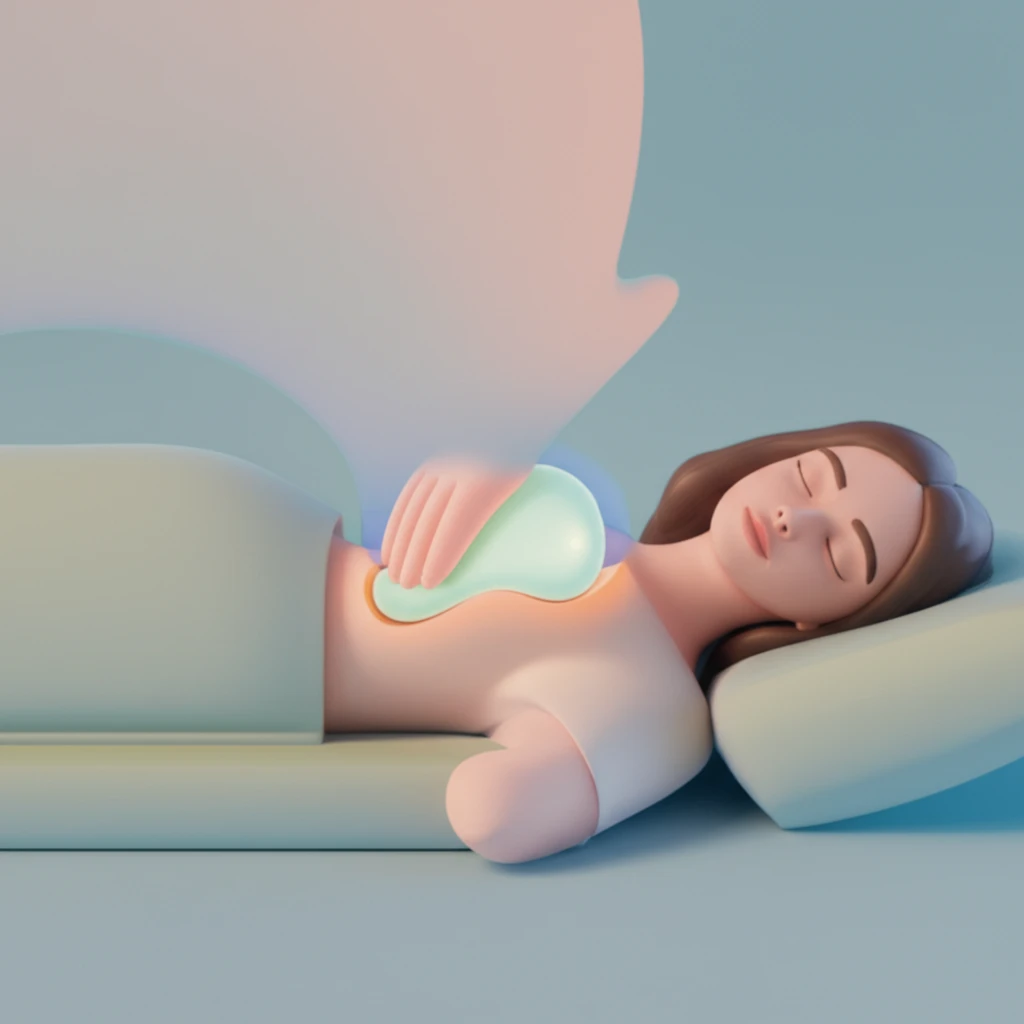
Unlocking Sleep: Can a Simple Device Ease Your Acid Reflux?

"A deep dive into how sleep positioning devices can offer relief from laryngopharyngeal reflux (LPR) and improve your sleep quality."
Laryngopharyngeal reflux (LPR), often called silent reflux, can be a sneaky saboteur of your sleep and overall well-being. Unlike its cousin, gastroesophageal reflux disease (GERD), LPR doesn't always announce itself with classic heartburn. Instead, it can manifest as a persistent cough, sore throat, hoarseness, or even difficulty swallowing. These symptoms often intensify at night, disrupting sleep and leaving you feeling exhausted.
For those battling nighttime LPR, finding effective relief is crucial. Medications like proton pump inhibitors (PPIs) can help, but many people seek alternative or complementary approaches. Enter the sleep positioning device – a simple yet potentially powerful tool designed to keep you elevated and reduce acid reflux while you sleep.
A recent study by Tierney et al. explored the effectiveness of sleep positioning devices in managing LPR symptoms. While the study highlights the promise of this approach, a deeper understanding of LPR and its management is essential. Let's explore how these devices work, who might benefit, and what else you can do to reclaim your nights.
How Does a Sleep Positioning Device Work?
Sleep positioning devices are designed to keep your upper body elevated during sleep, typically at a 30- to 45-degree angle. This elevation helps to prevent stomach acid from flowing back into the esophagus and potentially reaching the larynx and pharynx. By reducing the frequency and duration of acid exposure, these devices can alleviate LPR symptoms and improve sleep quality.
- Reduces Acid Exposure: Elevating the upper body minimizes the backflow of stomach acid.
- Improves Sleep Quality: By reducing nighttime symptoms like coughing and sore throat, it promotes better sleep.
- Non-Invasive: It's a drug-free alternative or complement to traditional medications.
Is a Sleep Positioning Device Right for You?
If you suspect you have LPR, or if you've been diagnosed and are seeking additional relief, a sleep positioning device may be worth considering. However, it's essential to consult with your doctor or a gastroenterologist to get an accurate diagnosis and rule out other potential causes of your symptoms. They can also help you determine if a sleep positioning device is an appropriate and safe option for you.