
Unlocking Relief: Understanding and Treating Thoracolumbar Fascia Pain

"Explore how ultrasound and innovative treatments like ACP injections are revolutionizing the management of lower back pain, offering new hope for those seeking lasting relief."
Lower back pain is a widespread issue, affecting millions of people worldwide. While many cases stem from well-known causes such as muscle strains or disc problems, there are instances where the source of pain remains elusive. One often-overlooked culprit is the thoracolumbar fascia (TLF), a complex network of connective tissue in the lower back. When this fascia becomes strained or injured, it can lead to chronic pain and limited mobility.
The thoracolumbar fascia plays a crucial role in supporting the spine, facilitating movement, and transmitting forces between the upper and lower body. Its intricate structure and connections to various muscles make it a potential source of pain that can be challenging to diagnose. Traditional methods may not always pinpoint TLF issues, leaving patients searching for effective solutions.
Fortunately, advancements in diagnostic techniques and treatment approaches are shedding new light on TLF-related pain. Ultrasound imaging, for example, allows healthcare professionals to visualize the fascia and identify areas of thickening or injury. Furthermore, innovative treatments like autologous conditioned plasma (ACP) injections are showing promise in relieving pain and restoring function.
From Force Transmission to Multimodal Care
The thoracolumbar muscles and fascia have been described as important force transmitters during movement and contributors to stability at the thoracolumbar junction. Dysfunction in these structures has been associated with myofascial pain syndrome and chronic low back pain. An October 2022 study reported that a multimodal chiropractic plan combining spinal manipulation, education, exercise, self-management advice, and myofascial therapies improved pain, disability, and thoracolumbar fascia mobility in women with chronic low back pain.
What is Thoracolumbar Fascia and Why Does It Cause Pain?
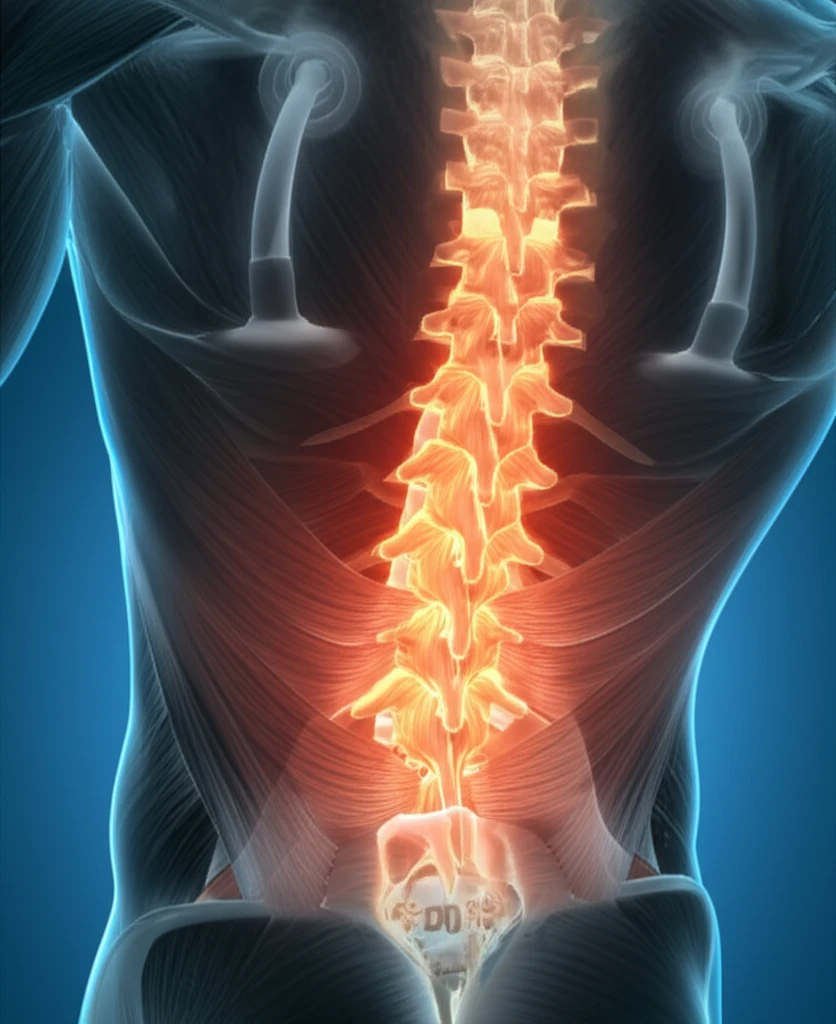
The thoracolumbar fascia is a large, diamond-shaped area of connective tissue located in the lower back. It extends from the sacrum (the bony structure at the base of the spine) to the thoracic region (mid-back) and wraps around the sides of the body. The TLF consists of multiple layers that connect to various muscles, including the latissimus dorsi, gluteus maximus, and transverse abdominis.
- Sudden injuries: Falls, accidents, or heavy lifting can cause acute trauma to the TLF.
- Repetitive movements: Activities like running, bending, or twisting can place excessive stress on the fascia over time.
- Poor posture: Slouching or prolonged sitting can lead to muscle imbalances and strain on the TLF.
- Muscle imbalances: Weakness or tightness in surrounding muscles can alter the way forces are distributed through the TLF.
- Arthritis or other spinal conditions: These conditions can indirectly affect the TLF by altering spinal mechanics.
Emerging Imaging and Diagnostic Evidence
A study published on August 17, 2026, reported that people with low back pain displayed increased lumbar fascia stiffness, thickness, and echogenicity compared with asymptomatic controls. Shear mobility was altered, although the direction of the effect was inconsistent. A separate systematic review published on August 26, 2026, examined quantitative ultrasound biomarkers of thoracolumbar fascia stiffness, shear strain, morphology, and microstructure in relation to nonspecific low back pain. The findings suggest that fascia properties may have diagnostic and treatment relevance, but prospective trials are still needed to establish causal contributions.
Association Is Not Yet Causation
Research has found pronounced thoracolumbar fascia thickening and attenuation of the lumbar multifidus muscle in people with chronic low back pain compared with asymptomatic counterparts. Another study reported reduced differential movement, or shear strain, between thoracolumbar fascia layers in people with chronic low back pain. However, one regression analysis did not identify significant demographic or clinical predictors for the presence of low back pain. Persistent pain after lumbar spine surgery is also commonly attributed to recurrent stenosis, neural compression, or degenerative changes, while postsurgical thoracolumbar fascia abnormalities have been reported less often.
Ultrasound Comparisons Across Pain Groups
A January 2025 study used ultrasound elastography to compare thoracolumbar fascia shear strain in 32 patients with nonspecific low back pain and 32 pain-free individuals. The researchers observed distinct differences in shear strain between the two groups. Separately, research has examined thoracolumbar fascia microstructure in individuals with and without nonspecific low back pain using homodyned K-distribution statistical modeling of ultrasound radiofrequency signals. Together, these studies frame ultrasound-based measurements as tools for comparing fascia characteristics across pain-status groups.
The Future of Thoracolumbar Fascia Pain Treatment
The growing understanding of thoracolumbar fascia pain and the development of innovative diagnostic and treatment approaches offer new hope for individuals seeking relief from chronic lower back pain. As research continues, we can expect to see even more targeted and effective strategies for managing TLF-related issues, ultimately improving the quality of life for those affected.
A Multilayered Structure With Systemic Importance
The thoracolumbar fascia is a complex, multilayered connective tissue located in the lower back. It extends from the thoracic spine to the sacrum. The fascia contributes to biomechanical spinal stability and movement, including forward flexion, which helps explain why injury or dysfunction in this region can have broader mechanical implications.
Investigating Immediate Physical Effects
Low back pain can influence spine-shape parameters, including leg length and kyphotic or lordotic angles. Existing evidence also indicates that the thoracolumbar fascia may play a role in these conditions. A study examined the immediate effects of myofascial release on the thoracolumbar fascia and related spine-shape parameters, providing a focused way to investigate short-term physical changes associated with treatment.