
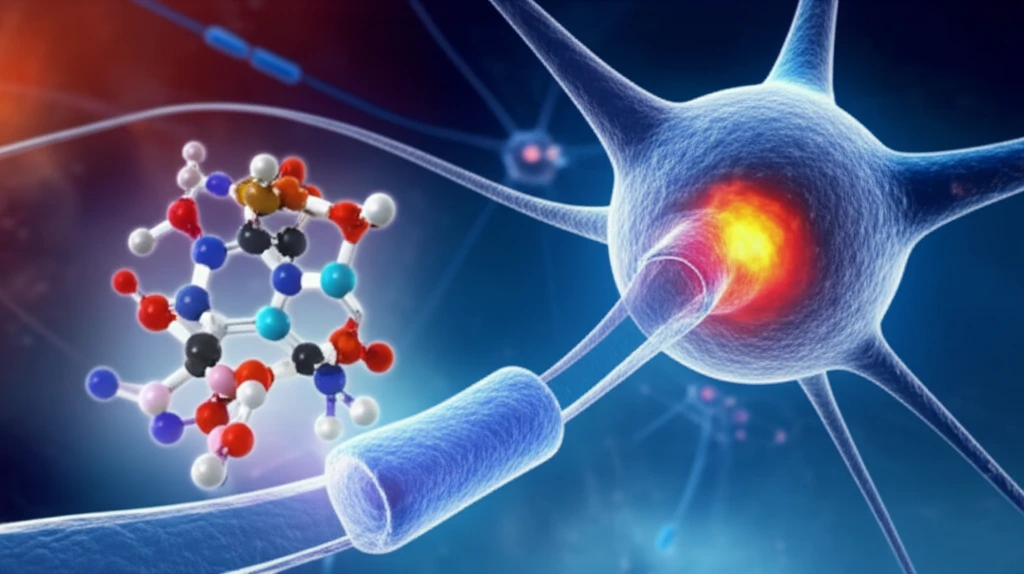
Unlocking Pain Relief: How 5-BDBD Could Revolutionize Treatment for Chronic Conditions

"A deep dive into the potential of 5-BDBD as a targeted P2X4 receptor antagonist, offering new hope for managing chronic pain and neuroinflammation."
Chronic pain and neurological disorders affect millions worldwide, significantly impacting quality of life. Current treatments often provide incomplete relief and come with undesirable side effects, highlighting the urgent need for more effective and targeted therapies. The search for innovative solutions has led researchers to explore the role of purinergic P2X receptors, particularly the P2X4 receptor, in pain pathways and neuroinflammation.
P2X4 receptors are ATP-gated ion channels found in various cells, including those in the nervous system and immune system. When activated, these receptors play a critical role in transmitting pain signals and mediating inflammatory responses. Scientists have been particularly interested in developing selective antagonists—drugs that can block the action of P2X4 receptors—as a way to precisely target and alleviate these conditions.
One such promising compound is 5-(3-bromophenyl)-1,3-dihydro-2H-benzofuro[3,2-e]-1,4-diazepin-2-one, commonly known as 5-BDBD. Recent studies have shed light on its potential as a potent and selective P2X4 receptor antagonist. This article delves into the research surrounding 5-BDBD, exploring its mechanisms of action, its specificity compared to other P2X receptor subtypes, and its potential applications in treating chronic pain and neurological disorders.
Chronic Pain: A Widespread Health Challenge
Chronic pain represents one of the most significant healthcare challenges globally, affecting millions of individuals and substantially impacting quality of life, productivity, and healthcare systems. While precise prevalence figures vary across regions and studies, the burden of chronic pain is widely recognized as substantial and growing. Current treatment approaches often fall short of providing adequate relief, highlighting the urgent need for innovative therapeutic strategies that address the underlying mechanisms of pain rather than merely masking symptoms.
P2X4 Receptors: An Established Target in Pain Research
The P2X4 receptor (P2X4R) has emerged as a significant therapeutic target in chronic pain management. Research has established that ATP-gated P2X4R, an ion channel activated by ATP, plays an important role in nervous system information transmission and pain formation. Multiple studies confirm that P2X4R is dependent on ATP ligand-gated ion channel activity, making it a key mediator in chronic pain pathogenesis. Current understanding indicates that targeting this receptor could offer new therapeutic avenues, though translating this research into effective treatments remains an ongoing challenge.
The Evolution of P2X4 Receptor Research
The study of P2X receptors, including P2X4R, has evolved significantly since Geoffrey Burnstock first proposed the roles of ATP and P2 receptors as neurotransmitters. This foundational work established the basis for understanding how ATP-gated channels function in pain signaling. Research has revealed that P2X4 receptors are uniquely expressed on lysosomal compartments and are homotrimeric structures composed of three P2X4 monomers. These nonselective cation channels exhibit high calcium permeability, leading to cell membrane depolarization and activation of various Ca2+-sensitive intracellular processes.
What Makes 5-BDBD a Game-Changer in Pain Management?
5-BDBD stands out due to its ability to selectively target the P2X4 receptor. Unlike broad-spectrum purinergic antagonists, which can affect multiple P2X receptor subtypes and lead to off-target effects, 5-BDBD hones in on P2X4 receptors with remarkable precision. This selectivity is crucial for minimizing side effects and maximizing therapeutic benefits.
- Selectivity: 5-BDBD’s selectivity ensures that it primarily affects P2X4 receptors, reducing the likelihood of unwanted side effects.
- Potency: The compound’s high potency means that even small doses can produce significant therapeutic effects.
- Specificity: By targeting only P2X4 receptors, 5-BDBD can precisely interrupt pain signals and inflammatory responses, offering a more focused treatment approach.
Breakthroughs in P2X4 Receptor Inhibition
Recent research has identified promising approaches to inhibiting the P2X4 receptor, a key protein linked to chronic pain, inflammation, and certain cancers. Scientists at the University of Bonn and University Hospital Bonn have discovered a mechanism that can inhibit this receptor, as published in Nature Communications. This discovery opens pathways for developing new drugs targeting P2X4R. Additionally, humanized anti-P2X4 scFv has shown ability to reduce ATP-induced P2X4 currents, representing another potential therapeutic approach.
Challenges in P2X4 Receptor Drug Development
Despite the promising nature of P2X4 receptor research, significant challenges remain in translating laboratory findings into effective treatments. The complexity of pain mechanisms means that targeting a single receptor may not address all aspects of chronic pain conditions. Additionally, drug development for CNS targets faces inherent difficulties including blood-brain barrier penetration, potential side effects, and the need for extensive clinical validation. While P2X4R antagonists show promise in preclinical models, their ultimate efficacy and safety in human patients requires further investigation.
P2X4R Targeting: Context Within Pain Therapeutics
Targeting P2X4 receptors represents one approach among many in the landscape of chronic pain therapeutics. While traditional pain medications often focus on opioid receptors or cyclooxygenase pathways, P2X4R antagonists offer a novel mechanism that addresses neuroinflammatory components of pain. However, it's important to recognize that different pain conditions may respond better to different therapeutic approaches, and the optimal treatment strategy likely depends on the specific underlying pathology. The relative effectiveness of P2X4R-targeting compared to other approaches remains to be fully established through clinical research.
The Future of 5-BDBD: Potential Applications and Further Research
5-BDBD represents a significant step forward in the development of targeted pain therapies. Its selectivity and potency make it a promising candidate for treating chronic pain conditions, neurological disorders, and inflammatory diseases. Further research is needed to fully explore its potential, including clinical trials to evaluate its safety and efficacy in humans. As scientists continue to unravel the complexities of P2X4 receptor signaling, 5-BDBD may well pave the way for a new era of personalized and effective pain management.
The Therapeutic Promise of P2X4 Receptor Antagonism
The convergence of research findings establishes P2X4 receptors as a validated target for chronic pain intervention. Studies consistently demonstrate that ATP and P2X4R play important roles in pain pathogenesis, with P2X4R functioning as an ATP ligand-gated ion channel receptor critical for nervous system information transmission. The selective P2X4 receptor antagonist NP-1815-PX has shown efficacy in preclinical chronic pain models, suggesting that this approach holds genuine therapeutic potential. Expert analysis indicates that while challenges remain, the mechanistic understanding of P2X4R's role in pain signaling provides a solid foundation for drug development.
5-BDBD: A Revolutionary Approach to Pain Management
Scientists are expressing excitement about 5-BDBD, a compound that targets the P2X4 receptor found in the brain and central nervous system. This receptor plays a key role in inflammation and pain signaling, making it an attractive therapeutic target. Research suggests that 5-BDBD has the potential to revolutionize chronic pain treatment by specifically targeting this receptor mechanism. If successful in clinical trials, this approach could provide a new class of pain relief medications that address the underlying neuroinflammatory processes rather than simply masking pain symptoms.
P2X4R in the Landscape of Neuroinflammatory Pain
ATP acting via P2 purinergic receptors is recognized as a mediator of inflammatory and neuropathic pain, with increasing evidence pointing to P2X4R as a key locus through which spinal microglia and peripheral immune cells influence pain signaling. This receptor represents a convergence point for neuroinflammatory processes that contribute to chronic pain conditions. Understanding P2X4R's broader role in neuroinflammation provides context for why targeting this receptor might address fundamental mechanisms of chronic pain rather than just symptoms. However, the complexity of neuroinflammatory pathways means that therapeutic interventions must be carefully designed to avoid disrupting beneficial immune responses.
Potential Patient Impact and Accessibility Considerations
For the millions of individuals suffering from chronic pain, emerging treatments targeting P2X4 receptors offer hope for more effective relief with potentially fewer side effects than current options. If 5-BDBD or similar compounds prove successful in clinical trials, they could significantly improve quality of life for patients who have not responded adequately to existing therapies. However, the path from laboratory research to accessible treatments involves navigating complex regulatory pathways, manufacturing challenges, and ensuring equitable access. The ultimate impact will depend not only on scientific success but also on healthcare system implementation and affordability for patients who need these treatments most.