
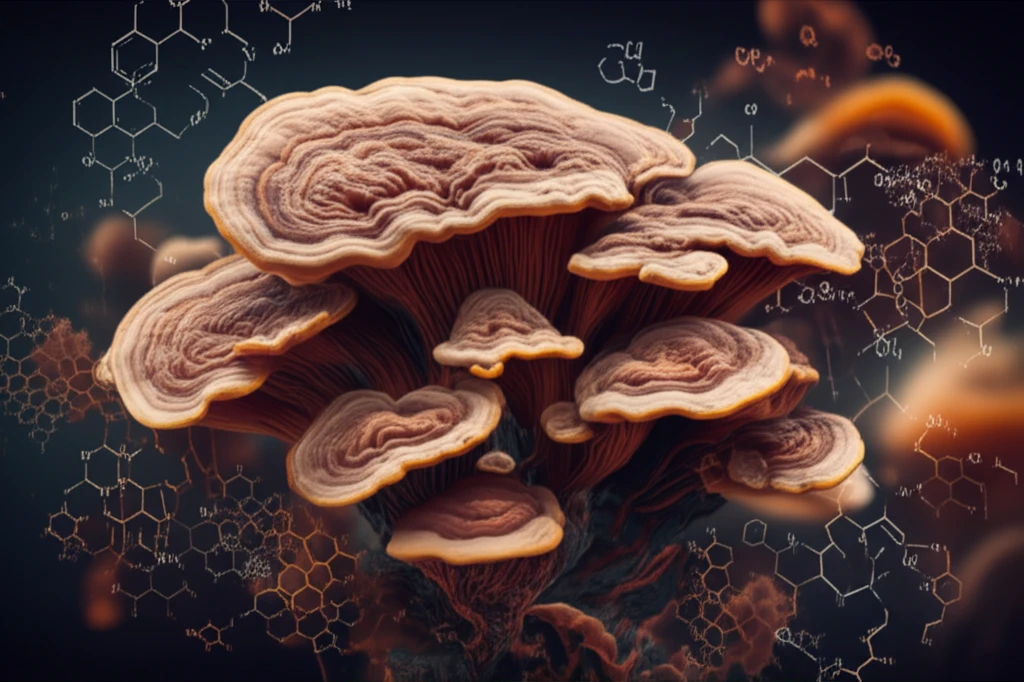
Surreal illustration of Reishi mushroom polysaccharides.

Unlocking Reishi's Potential: A Guide to Extracting and Understanding Polysaccharides

"Maximize the medicinal benefits of Ganoderma lucidum with optimized extraction techniques and insightful characterization."


In recent years, the production of polysaccharides through submerged fermentation has garnered significant attention, driven by the escalating demand for these compounds in pharmaceuticals and health supplements. This article delves into the optimization of polysaccharide extraction from the medicinal mushroom Ganoderma lucidum, commonly known as Reishi. We'll explore how response surface methodology (RSM) can be employed to fine-tune the extraction process and maximize yield.

Ganoderma lucidum has a rich history in traditional Chinese and Japanese medicine, where it's been used to prevent and treat a variety of ailments, including cancer, liver disease, arthritis, and hypertension. These therapeutic effects are largely attributed to its key components, primarily polysaccharides, along with proteins, peptides, and triterpenes. Identifying the optimal methods to extract these valuable polysaccharides is crucial for harnessing the full potential of this medicinal mushroom.

This exploration will also cover the use of Fourier transform infrared spectroscopy (FTIR) to analyze the chemical composition of G. lucidum mycelium, providing insights into the presence and characteristics of its polysaccharides. Understanding these elements is crucial for unlocking the full medicinal potential of Reishi mushrooms.

Optimizing Extraction: Finding the Sweet Spot

Surreal illustration of Reishi mushroom polysaccharides.

The research employed a central composite rotatable design (CCRD) to pinpoint the optimal conditions for polysaccharide extraction. This statistical approach allowed researchers to systematically vary key factors, including temperature, extraction time, sodium hydroxide (NaOH) concentration, and the ratio of liquid to solid material. By analyzing the effects of these variables, they could develop a model to predict and maximize polysaccharide yield.

The study's findings revealed that the most effective extraction occurred under specific conditions:

  • Temperature: 100°C
  • Extraction Time: 3 hours
  • NaOH Concentration: 6%
  • Liquid-to-Solid Ratio: 20 ml
Under these optimized conditions, the experimental polysaccharide production reached 4.96%, validating the accuracy and reliability of the RSM model. This optimized approach paves the way for more efficient and cost-effective extraction of these valuable compounds.

FTIR Analysis: Unveiling the Chemical Fingerprint

Fourier transform infrared spectroscopy (FTIR) played a crucial role in characterizing the polysaccharides extracted from G. lucidum. This technique allowed researchers to identify the specific vibrational spectra of the mycelium and fruit body, providing insights into their chemical composition.

The analysis revealed key absorption bands in the range of 1200 to 800 cm⁻¹, indicative of the presence of polysaccharides. These findings further confirm the presence of these beneficial compounds within the Reishi mushroom.

By optimizing extraction techniques and employing FTIR analysis, we can gain a deeper understanding of the valuable polysaccharides found in Ganoderma lucidum, paving the way for more effective utilization of this powerful medicinal mushroom in health and wellness applications.

About this Article -

This article was crafted using a human-AI hybrid and collaborative approach. AI assisted our team with initial drafting, research insights, identifying key questions, and image generation. Our human editors guided topic selection, defined the angle, structured the content, ensured factual accuracy and relevance, refined the tone, and conducted thorough editing to deliver helpful, high-quality information.See our About page for more information.

This article is based on research published under:

DOI-LINK: 10.5897/jmpr2013.5115, Alternate LINK

Title: Optimization Of Extraction And Characterization Of Polysaccharides From Medicinal Mushroom Ganoderma Lucidum Using Response Surface Methodology

Subject: Complementary and alternative medicine

Journal: Journal of Medicinal Plants Research

Publisher: Academic Journals

Authors: Sood Gunjan, Sharma Shivani, Kapoor S, K Khanna P

Published: 2013-08-17

Everything You Need To Know

1

Why are polysaccharides from Ganoderma lucidum so important?

The polysaccharides within Ganoderma lucidum, also known as Reishi mushrooms, are the primary focus because they are key components responsible for the mushroom's therapeutic effects. These polysaccharides, along with proteins, peptides, and triterpenes, are believed to contribute to Reishi's ability to prevent and treat ailments such as cancer, liver disease, arthritis, and hypertension. Understanding and optimizing the extraction of these polysaccharides is crucial for maximizing the medicinal benefits of Reishi.

2

What is Response Surface Methodology (RSM) and how is it used?

Response surface methodology (RSM) is a statistical approach used to optimize the extraction process of polysaccharides from Ganoderma lucidum. It allows researchers to systematically vary factors like temperature, extraction time, sodium hydroxide (NaOH) concentration, and liquid-to-solid ratio. By analyzing the effects of these variables, a model is developed to predict and maximize the yield of polysaccharides, leading to more efficient and cost-effective extraction methods.

3

What are the best conditions for extracting polysaccharides from Ganoderma lucidum?

The optimal conditions for polysaccharide extraction from Ganoderma lucidum, as determined by the study, are: a temperature of 100°C, an extraction time of 3 hours, a sodium hydroxide (NaOH) concentration of 6%, and a liquid-to-solid ratio of 20 ml. These parameters were identified using Response Surface Methodology (RSM). Under these specific conditions, the experimental polysaccharide production reached 4.96%, validating the accuracy and reliability of the RSM model.

4

How is Fourier transform infrared spectroscopy (FTIR) used in the context of Reishi mushrooms?

Fourier transform infrared spectroscopy (FTIR) is used to analyze the chemical composition of Ganoderma lucidum, specifically to understand the presence and characteristics of its polysaccharides. This technique provides insights into the vibrational spectra of the mycelium and fruit body, which helps researchers identify the chemical structure of the extracted polysaccharides. This analysis is crucial for understanding and harnessing the full medicinal potential of Reishi mushrooms.

5

What is the significance of the study's findings on polysaccharide extraction?

The study's findings are significant because they demonstrate how to optimize the extraction of polysaccharides from Ganoderma lucidum. By employing Response Surface Methodology (RSM) to determine the best conditions for extraction, the research provides a roadmap for others to efficiently obtain these valuable compounds. This optimized approach is crucial because it is directly linked to the medicinal benefits and therapeutic potential of Reishi mushrooms, and it is important for the pharmaceutical and health supplement industries.

Newsletter Subscribe

Subscribe to get the latest articles and insights directly in your inbox.