
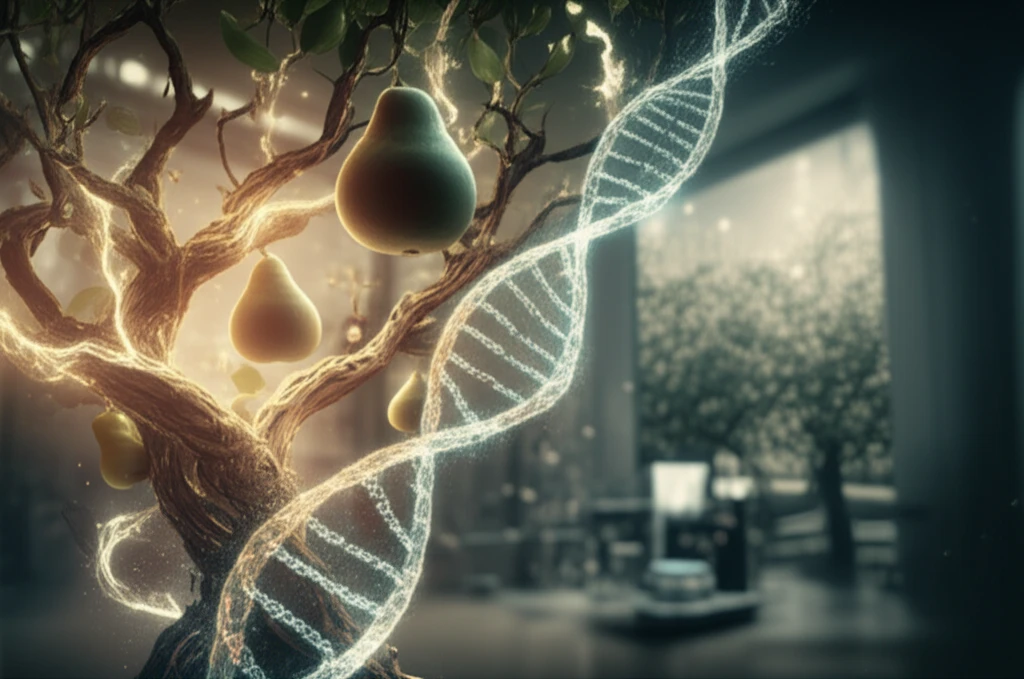
A surreal illustration of pear tree branches interwoven with DNA, representing genetic research for sweeter fruit.

Unlocking Pear Sweetness: How Gene Research Could Revolutionize Fruit Quality

"Dive into the groundbreaking study that explores how manipulating hexokinase genes can lead to sweeter, more desirable pears, transforming the future of fruit cultivation."


Imagine biting into a pear that's bursting with the perfect level of sweetness. For fruit growers and consumers alike, achieving this ideal sweetness is a constant pursuit. The sugar content of fruit isn't just about taste; it's a key factor influencing consumer preference, market value, and overall fruit quality. Recent research has shed light on the complex genetic mechanisms that govern sugar accumulation in pears, offering exciting possibilities for enhancing fruit sweetness through targeted breeding and cultivation techniques.

At the heart of this research lies a family of genes known as hexokinases (HXKs). These genes encode enzymes that play a crucial role in the first step of glycolysis, the metabolic pathway responsible for converting sugars into energy. Understanding how HXK genes function and how their expression varies can provide valuable insights into how sugar levels are regulated in fruit development.

A groundbreaking study published in "The Journal of Horticultural Science and Biotechnology" delved deep into the hexokinase gene family in pears (Pyrus bretschneideri Rehd.), aiming to unravel the functional divergence of these genes and their impact on fruit sweetness. By examining the genetic makeup of pears and comparing them to other plant species, researchers have identified key HXK genes that appear to play a significant role in sugar accumulation, paving the way for future advancements in fruit quality.

Decoding the Sweetness Code: What the Gene Research Reveals

A surreal illustration of pear tree branches interwoven with DNA, representing genetic research for sweeter fruit.

The study meticulously analyzed the HXK genes in pear trees, comparing them to those in seven other plant species. This comparative approach allowed researchers to identify unique characteristics and patterns specific to pears. The research team identified ten HXK protein sequences in pears and then categorized these sequences into four distinct groups, based on similarities in their structure and function.

This detailed classification revealed that the diversity of HXK genes is driven by two main factors:

  • Duplication Events: Genes get copied, leading to more of them.
  • Motif Structure Variation: Minor changes in gene parts change function.
Further analysis of gene expression patterns, combined with data on sugar content in pears, pinpointed two HXK genes, PbrHXK1 and PbrHXK3, as major players in the accumulation of sorbitol, fructose, and glucose – the key sugars that contribute to pear sweetness. These findings suggest that by manipulating these specific genes, it may be possible to fine-tune the sugar content of pears and create varieties with enhanced sweetness.

A Sweet Future for Pear Cultivation

The identification of PbrHXK1 and PbrHXK3 as key regulators of sugar accumulation opens up exciting possibilities for enhancing pear sweetness and overall fruit quality. Further research focusing on these genes could lead to the development of new pear varieties with improved taste, increased market value, and greater consumer appeal. As our understanding of fruit genetics deepens, we can look forward to a future where science helps us cultivate the perfect, sweet-tasting pear.

About this Article -

This article was crafted using a human-AI hybrid and collaborative approach. AI assisted our team with initial drafting, research insights, identifying key questions, and image generation. Our human editors guided topic selection, defined the angle, structured the content, ensured factual accuracy and relevance, refined the tone, and conducted thorough editing to deliver helpful, high-quality information.See our About page for more information.

This article is based on research published under:

DOI-LINK: 10.1080/14620316.2017.1362961, Alternate LINK

Title: Characterisation Of The Whole-Genome Wide Hexokinase Gene Family Unravels The Functional Divergence In Pear (Pyrus Bretschneideri Rehd.)

Subject: Horticulture

Journal: The Journal of Horticultural Science and Biotechnology

Publisher: Informa UK Limited

Authors: Li’Ang Yu, Jiaming Li, Leiting Li, Yuhua Huang, Xiaolong Li, Xin Qiao, Xing Liu, Jun Wu

Published: 2017-08-24

Everything You Need To Know

1

What are hexokinases (HXKs), and what is their role in the context of this research?

The term "hexokinases" (HXKs) refers to a family of genes that encode enzymes vital for the first step of glycolysis. This metabolic pathway converts sugars into energy. Understanding the function and expression variations of these genes helps researchers understand how sugar levels are regulated in fruit development, directly impacting sweetness. In the context of this research, HXKs are the primary focus, with specific genes like PbrHXK1 and PbrHXK3 identified as key regulators of sugar accumulation in pears.

2

Why is this research on pear sweetness considered important or significant?

The research is important because it focuses on the genetic mechanisms governing sugar accumulation, which is a key factor in consumer preference and market value. By pinpointing specific genes like PbrHXK1 and PbrHXK3, the study opens possibilities for manipulating these genes to enhance sweetness. This manipulation could lead to pear varieties with improved taste and higher market value. It's significant because it provides a scientific basis for targeted breeding and cultivation techniques, ultimately aiming to improve fruit quality.

3

What are the potential implications of this gene research for the future of pears?

The implications of the research are far-reaching. Identifying PbrHXK1 and PbrHXK3 as critical regulators of sugar accumulation suggests that by manipulating these genes, it might be possible to fine-tune the sugar content of pears. This could lead to sweeter, more desirable fruit. Furthermore, this research opens avenues for developing new pear varieties with enhanced taste, increased market value, and greater consumer appeal. This has a direct impact on the future of fruit cultivation, potentially leading to significant changes in the pear industry and consumer experience.

4

How did the researchers classify the HXK genes in pears?

The research team identified ten HXK protein sequences in pears (Pyrus bretschneideri Rehd.) and grouped them into four categories. This classification was based on structural and functional similarities. This detailed analysis revealed that the diversity of HXK genes is driven by two factors: duplication events, where genes are copied leading to more of them, and motif structure variation, which involves minor changes in gene parts that alter their function. This method allowed the researchers to pinpoint the specific HXK genes, PbrHXK1 and PbrHXK3, that play a major role in sugar accumulation.

5

Why are PbrHXK1 and PbrHXK3 significant in relation to pear sweetness?

PbrHXK1 and PbrHXK3 are key genes because they have been identified as major players in the accumulation of sorbitol, fructose, and glucose – the main sugars contributing to pear sweetness. This finding provides a specific target for genetic manipulation to enhance the sweetness of pears. Further research focusing on these two genes is crucial for developing new varieties with improved taste and market value. The identification of these genes is a critical step towards cultivating sweeter, more appealing pears.

Newsletter Subscribe

Subscribe to get the latest articles and insights directly in your inbox.