
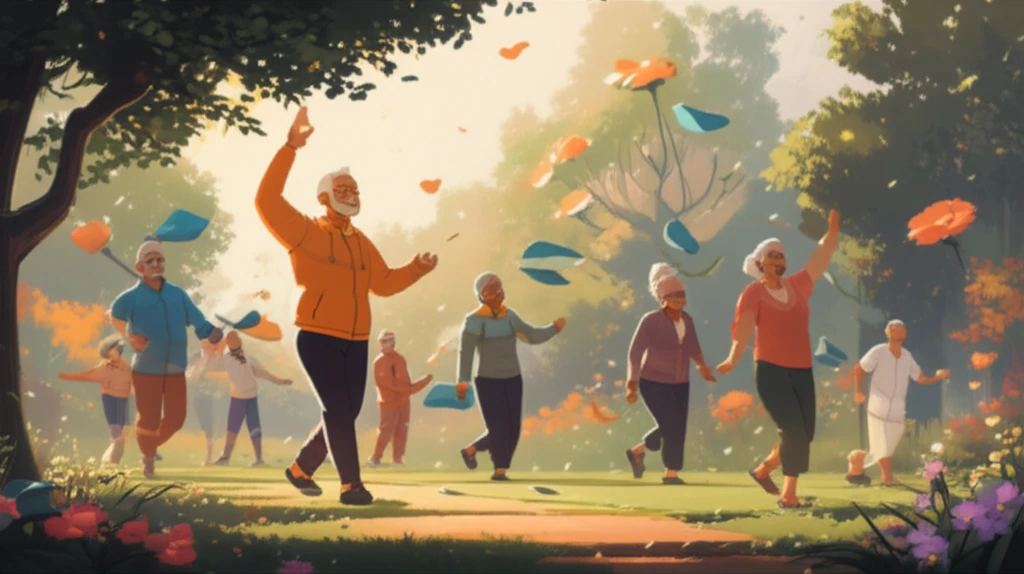
Diverse group of older adults exercising in a park, symbolizing active and pain-free aging.

Unlocking Pain-Free Aging: Simple Exercises and Lifestyle Tips for Seniors

"Discover practical strategies to manage pain and enhance physical activity, promoting a healthier, more active life in your golden years."


Aging is an inevitable journey, marked by various physical and physiological changes. As we advance in years, maintaining an active and pain-free lifestyle becomes increasingly important. Many older adults experience pain and reduced mobility, which can significantly impact their quality of life. Addressing these challenges through appropriate physical activity and lifestyle modifications is crucial for promoting healthier aging.

Recent research highlights the intricate relationship between physical activity and pain perception among older adults. A study involving 564 participants aged 40-88 in Sabah, Malaysia, investigated the prevalence of pain and its correlation with physical activity levels. The findings offer valuable insights into how we can better support the aging population in maintaining their physical well-being.

This article delves into the key findings of the study, offering practical advice and actionable strategies to help older adults manage pain, enhance physical activity, and improve their overall quality of life. Whether you're an older adult seeking ways to stay active or a caregiver looking for supportive tips, this guide provides essential knowledge for navigating the challenges of aging with grace and vitality.

Understanding the Link Between Physical Activity and Pain in Older Adults

Diverse group of older adults exercising in a park, symbolizing active and pain-free aging.

The study revealed that a significant majority (80.9%) of participants reported experiencing moderate pain, particularly in the cervical area and knees. However, a notable 73.2% engaged in regular physical activities. Interestingly, the research found no direct correlation between the degree of pain and the level of physical activity. This suggests that while pain is prevalent, many older adults remain active, highlighting the importance of tailored exercise programs.

Several factors can influence the experience of pain and the ability to engage in physical activity. These include:

  • Age and Gender: While pain prevalence tends to increase with age, gender differences are less clear-cut. Women may be more predisposed to certain types of pain, such as that related to bone density loss.
  • Occupation and Civil Status: The study indicated that occupation and civil status did not significantly correlate with the degree of pain, suggesting that pain is a widespread issue regardless of social and professional backgrounds.
  • Type of Physical Activity: Walking was the most common activity among participants. However, the lack of correlation between pain and activity levels underscores the need for diverse and adapted exercise routines.
These findings emphasize the need for personalized approaches to physical activity that consider the individual needs and limitations of older adults. Rather than a one-size-fits-all approach, exercise programs should be designed to accommodate varying pain levels and physical capabilities.

Taking Action: Practical Steps for Pain-Free, Active Aging

The key takeaway from this research is the urgent need for tailored exercise and health programs that cater to the individual needs of older adults. These programs should adopt a multidisciplinary approach, incorporating medical advice, physiotherapy, and lifestyle adjustments to promote both physical and mental well-being. By creating accessible and modern sporting facilities, especially in rural areas, we can empower older adults to enjoy enhanced sporting opportunities and lead more active, pain-free lives.

About this Article -

This article was crafted using a human-AI hybrid and collaborative approach. AI assisted our team with initial drafting, research insights, identifying key questions, and image generation. Our human editors guided topic selection, defined the angle, structured the content, ensured factual accuracy and relevance, refined the tone, and conducted thorough editing to deliver helpful, high-quality information.See our About page for more information.

Everything You Need To Know

1

What did the study in Sabah, Malaysia, reveal about the prevalence of pain and physical activity among older adults?

The study in Sabah, Malaysia, involving 564 participants aged 40-88, revealed that a significant 80.9% of older adults reported experiencing moderate pain, particularly in the cervical area and knees. Despite this, a notable 73.2% engaged in regular physical activities. Interestingly, the research found no direct correlation between the degree of pain and the level of physical activity, highlighting the importance of tailored exercise programs rather than a one-size-fits-all approach.

2

What are the key factors that influence pain and physical activity levels in older adults, according to the study?

The study identified several factors influencing pain and physical activity. Age is a significant factor, with pain prevalence tending to increase with age, though gender differences are less clear-cut. Occupation and civil status did not show a significant correlation with pain. The type of physical activity also plays a role, with walking being the most common activity. The lack of correlation between pain and activity levels underscores the need for diverse and adapted exercise routines.

3

How can older adults and caregivers take practical steps to achieve pain-free, active aging, based on the research findings?

Based on the research, the key is to adopt tailored exercise and health programs. These programs should consider individual needs and limitations. A multidisciplinary approach is recommended, incorporating medical advice, physiotherapy, and lifestyle adjustments. Creating accessible and modern sporting facilities, especially in rural areas, can empower older adults to enjoy enhanced sporting opportunities and lead more active, pain-free lives.

4

Why is the lack of direct correlation between pain and physical activity significant for older adults?

The absence of a direct correlation means that experiencing pain does not necessarily prevent older adults from remaining active. This is significant because it underscores the need for exercise programs adapted to varying pain levels and physical capabilities. It highlights that older adults can still engage in physical activity despite pain, provided the exercises are appropriate and tailored to their individual needs. It also emphasizes the need for healthcare professionals to design exercise routines which are adaptable.

5

In what ways can personalized exercise programs improve the quality of life for seniors experiencing pain, based on this research?

Personalized exercise programs can significantly improve the quality of life by considering individual needs and limitations. By incorporating medical advice, physiotherapy, and lifestyle adjustments, these programs can help manage pain effectively. Tailored exercises may focus on strengthening specific muscles, improving flexibility, and reducing pain in areas like the cervical area and knees, which were identified as common pain points. Moreover, such programs can boost both physical and mental well-being, enabling older adults to maintain an active lifestyle and improve their overall quality of life.

Newsletter Subscribe

Subscribe to get the latest articles and insights directly in your inbox.