
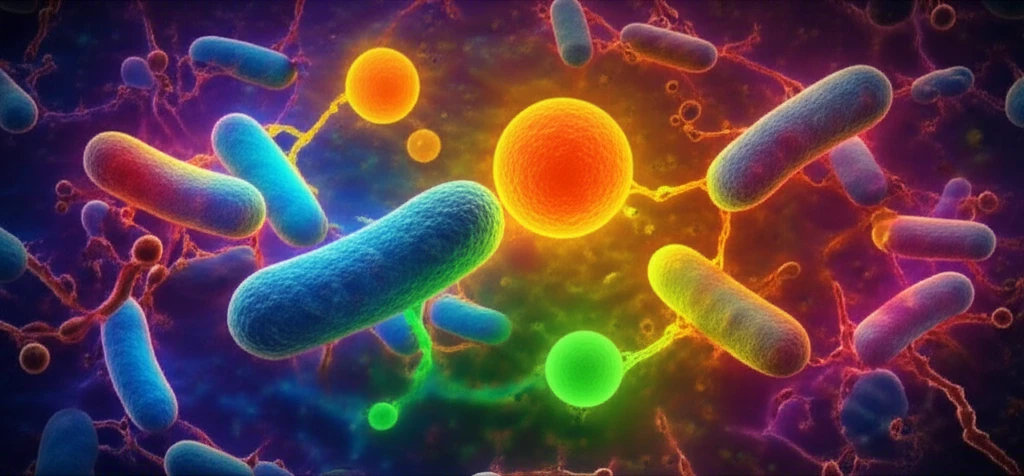
Microscopic view of Lactobacillus pentosus bacteria producing antimicrobial compounds.

Unlocking Nature's Secrets: How to Boost Antimicrobial Production in Fermented Foods

"Optimize your fermentation process with science-backed methods to enhance the power of natural antimicrobials."


In an era where consumers are increasingly seeking natural alternatives to synthetic preservatives, the spotlight shines brightly on lactic acid bacteria (LAB). These microorganisms, commonly found in fermented foods, are not only responsible for the tangy flavors and unique textures we enjoy, but also for producing bacteriocins – natural antimicrobial peptides with a wide range of applications.

Among the diverse world of LAB, Lactobacillus pentosus stands out for its potent antimicrobial activity. Strains like L. pentosus SJ65, originally isolated from fermented Uttapam batter (a South Indian pancake), have demonstrated a remarkable ability to combat various pathogens. However, harnessing the full potential of these natural defenders requires a deep understanding of the factors that influence their bacteriocin production.

This article delves into the groundbreaking research on optimizing bacteriocin production in L. pentosus SJ65. We'll explore how carefully manipulating nutritional and environmental conditions can significantly enhance the yield of these valuable antimicrobial compounds, paving the way for more effective natural food preservation and potential applications in the health sector.

The Science of Optimization: Feeding and Nurturing Antimicrobial Power

Microscopic view of Lactobacillus pentosus bacteria producing antimicrobial compounds.

The journey to maximize bacteriocin production begins with understanding the specific needs of L. pentosus SJ65. Researchers initially screened various carbon and nitrogen sources using a one-variable-at-a-time (OVAT) approach. This meticulous process revealed that glucose serves as the most readily utilized carbon source for this particular strain. Subsequent experiments pinpointed the optimal glucose concentration at 20 g/L, resulting in a significant bacteriocin activity of 1600 AU/mL. Concentrations beyond this level, however, led to a reduction in antimicrobial production, highlighting the delicate balance required.

Nitrogen sources also play a critical role in bacteriocin synthesis. The study identified tryptone, soy peptone, and yeast extract as particularly effective in promoting higher production levels. This aligns with the understanding that yeast extract, rich in amino acids, peptides, and essential vitamins, provides a comprehensive nutritional foundation for LAB growth and metabolic activity. Tryptone and peptone, being complex mixtures of peptides, offer readily available building blocks for bacteriocin synthesis.

Here's a quick recap of key nutrients:
  • Carbon Source: Glucose (20 g/L is optimal)
  • Nitrogen Sources: Tryptone, Soy Peptone, Yeast Extract
Beyond carbon and nitrogen, the research team investigated the impact of various minerals and non-nutritional factors. They discovered that a specific concentration of manganese sulfate (MnSO4), 0.3 g/L, significantly boosts bacteriocin production. Moreover, the non-ionic surfactant Tween 80, at a concentration of 1 g/L, also proved beneficial. Tween 80 is believed to enhance bacteriocin secretion by altering the cell membrane fluidity, facilitating the release of these antimicrobial peptides into the surrounding environment. Interestingly, the study also found that static (non-agitated) conditions favored bacteriocin production, contrasting with some previous research that reported improved production with agitation.

Harnessing the Power of Fermentation: A Promising Future

This study underscores the immense potential of optimizing fermentation processes to unlock the natural antimicrobial power of LAB. By carefully fine-tuning the growth environment of Lactobacillus pentosus SJ65, researchers were able to significantly enhance bacteriocin production, paving the way for more effective natural food preservation strategies.

The optimized medium, comprising tryptone, yeast extract, tri-ammonium citrate, glucose, Tween-80, and di-potassium hydrogen phosphate, led to a remarkable 4- to 8-fold increase in bacteriocin production compared to the standard MRS medium. This enhanced production translates to a more potent antimicrobial effect against a range of pathogenic indicator organisms.

Further research is now essential to purify and identify the exact nature of the antimicrobial compound and to explore its application in real-world food systems. As consumer demand for natural preservatives continues to rise, the optimization of bacteriocin production in LAB represents a promising avenue for creating safer, healthier, and more sustainable food products.

About this Article -

This article was crafted using a human-AI hybrid and collaborative approach. AI assisted our team with initial drafting, research insights, identifying key questions, and image generation. Our human editors guided topic selection, defined the angle, structured the content, ensured factual accuracy and relevance, refined the tone, and conducted thorough editing to deliver helpful, high-quality information.See our About page for more information.

Everything You Need To Know

1

What are bacteriocins and how are they related to lactic acid bacteria?

Lactic acid bacteria, especially strains like *Lactobacillus pentosus* SJ65, produce bacteriocins, which are natural antimicrobial peptides. These bacteriocins can combat various pathogens and offer a natural way to preserve food and potentially provide health benefits. They're an alternative to synthetic preservatives, capitalizing on the increasing consumer demand for natural products.

2

What are the key carbon and nitrogen sources that boost antimicrobial production in *Lactobacillus pentosus* SJ65, and what makes them so effective?

For *Lactobacillus pentosus* SJ65, glucose has been identified as the most effective carbon source, with an optimal concentration of 20 g/L for bacteriocin production. Tryptone, soy peptone, and yeast extract are effective nitrogen sources, with yeast extract providing a comprehensive nutritional foundation due to its rich content of amino acids, peptides, and essential vitamins. These nutrients are fundamental for the growth and metabolic activity of the bacteria, directly influencing the synthesis of bacteriocins.

3

Besides carbon and nitrogen, what other factors like minerals or surfactants affect bacteriocin production in *Lactobacillus pentosus* SJ65?

Manganese sulfate (MnSO4) at 0.3 g/L and Tween 80 at 1 g/L can significantly enhance bacteriocin production in *Lactobacillus pentosus* SJ65. MnSO4 acts as a mineral supplement, facilitating enzymatic processes involved in bacteriocin synthesis. Tween 80, a non-ionic surfactant, improves bacteriocin secretion by altering the cell membrane fluidity, which enables the release of antimicrobial peptides into the surrounding environment. Additionally, static, non-agitated conditions favor bacteriocin production for this strain.

4

What is the future potential of using *Lactobacillus pentosus* SJ65 and its bacteriocins?

Bacteriocins, produced by *Lactobacillus pentosus* SJ65, hold substantial promise for natural food preservation and potential applications in the health sector. By optimizing the growth environment, you can maximize bacteriocin production. This enhanced production offers a way to create more effective natural food preservation strategies, reducing reliance on synthetic additives. Further research is needed to fully explore the health benefits and applications of these optimized bacteriocins.

5

What is the OVAT (one-variable-at-a-time) approach, and how was it used to optimize bacteriocin production in *Lactobacillus pentosus* SJ65?

The OVAT, or one-variable-at-a-time approach, is vital in optimizing bacteriocin production, and involves systematically testing different carbon and nitrogen sources to determine which ones yield the highest antimicrobial activity. For *Lactobacillus pentosus* SJ65, this method revealed that glucose is the best carbon source. This iterative process allows researchers to identify the ideal conditions for bacteriocin synthesis, fine-tuning the fermentation process for maximum output.

Newsletter Subscribe

Subscribe to get the latest articles and insights directly in your inbox.