
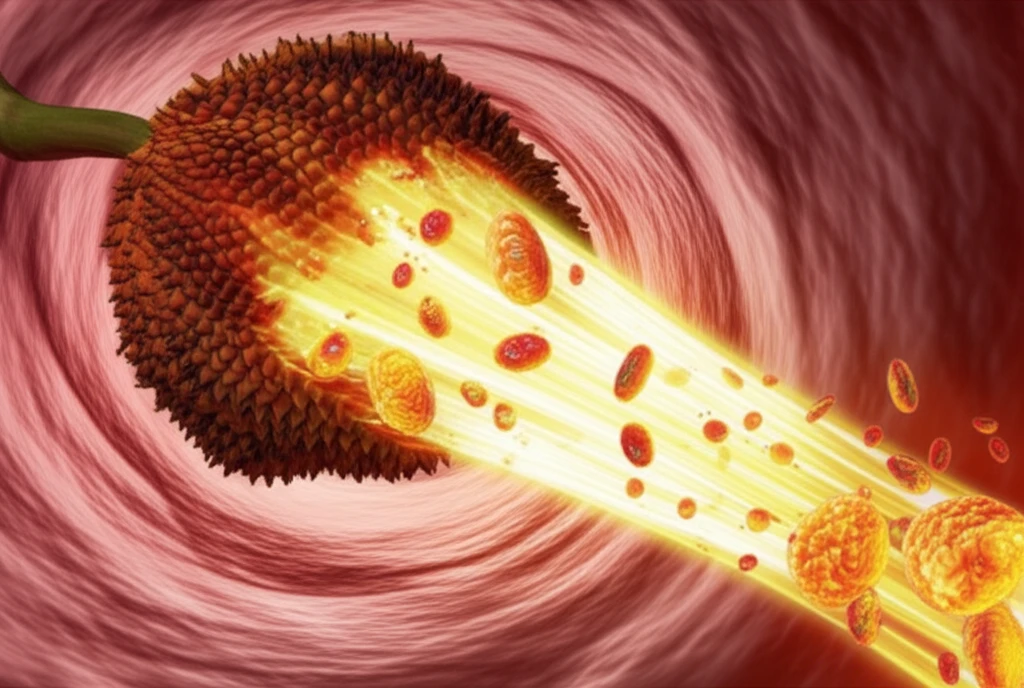
Borassus flabelifer fruit enzyme dissolving cholesterol.

Unlocking Nature's Secrets: How Palm Fruit Enzymes Could Revolutionize Health and Industry

"Scientists discover unique properties of Borassus flabelifer peroxidase, paving the way for novel applications in medicine and sustainable technology."


For years, scientists have been exploring the hidden potential of plant enzymes, unlocking secrets that could revolutionize medicine, industry, and our understanding of the natural world. Among these, peroxidases, a class of enzymes found in various plants, are gaining attention for their ability to break down harmful substances and facilitate essential biochemical reactions. These enzymes are categorized into three classes, each with unique origins and functions.

Now, groundbreaking research has shed light on a particularly intriguing peroxidase found in the palm fruit Borassus flabelifer, commonly known as the palmyra palm. This enzyme, a lipophilic peroxidase, exhibits remarkable properties, including the ability to interact with fats and oils. This interaction is particularly exciting because it suggests potential applications in breaking down lipids in the body and industrial processes.

This article delves into the exciting findings of this research, exploring how the Borassus flabelifer peroxidase can be inhibited by natural compounds. We'll uncover the enzyme's unique interactions with lipoproteins and its potential role in addressing health challenges and promoting sustainable solutions. Get ready to discover how nature's ingenuity could pave the way for a healthier and more sustainable future.

The Palm Fruit Enzyme: A Natural Defense Against Harmful Substances

Borassus flabelifer fruit enzyme dissolving cholesterol.

The study reveals that Borassus flabelifer peroxidase, found within the fruit's stone parts, interacts with these components and can be inhibited by aromatic alcohols, commonly found in plant-based foods. This inhibition process is reversible, meaning the enzyme's activity can be restored, making it a promising candidate for controlled applications.

Researchers used a Dixon plot to analyze the type of inhibition, discovering it to be a mixed type. This detailed analysis allowed them to determine the Ki values, which reflect the strength of the interaction between the peroxidase and various inhibitors. This information is crucial for understanding how to effectively regulate the enzyme's activity.

  • Key Discovery: Borassus flabelifer peroxidase interacts with triglycerides and phytosterols.
  • Lipoprotein Interaction: The enzyme interacts with acid hydrolysable low-density lipoprotein (LDLP) but not high-density lipoprotein (HDLP).
  • Organic Solvent Stability: This interaction contributes to the enzyme's stability and catalytic ability in organic solvents.
One of the most exciting findings is the enzyme's interaction with lipoproteins, particularly LDLP. LDLP is known to contribute to arterial blockages, but the Borassus flabelifer peroxidase interacts with it. This suggests a potential role for the enzyme in managing cholesterol levels and promoting cardiovascular health. Furthermore, the study highlights the potential of utilizing waste stone parts of the fruit for extracting valuable phytosterols and fatty acids, offering a sustainable approach to resource utilization.

Nature's Gift: Towards a Healthier and Sustainable Future

This research opens doors to exciting possibilities. The Borassus flabelifer peroxidase is not just an enzyme; it's a key to unlocking new strategies for health and sustainable practices. By understanding its interactions with lipids and lipoproteins, we can develop innovative solutions for managing cholesterol and promoting cardiovascular well-being.

Moreover, the study emphasizes the importance of utilizing waste materials. The stone parts of the Borassus flabelifer fruit, often discarded, are a valuable source of phytosterols and fatty acids. This discovery aligns with the growing movement towards a circular economy, where resources are used efficiently and waste is minimized.

As we continue to explore the potential of plant enzymes, the Borassus flabelifer peroxidase stands out as a remarkable example of nature's ingenuity. With further research, this enzyme could become a cornerstone of both health and sustainability initiatives, transforming industries and improving lives.

About this Article -

This article was crafted using a human-AI hybrid and collaborative approach. AI assisted our team with initial drafting, research insights, identifying key questions, and image generation. Our human editors guided topic selection, defined the angle, structured the content, ensured factual accuracy and relevance, refined the tone, and conducted thorough editing to deliver helpful, high-quality information.See our About page for more information.

This article is based on research published under:

DOI-LINK: 10.1016/j.ijbiomac.2018.09.145, Alternate LINK

Title: Inhibition Of Membrane Bound Lipophilic Plant (Borassus Flabelifer L.) Peroxidase By Phenolic Compounds

Subject: Molecular Biology

Journal: International Journal of Biological Macromolecules

Publisher: Elsevier BV

Authors: Theivarasu Chinna Gownder, Shanmugam Venkatachalam

Published: 2019-02-01

Everything You Need To Know

1

What is the Borassus flabelifer peroxidase, and why is it important?

The Borassus flabelifer peroxidase is a type of enzyme found in the fruit of the palmyra palm. It's significant because it has unique properties, particularly its ability to interact with fats and oils. This interaction opens possibilities for use in medicine and sustainable technology, specifically in breaking down lipids in the body and industrial processes. The enzyme's interaction with fats and oils could lead to innovative solutions for managing cholesterol and promoting cardiovascular well-being.

2

What are peroxidases, and why is the Borassus flabelifer peroxidase unique?

Peroxidases are a class of enzymes found in various plants, including the Borassus flabelifer. These enzymes are essential because they can break down harmful substances and facilitate vital biochemical reactions. The Borassus flabelifer peroxidase, in particular, stands out due to its interaction with lipids and lipoproteins, potentially contributing to cardiovascular health. This enzyme's ability to be inhibited by natural compounds and its stability in organic solvents highlights its potential for various applications in health and industry.

3

How does the Borassus flabelifer peroxidase interact with lipoproteins, and what is the significance?

Lipoproteins are crucial for transporting fats in the body. The Borassus flabelifer peroxidase interacts with acid hydrolysable low-density lipoprotein (LDLP), which is known to contribute to arterial blockages. This interaction implies that the enzyme could play a role in managing cholesterol levels and promoting cardiovascular health. This is significant because it offers a new approach to address a major health concern. The enzyme's interaction with LDLP, but not high-density lipoprotein (HDLP), suggests a targeted approach.

4

What does it mean for the Borassus flabelifer peroxidase to be inhibited, and why is it significant?

The term "inhibition" refers to the process where the Borassus flabelifer peroxidase's activity is reduced or stopped by certain substances. This study found that aromatic alcohols, found in plant-based foods, can inhibit this enzyme. The analysis using a Dixon plot revealed a mixed type of inhibition. This is important because it allows scientists to understand how to regulate the enzyme's activity, with the Ki values quantifying the interaction strength. This controlled regulation is essential for developing controlled applications of the enzyme in medicine or other industries.

5

Where is the Borassus flabelifer peroxidase found, and what are the key findings and implications of the research?

The fruit, Borassus flabelifer, contains the peroxidase in the stone parts. This peroxidase interacts with triglycerides and phytosterols, opening doors for their use. The key findings include the enzyme's interaction with LDLP and its stability in organic solvents. The implication of this interaction is that it could lead to new methods for managing cholesterol and creating sustainable practices. The research also offers a sustainable approach to resource utilization by potentially using waste parts for extracting valuable compounds, contributing to a healthier and more sustainable future.

Newsletter Subscribe

Subscribe to get the latest articles and insights directly in your inbox.