
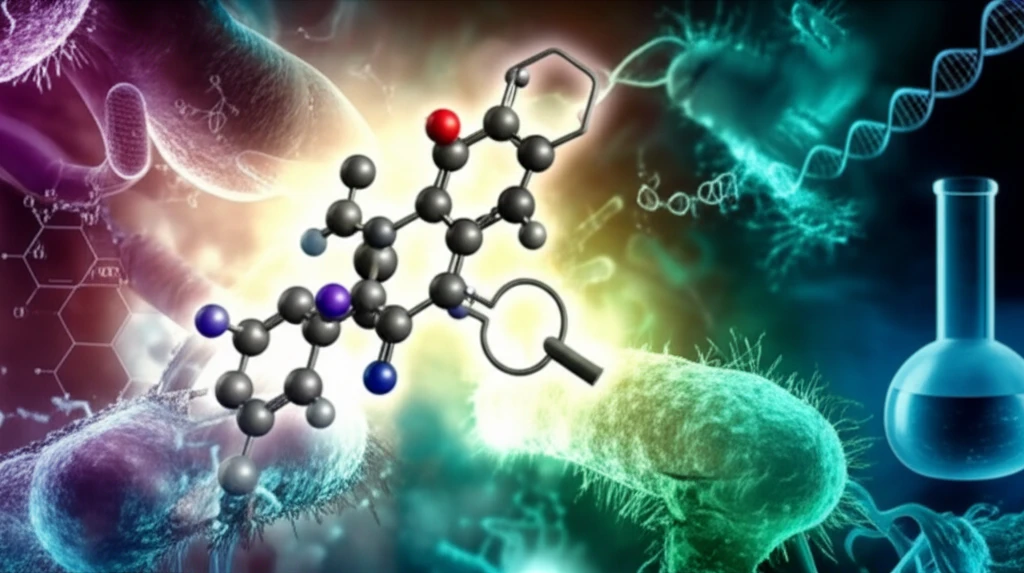
Illustration of a drug molecule interacting with a bacteria cell, symbolizing the precision of drug design

Unlocking Nature's Pharmacy: How Scientists Are Designing New Drugs to Fight Infections

"From Ancient Remedies to Modern Medicine: A Look at the Cutting-Edge Research Revolutionizing Antimicrobial Treatments."


In a world increasingly threatened by antibiotic-resistant superbugs, the search for new and effective antimicrobial agents has never been more critical. The rise of infections that defy conventional treatments poses a significant challenge to global health, demanding innovative solutions. Scientists are turning to nature, inspired by the potential of natural compounds, to design and synthesize novel drugs. This process, combining the art of chemistry with the precision of biology, is at the forefront of modern medicine.

This is the realm of drug design, a field where researchers meticulously craft new molecules with the goal of disrupting the life cycles of harmful microorganisms. This article delves into the heart of this research, exploring the strategies and advancements in creating new drugs. We'll examine the complex processes of drug design, the potential of specific compounds, and the profound implications these developments have for our health and well-being.

The journey of drug discovery is a complex and multifaceted one, often involving multiple stages. It starts with identifying a target within a pathogen—a specific molecule or process essential for its survival. Once a target is identified, researchers seek to design molecules that can interact with and disrupt that target. In this article, we will explore the fascinating work of scientists who are creating innovative medicines.

The Chemistry of Combat: Designing New Antimicrobial Compounds

Illustration of a drug molecule interacting with a bacteria cell, symbolizing the precision of drug design

The core of antimicrobial drug design lies in the synthesis of new chemical compounds that can effectively target and eliminate disease-causing organisms. The process begins with a deep understanding of the structure and function of these microorganisms. Researchers meticulously analyze the vulnerabilities of these pathogens, identifying specific molecular targets that can be exploited.

One exciting approach involves creating novel heterocyclic compounds. These are ring-shaped molecules that incorporate atoms other than carbon, lending them unique properties. These compounds can be tailored to interact with specific targets, such as enzymes or cellular structures, thereby disrupting the pathogen's ability to function.

  • Target Identification: Pinpointing specific molecules or processes essential for a pathogen's survival.
  • Compound Design: Creating new chemical structures to interact with these targets.
  • Synthesis and Testing: Producing these compounds in the laboratory and assessing their effectiveness.
  • Evaluation: Testing the effectiveness against various bacteria and fungi.
  • Refinement: Improving the compound's properties through further structural modifications.
Another fascinating strategy focuses on mimicking natural compounds, like those found in plants, which possess antimicrobial properties. By studying these natural defenses, scientists can design synthetic versions that are often more potent and specific. The goal is to develop medications that can effectively eliminate pathogens, minimize side effects, and reduce the likelihood of resistance.

A Promising Future for Fighting Infections

The creation of new drugs remains an ongoing endeavor, marked by challenges and filled with promise. The development of innovative drugs, like the heterocyclic compounds mentioned above, signifies progress towards more effective treatments and a healthier future. Continued support for research, along with advancements in our understanding of biology and chemistry, is essential to unlocking the full potential of nature's pharmacy and meeting the growing threat of infectious diseases.

About this Article -

This article was crafted using a human-AI hybrid and collaborative approach. AI assisted our team with initial drafting, research insights, identifying key questions, and image generation. Our human editors guided topic selection, defined the angle, structured the content, ensured factual accuracy and relevance, refined the tone, and conducted thorough editing to deliver helpful, high-quality information.See our About page for more information.

This article is based on research published under:

DOI-LINK: 10.2174/1570180814666161128120240, Alternate LINK

Title: A Facile Synthesis And Drug Design Of Some New Heterocyclic Compounds Incorporating Pyridine Moiety And Their Antimicrobial Evaluation

Subject: Drug Discovery

Journal: Letters in Drug Design & Discovery

Publisher: Bentham Science Publishers Ltd.

Authors: Fathy M. Abdelrazek, Sobhi M. Gomha, Aly H. Abdelrahman, Peter Metz, Mohsen A. Sayed

Published: 2017-06-30

Everything You Need To Know

1

What is the main goal of antimicrobial drug design?

The main goal of antimicrobial drug design is to create new molecules that can disrupt the life cycles of harmful microorganisms. This involves synthesizing new chemical compounds, such as novel heterocyclic compounds, that effectively target and eliminate disease-causing organisms. Researchers analyze the vulnerabilities of pathogens, identifying specific molecular targets, like enzymes or cellular structures, to disrupt their ability to function.

2

How does mimicking natural compounds contribute to the creation of new antimicrobial drugs?

Mimicking natural compounds found in plants with antimicrobial properties is a key strategy in drug design. Scientists study these natural defenses to create synthetic versions that are often more potent and specific. The intention is to develop medications that can effectively eliminate pathogens, minimize side effects, and reduce the likelihood of resistance. This approach leverages nature's existing solutions to combat infections.

3

What are heterocyclic compounds, and why are they important in antimicrobial drug design?

Heterocyclic compounds are ring-shaped molecules that incorporate atoms other than carbon, giving them unique properties. In antimicrobial drug design, these compounds are tailored to interact with specific targets within microorganisms, such as enzymes or cellular structures, thereby disrupting the pathogen's ability to function. Their unique structures allow for targeted action, making them valuable in combating infections.

4

Can you describe the typical stages involved in the journey of antimicrobial drug discovery?

The journey of antimicrobial drug discovery begins with identifying a target within a pathogen—a specific molecule or process essential for its survival. Once identified, researchers design molecules to interact with and disrupt that target. This is followed by the synthesis and testing of these compounds in the lab to assess their effectiveness. Evaluation against various bacteria and fungi is conducted, and the compound's properties are refined through structural modifications to improve its effectiveness and reduce side effects.

5

What are the potential implications of advancements in antimicrobial drug design for global health?

Advancements in antimicrobial drug design, such as the development of novel heterocyclic compounds and synthetic versions of natural compounds, hold the potential to provide more effective treatments for drug-resistant infections. Continued progress in this field, supported by research and a deeper understanding of biology and chemistry, is essential for unlocking the full potential of nature's pharmacy. Success in drug design can significantly improve global health by combating the growing threat of infectious diseases and improving patient outcomes.

Newsletter Subscribe

Subscribe to get the latest articles and insights directly in your inbox.