
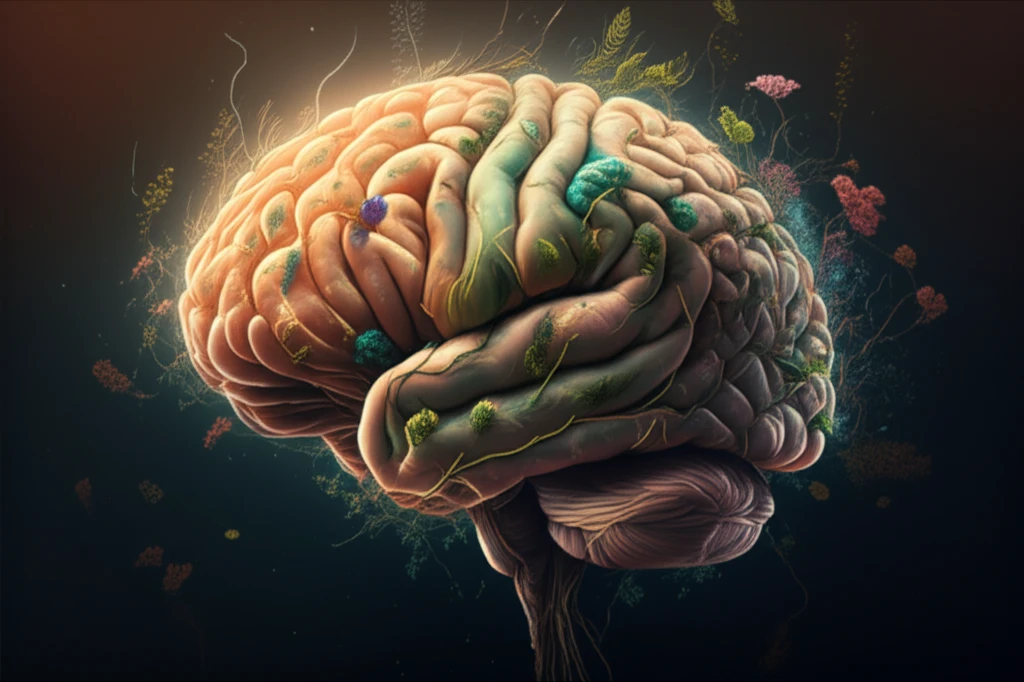
Unlocking Nature's Pharmacy: Can Natural Compounds Combat Alzheimer's?

"A deep dive into the latest research and patents exploring natural product formulations for Alzheimer's prevention and treatment."
Alzheimer's disease (AD) remains one of the most significant healthcare challenges of our time. With an aging global population, the quest for effective therapeutic agents to prevent and treat this neurodegenerative disorder is more urgent than ever. While pharmaceutical research continues to advance, there's a growing interest in harnessing the power of nature to combat AD.
Natural product chemistry offers a vast and diverse array of compounds that may hold the key to unlocking new treatments and preventive strategies for Alzheimer's. For decades, researchers have explored the potential of natural extracts and derived drugs to address the complex factors contributing to the onset and progression of AD.
This article explores recent patents and research focused on natural product formulations for the prevention and treatment of Alzheimer's disease. From well-known herbs like ginseng and turmeric to lesser-known compounds, we'll delve into the mechanisms of action and potential benefits of these natural remedies, offering a comprehensive overview of this exciting field.
A Growing Public Health Burden
The 2025 Alzheimer's disease facts and figures report examines Alzheimer's disease prevalence and incidence, mortality and morbidity, care use and costs, and consequences for family caregivers, the dementia workforce, and society. The 2026 report adds information on Alzheimer's-related brain changes, treatments, risk factors, national and state-level numbers of Americans with clinical Alzheimer's dementia, lifetime risk, and differences between women and men. Both reports emphasize that these findings are based on currently available data and may be revised as new information emerges. Research on herbal extracts and natural compounds is exploring whether they might support memory and cognitive performance, but future studies are still needed.
Current Treatment Limits
Conventional Alzheimer's care generally focuses on diagnosing the condition, managing symptoms, and using treatments intended to address aspects of disease progression. These approaches may provide benefits for some people, but their effectiveness can vary and they do not eliminate the underlying disease. Treatment decisions also require attention to safety, tolerability, and the individual's clinical circumstances. Natural compounds are therefore being investigated as possible complementary or future therapeutic options, not as established replacements for accepted medical care.
From Auguste Deter to Modern Research
The history of Alzheimer's disease research reaches back to the early 1900s. In 1901, German psychiatrist and neuropathologist Dr. Alois Alzheimer first observed his 51-year-old patient, Auguste Deter, at the Frankfurt asylum; she showed severe memory loss, disorientation, and unpredictable behavior. Nature's 1906–2024 milestones timeline and the Alzheimer's Association's milestones record subsequent developments in research, clinical trials, treatments, awareness, and national priorities. More recent reviews have expanded this historical trajectory to include investigations of herbal extracts and natural compounds.
Why Natural Products are Gaining Attention in Alzheimer's Research
The search for effective Alzheimer's treatments has been long and challenging. Current medications primarily focus on managing symptoms rather than addressing the underlying causes of the disease. This is where natural products come into play. Researchers are increasingly drawn to natural compounds due to their potential to:
- Address Multiple Targets: Alzheimer's is a complex disease influenced by various factors, including amyloid-beta plaques, tau protein tangles, oxidative stress, and inflammation. Natural products often contain multiple active compounds that can simultaneously target these different pathways.
- Offer a Holistic Approach: Instead of focusing on a single target, natural remedies can provide a more holistic approach, potentially leading to better outcomes.
- Provide a Rich Source of Novel Compounds: Nature is an unparalleled source of chemical diversity, offering a vast library of compounds that have yet to be fully explored for their therapeutic potential.
Natural Products Under Investigation
A 2025 Frontiers review presents natural products as a foundation for developing new drugs for neurodegenerative diseases and calls for further research. A systematic review published in 2025 examined 31 clinical trial articles involving 3,582 participants with Alzheimer's disease or mild cognitive impairment. The participants were aged 50–90, treatment durations ranged from 8 weeks to 2 years, and the average treatment duration was 12.5 months. Eleven studies focused on herbal extracts, highlighting their prominence in the current clinical literature.
Evidence Remains Incomplete
Interest in natural remedies does not establish that they prevent, cure, or reliably slow Alzheimer's disease. Early findings may be difficult to compare because studies can differ in compound, formulation, dose, treatment duration, and outcome measures. Positive laboratory or small clinical results may also fail to translate into consistent patient benefits. Stronger, well-controlled research is needed before natural products can be considered dependable Alzheimer's treatments.
Promising but Not Equivalent
Natural compounds and established Alzheimer's treatments should not be treated as interchangeable categories. Natural-product research spans herbal extracts and other substances with potentially different mechanisms, evidence levels, and safety profiles. Comparisons are further complicated when studies use different participants, treatment periods, and measures of cognition. At present, the most defensible comparison is that natural products represent a developing source of therapeutic leads rather than a proven alternative to standard care.
The Future of Natural Products in Alzheimer's Treatment
As research continues to uncover the potential of natural products in preventing and treating Alzheimer's, it's important to approach this field with both optimism and caution. While these compounds show promise, further studies are needed to fully understand their mechanisms of action, optimize dosages, and ensure safety and efficacy. Nevertheless, the growing interest in natural remedies offers a beacon of hope in the ongoing quest to combat this devastating disease and improve the lives of those affected.
Potential Without Proof of a Cure
A 2022 systematic review describes Alzheimer's disease as currently incurable and reports that existing FDA-approved drugs may not work for everyone, cannot cure the disease or stop its progression, and may lose effect over time. These limitations help explain the interest in natural alternatives. However, the review's rationale for studying natural remedies is not evidence that those remedies are clinically effective. Natural compounds should therefore be viewed as candidates for investigation while evidence on benefits, risks, and long-term outcomes continues to develop.
Toward Better Evidence
Future research will need to determine which natural compounds are most promising, how they should be formulated, and whether observed effects are meaningful for people with Alzheimer's disease or mild cognitive impairment. Studies should also clarify appropriate doses, treatment durations, safety, and interactions with existing therapies. Progress will depend on moving from encouraging laboratory and early clinical findings to reproducible, well-designed clinical trials. Until then, the field remains promising but investigational.
Delivery and Access Challenges
Reviews describe Alzheimer's disease as a progressive neurodegenerative condition associated with memory loss and cognitive decline, while current drugs may offer limited benefits and cause side effects. Natural products from plants, marine organisms, and fungi are being examined for neuroprotective potential, building partly on their longstanding use in traditional medicine. A major practical challenge is delivery: poor bioavailability, limited blood-brain barrier penetration, and nonspecific distribution can reduce the effectiveness of natural products. The 2025 literature identifies nanoparticle-based delivery systems as a possible way to address these barriers.
Keeping Patients at the Center
Any discussion of natural compounds must remain connected to the lived realities of people with Alzheimer's disease and those who care for them. Possible benefits should be weighed alongside uncertainty, side effects, interactions, cost, and the risk that an unproven remedy could delay appropriate medical care. Patients and families also need clear information about what is known, what remains experimental, and how evidence applies to their circumstances. A person-centered approach can support informed decisions without overstating the promise of natural products.