
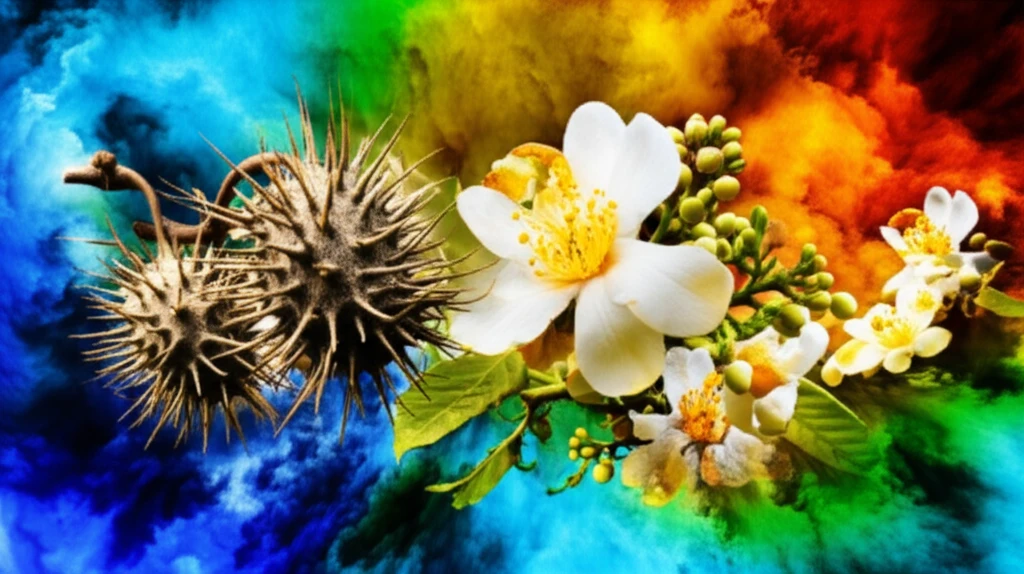
Illustration of Tribulus Terrestris fruit and Mesua Ferrea flowers, with a vibrant, colorful background

Unlocking Nature's Pharmacy: A Deep Dive into the Antioxidant Power of Tribulus Terrestris and Mesua Ferrea

"Discover the hidden health benefits of two powerful plant extracts and their impact on your well-being."


In a world increasingly focused on natural remedies, the spotlight is on the remarkable properties of plant-based pharmaceuticals. Among these, extracts from fruits, leaves, and flowers are gaining prominence for their potent antioxidant capabilities. These natural compounds are not just trendy; they are backed by scientific research, offering potential health benefits that have captured the attention of both the public and the scientific community.

This article delves into the antioxidant and free radical scavenging properties of two specific plant extracts: Tribulus Terrestris fruit (TTF) and Mesua Ferrea flower (MFF). These extracts have been studied for their ability to combat free radicals, which are known to contribute to various health issues. We will explore the science behind these natural compounds and their potential to support overall well-being.

Join us as we uncover the potential of TTF and MFF extracts, examining their role in neutralizing free radicals, and their significance in promoting health. This exploration will shed light on how these plant-based extracts can be harnessed for their antioxidant benefits, potentially impacting your health in significant ways.

Unveiling the Antioxidant Powerhouses: TTF and MFF

Illustration of Tribulus Terrestris fruit and Mesua Ferrea flowers, with a vibrant, colorful background

At the heart of this investigation are Tribulus Terrestris fruit (TTF), often known as Gokhru, and Mesua Ferrea flower (MFF). TTF, a creeping herb, has a long history of use in traditional medicine, particularly for enhancing vitality and sexual function. MFF, also known as Ceylon ironwood, is valued for its potential to address a range of health issues. Both plants have unique bioactive compounds that contribute to their medicinal properties.

The study focused on evaluating the antioxidant and free radical scavenging activities of ethanolic extracts from TTF and MFF. These activities were measured using standard protocols to understand how these extracts interact with free radicals. The Folin-Ciocalteu and aluminum-chloride reagent assays were used to estimate the total phenolic and flavonoid content, which are key indicators of antioxidant potential.

  • DPPH Assay: This assay assesses the extracts' ability to scavenge free radicals, providing insights into their antioxidant capabilities.
  • Superoxide Radical Scavenging Assay: Evaluates the extracts' ability to neutralize superoxide radicals, which can cause cellular damage.
  • Hydrogen Peroxide Radical Scavenging Assay: Measures the extracts' capacity to eliminate hydrogen peroxide, a harmful reactive oxygen species.
  • Nitric Oxide Radical Scavenging Assay: Tests the extracts' ability to neutralize nitric oxide radicals, which can contribute to various health issues.
  • FRAP Assay: Determines the extracts' reducing power, indicating their ability to donate electrons and neutralize free radicals.
The results of the study revealed that MFF showed the highest total antioxidant ability, followed by TTF. In various scavenging activities, MFF demonstrated superior radical scavenging activity compared to TTF, closely resembling the standards. The reducing capacity on ferrous ions was also higher in MFF than in TTF. The phenolic content of TTF and MFF ethanolic extracts were quantified, revealing the richness of these compounds. The study also found a positive correlation between phenolic content and free radical scavenging efficiencies.

Embracing Nature's Antioxidants for a Healthier Tomorrow

In conclusion, the findings of this study confirm that both MFF and TTF extracts are valuable sources of natural antioxidants. These extracts function as effective free radical scavengers and inhibitors, offering potential benefits in addressing free radical-mediated diseases. As we continue to explore the world of natural remedies, these plant-based extracts represent a promising avenue for enhancing health and well-being. The exploration of TTF and MFF opens doors to new possibilities in the realm of natural health solutions.

About this Article -

This article was crafted using a human-AI hybrid and collaborative approach. AI assisted our team with initial drafting, research insights, identifying key questions, and image generation. Our human editors guided topic selection, defined the angle, structured the content, ensured factual accuracy and relevance, refined the tone, and conducted thorough editing to deliver helpful, high-quality information.See our About page for more information.

This article is based on research published under:

DOI-LINK: 10.22159/ijpps.2018v10i3.24021, Alternate LINK

Title: Phytochemical Screening And In Vitro Antioxidant Potential Of Tribulus Terrestris Fruit And Mesua Ferrea Flower Extracts: A Comparative Study

Subject: Pharmaceutical Science

Journal: International Journal of Pharmacy and Pharmaceutical Sciences

Publisher: Innovare Academic Sciences Pvt Ltd

Authors: Dakshayini P. N., Mahaboob Basha P.

Published: 2018-03-01

Everything You Need To Know

1

What are the primary benefits of using plant extracts like Tribulus Terrestris fruit (TTF) and Mesua Ferrea flower (MFF) for health?

Plant extracts such as Tribulus Terrestris fruit (TTF) and Mesua Ferrea flower (MFF) offer significant health benefits due to their antioxidant properties. These extracts can neutralize free radicals, which are unstable molecules that can cause cellular damage and contribute to various health issues. TTF, known for enhancing vitality, and MFF, valued for addressing a range of health issues, have bioactive compounds that promote overall well-being by combating oxidative stress. Additionally, their potential in addressing free radical-mediated diseases makes them a promising avenue for natural health solutions.

2

How do Tribulus Terrestris fruit (TTF) and Mesua Ferrea flower (MFF) extracts neutralize free radicals, and what is the significance of this process?

Tribulus Terrestris fruit (TTF) and Mesua Ferrea flower (MFF) extracts neutralize free radicals through their antioxidant activities. This involves scavenging various types of free radicals, such as superoxide radicals, hydrogen peroxide, and nitric oxide. The significance of this process lies in the prevention of cellular damage and the reduction of oxidative stress, which are associated with numerous health issues. By neutralizing these harmful molecules, TTF and MFF extracts contribute to overall health and well-being, potentially mitigating the risk of free radical-mediated diseases. Specifically, the Folin-Ciocalteu and aluminum-chloride reagent assays are used to estimate the total phenolic and flavonoid content, which are key indicators of antioxidant potential.

3

What specific scientific methods were used to evaluate the antioxidant capabilities of Tribulus Terrestris fruit (TTF) and Mesua Ferrea flower (MFF) extracts?

Several scientific methods were employed to assess the antioxidant capabilities of Tribulus Terrestris fruit (TTF) and Mesua Ferrea flower (MFF) extracts. These include the DPPH Assay, which measures the extracts' ability to scavenge free radicals; the Superoxide Radical Scavenging Assay, which evaluates their capacity to neutralize superoxide radicals; the Hydrogen Peroxide Radical Scavenging Assay, which assesses their ability to eliminate hydrogen peroxide; the Nitric Oxide Radical Scavenging Assay, which tests their capacity to neutralize nitric oxide radicals and the FRAP Assay, which determines their reducing power. These assays provide comprehensive insights into how TTF and MFF interact with and neutralize different types of free radicals, demonstrating their antioxidant potential.

4

Which extract, Tribulus Terrestris fruit (TTF) or Mesua Ferrea flower (MFF), exhibits stronger antioxidant properties, and how was this determined?

Mesua Ferrea flower (MFF) extract exhibits stronger antioxidant properties compared to Tribulus Terrestris fruit (TTF) extract. This was determined through various assays, including the DPPH Assay, Superoxide Radical Scavenging Assay, Hydrogen Peroxide Radical Scavenging Assay, Nitric Oxide Radical Scavenging Assay, and FRAP Assay. MFF demonstrated superior radical scavenging activity and a higher reducing capacity on ferrous ions. The total phenolic content, an indicator of antioxidant potential, was also higher in MFF. These findings indicate that MFF is a more potent source of natural antioxidants than TTF.

5

How might the antioxidant properties of Tribulus Terrestris fruit (TTF) and Mesua Ferrea flower (MFF) extracts be harnessed for future health solutions, and what are the implications for natural medicine?

The antioxidant properties of Tribulus Terrestris fruit (TTF) and Mesua Ferrea flower (MFF) extracts can be harnessed to develop natural health solutions targeting free radical-mediated diseases and promoting overall well-being. Their effectiveness as free radical scavengers and inhibitors suggests potential applications in dietary supplements, functional foods, and pharmaceutical products. The implications for natural medicine are significant, as these plant-based extracts offer a promising alternative to synthetic antioxidants, potentially reducing the risk of adverse side effects. Further research into the specific bioactive compounds and their mechanisms of action could lead to the development of targeted therapies for various health conditions, solidifying the role of TTF and MFF in natural health solutions.

Newsletter Subscribe

Subscribe to get the latest articles and insights directly in your inbox.