
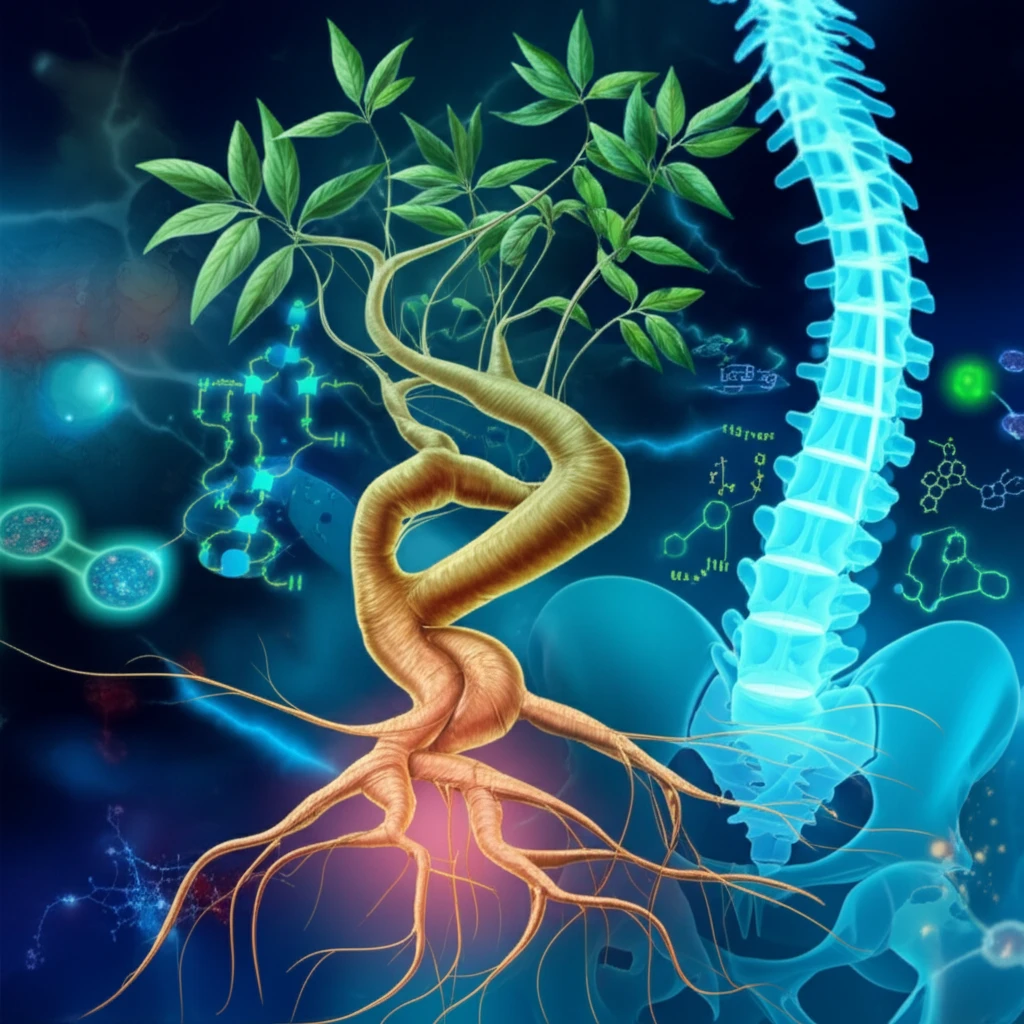
Tripterygium wilfordii plant intertwined with a human spinal cord, symbolizing pain relief and healing.

Unlocking Nature's Pain Relief: Can Celastrol Ease Inflammatory Pain?

"Discover how Celastrol, a compound from the Tripterygium wilfordii Hook plant, could revolutionize chronic pain management by targeting inflammation."


Chronic inflammatory pain is a widespread and debilitating condition affecting millions globally. It significantly impacts quality of life, often leading to decreased mobility, psychological distress, and increased healthcare costs. Finding effective treatments for chronic pain is a major challenge in modern medicine.

Current treatments often involve a combination of medications, physical therapy, and lifestyle adjustments. However, many pain medications come with significant side effects, including gastrointestinal issues, cardiovascular problems, and the risk of addiction. This has driven the search for alternative and complementary therapies that offer pain relief with fewer adverse effects.

Natural compounds derived from plants have long been a source of medicinal treatments. Among these, Celastrol, a bioactive component extracted from the Tripterygium wilfordii Hook plant, has garnered attention for its potent anti-inflammatory and antioxidant properties. Recent research investigates Celastrol's potential in managing inflammatory pain by targeting specific molecular pathways involved in pain signaling.

How Celastrol Targets Inflammation to Relieve Pain

Tripterygium wilfordii plant intertwined with a human spinal cord, symbolizing pain relief and healing.

A recent study published in Neuroscience Letters sheds light on how Celastrol alleviates inflammatory pain by modulating the HMGB1/NF-κB signaling pathway in the dorsal root ganglion (DRG). The DRG is a cluster of nerve cells in the spinal cord that plays a crucial role in transmitting pain signals from the body to the brain. When inflammation occurs, the HMGB1/NF-κB pathway becomes activated, leading to the release of pro-inflammatory cytokines and pain sensitization.

The study, conducted on rats with Complete Freund's Adjuvant (CFA)-induced inflammatory pain, demonstrated that Celastrol administration significantly reduced pain and inflammation. Researchers observed the following key effects of Celastrol:

  • Reduced HMGB1 and NF-κB Expression: Celastrol suppressed the expression of HMGB1 and NF-κB, key proteins involved in the inflammatory cascade, in the DRG.
  • Decreased Pro-inflammatory Cytokines: Celastrol lowered the levels of pro-inflammatory cytokines such as IL-1β, IL-6, IL-17, and TNF-α, all of which contribute to pain and inflammation.
  • Inhibited COX-2: Celastrol inhibited the expression of cyclooxygenase-2 (COX-2), an enzyme responsible for producing prostaglandins, which are involved in pain and inflammation.
  • Modulated Glial Cell Activation: Celastrol reduced the activation of glial cells (GFAP and CD11b), which play a significant role in maintaining chronic pain states.
These findings suggest that Celastrol exerts its pain-relieving effects by targeting multiple points in the inflammatory pathway, effectively dampening the overall inflammatory response and reducing pain sensitization.

The Future of Celastrol in Pain Management

While the study provides promising evidence for Celastrol's potential in managing inflammatory pain, further research is needed to fully understand its mechanisms of action and determine its safety and efficacy in humans. Clinical trials are essential to evaluate the optimal dosage, duration of treatment, and potential side effects. If proven safe and effective, Celastrol could offer a valuable alternative or complementary treatment option for individuals suffering from chronic inflammatory pain, providing hope for a better quality of life.

About this Article -

This article was crafted using a human-AI hybrid and collaborative approach. AI assisted our team with initial drafting, research insights, identifying key questions, and image generation. Our human editors guided topic selection, defined the angle, structured the content, ensured factual accuracy and relevance, refined the tone, and conducted thorough editing to deliver helpful, high-quality information.See our About page for more information.

Everything You Need To Know

1

What is Celastrol, and where does it come from?

Celastrol is a bioactive compound extracted from the Tripterygium wilfordii Hook plant. It is being investigated for its potential in managing inflammatory pain because of its potent anti-inflammatory and antioxidant properties.

2

How does Celastrol work to reduce inflammatory pain?

Celastrol alleviates inflammatory pain by modulating the HMGB1/NF-κB signaling pathway in the dorsal root ganglion (DRG). It reduces the expression of HMGB1 and NF-κB, key proteins in inflammation, and decreases pro-inflammatory cytokines like IL-1β, IL-6, IL-17, and TNF-α. Additionally, Celastrol inhibits COX-2 and modulates glial cell activation, all contributing to reduced pain and inflammation.

3

What is the role of the dorsal root ganglion (DRG) in pain signaling, and how does Celastrol affect it?

The dorsal root ganglion (DRG) is a cluster of nerve cells in the spinal cord that transmits pain signals from the body to the brain. Celastrol impacts the DRG by modulating the HMGB1/NF-κB signaling pathway within it. This modulation reduces inflammation by suppressing key proteins and pro-inflammatory cytokines, effectively reducing pain sensitization.

4

What specific inflammatory pathways does Celastrol target to alleviate pain?

Celastrol targets multiple points in the inflammatory pathway. It suppresses the HMGB1/NF-κB signaling pathway, reducing the levels of pro-inflammatory cytokines such as IL-1β, IL-6, IL-17, and TNF-α. It also inhibits COX-2, an enzyme involved in producing prostaglandins, and modulates the activation of glial cells (GFAP and CD11b), ultimately dampening the overall inflammatory response.

5

What are the potential implications of using Celastrol for chronic pain management, and what further research is needed?

Celastrol could offer a valuable alternative or complementary treatment option for chronic inflammatory pain sufferers. It has shown promise in reducing pain and inflammation by targeting multiple pathways. However, further research, including clinical trials, is needed to fully understand its mechanisms of action, determine optimal dosages, treatment duration, potential side effects, and its safety and efficacy in humans. This research is crucial to validate Celastrol's potential and ensure its safe and effective use.

Newsletter Subscribe

Subscribe to get the latest articles and insights directly in your inbox.