
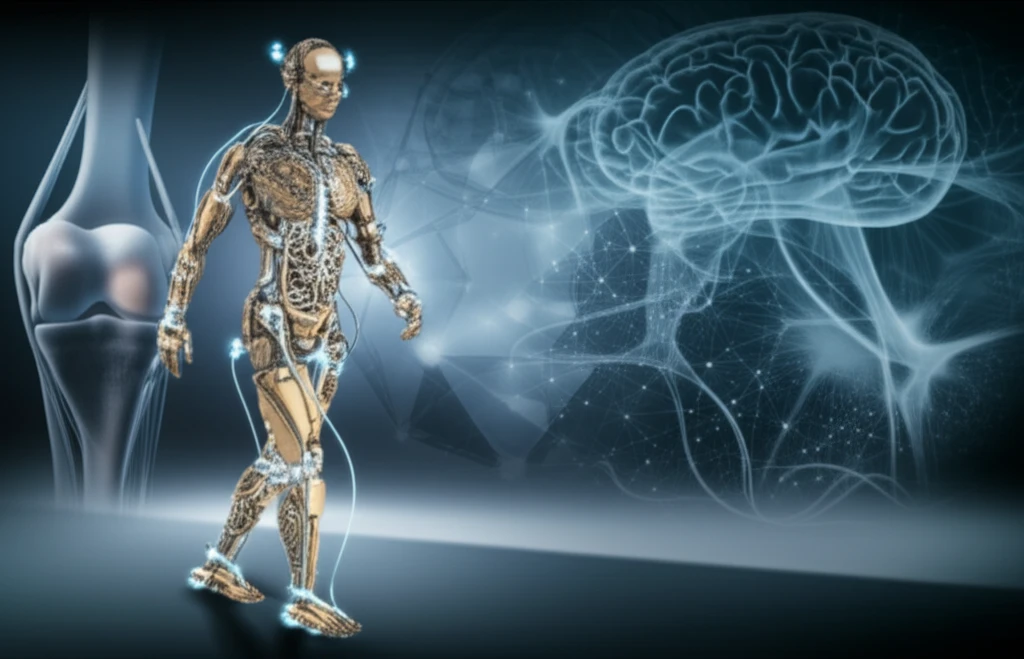
Unlocking Movement: How Biomechanics Reveals the Secrets of Walking with Knee Pain, ACL Injuries, and Beyond

"A Deep Dive into the Mechanical Energy of Your Gait: Understanding the Science Behind How You Walk and How Injuries Change It."
Walking, a seemingly simple act, is a complex dance of muscles, bones, and energy. For those of us who may take it for granted, the intricate mechanics of each step often go unnoticed. However, for individuals dealing with musculoskeletal disorders such as knee osteoarthritis, ACL injuries, or Parkinson's disease, walking can become a significant challenge. Understanding how these conditions affect the mechanics of walking, particularly the energy involved, is critical for improving mobility and quality of life.
This article explores the fascinating world of biomechanics, focusing on how researchers are using mechanical energy analysis to dissect the nuances of human gait. By examining the kinetic, potential, and total mechanical energy involved in walking, scientists can gain valuable insights into how these energies are altered by various conditions. This knowledge not only helps us understand the problems but also paves the way for more effective treatments and rehabilitation strategies.
We'll delve into the findings of a comparative study that examined the mechanical energy differences in normal individuals, those with ACL reconstruction, osteoarthritis, and Parkinson's disease. This research sheds light on how these conditions impact walking, offering hope for improved diagnosis, treatment, and ultimately, a better understanding of human movement.
The Energy of Movement: What Biomechanics Reveals
Biomechanics, the study of the mechanical laws relating to the movement or structure of living organisms, provides a powerful lens through which we can examine human gait. When we walk, our bodies constantly generate and manage energy. This energy can be broken down into several key components: kinetic energy (the energy of motion), potential energy (stored energy), and the total mechanical energy (the sum of kinetic and potential energies).
- Kinetic Energy: This is the energy of motion, directly related to the speed of the body segments.
- Potential Energy: This is stored energy, influenced by the position of body segments relative to the ground.
- Total Mechanical Energy: This is the sum of kinetic and potential energy, representing the overall energy expenditure during walking.
Empowering Movement: The Future of Biomechanics
The study of biomechanics offers a promising avenue for understanding and treating various musculoskeletal disorders. By continuing to explore the intricate relationship between energy, movement, and health, we can unlock new possibilities for improved mobility and quality of life. The insights gained from studies like the one discussed in this article are essential for clinicians, researchers, and patients, ensuring that the complexities of human movement are better understood and effectively addressed.