
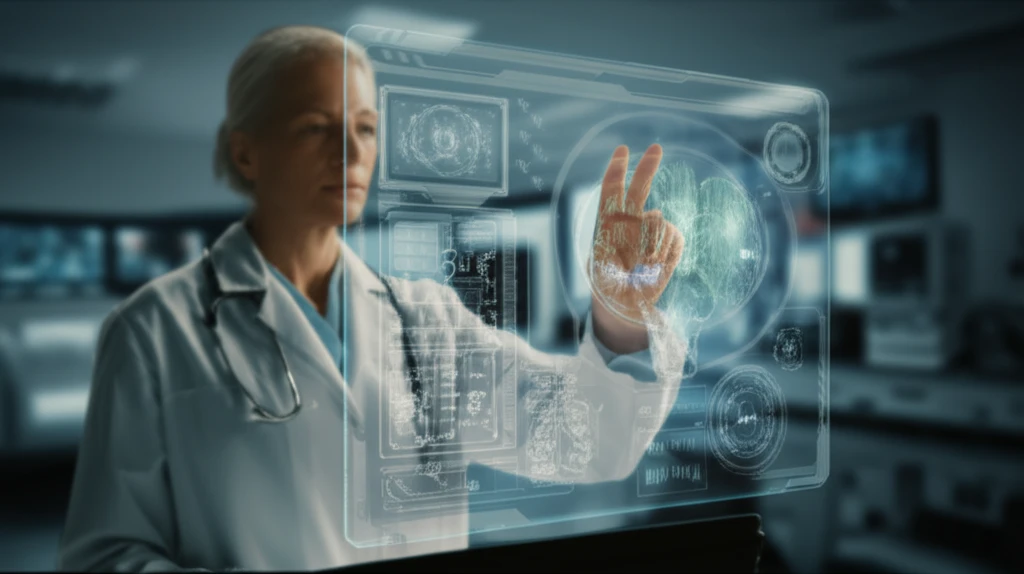
Unlocking Medical Mysteries: How AI is Revolutionizing Healthcare and Helping Clinicians

"From Faster Diagnoses to Smarter Treatments: Exploring the Cutting-Edge Role of Artificial Intelligence in Modern Medicine"
In the rapidly evolving landscape of healthcare, artificial intelligence (AI) is no longer a futuristic concept but a present-day reality. AI is swiftly transforming the way doctors diagnose, treat, and research diseases. From helping doctors make more accurate diagnoses to developing personalized treatment plans, AI's impact on medicine is profound and far-reaching. This article explores how AI is revolutionizing healthcare, enhancing patient outcomes, and creating new opportunities for medical innovation.
The integration of AI in healthcare involves using computer systems to perform tasks that typically require human intelligence. These tasks include learning, problem-solving, and decision-making. AI algorithms analyze vast amounts of medical data, identify patterns, and provide insights that can improve the efficiency and effectiveness of clinical practices. By automating routine tasks and providing valuable data analysis, AI is empowering clinicians to focus more on patient care and less on administrative burdens.
This transformation promises a future where healthcare is more precise, proactive, and accessible. This article will explore specific applications of AI in healthcare, including medical imaging, drug discovery, and personalized medicine. We'll also discuss the challenges and ethical considerations surrounding the use of AI in medicine. This helps the audience understand AI's transformative potential and its implications for the future of healthcare.
AI in Medical Imaging: Seeing Beyond the Visible
One of the most promising applications of AI in healthcare is medical imaging. AI algorithms can analyze images such as X-rays, MRIs, and CT scans to detect anomalies and diseases with remarkable accuracy. This is particularly beneficial in early cancer detection, where timely intervention can significantly improve patient outcomes. AI can identify subtle patterns that the human eye might miss, leading to faster and more accurate diagnoses.
- Faster Diagnoses: AI algorithms can quickly analyze medical images, significantly reducing the time it takes to diagnose conditions.
- Improved Accuracy: AI can detect subtle anomalies that might be missed by the human eye, leading to more precise diagnoses.
- Enhanced Efficiency: AI tools automate many of the routine tasks, freeing up radiologists to focus on more complex cases.
- Personalized Medicine: AI can assist in tailoring treatment plans to each patient's specific condition, increasing the chances of success.
The Future is Intelligent: Embracing AI in Healthcare
As AI technology continues to evolve, its role in healthcare will only grow. AI has the potential to transform healthcare in remarkable ways, improving diagnostic accuracy, personalizing treatments, and accelerating medical research. While challenges and ethical considerations remain, the benefits of AI in healthcare are clear. AI is reshaping the future of medicine, leading to better patient outcomes and a more efficient and accessible healthcare system. Embracing AI will be key to unlocking the next generation of medical advancements.