
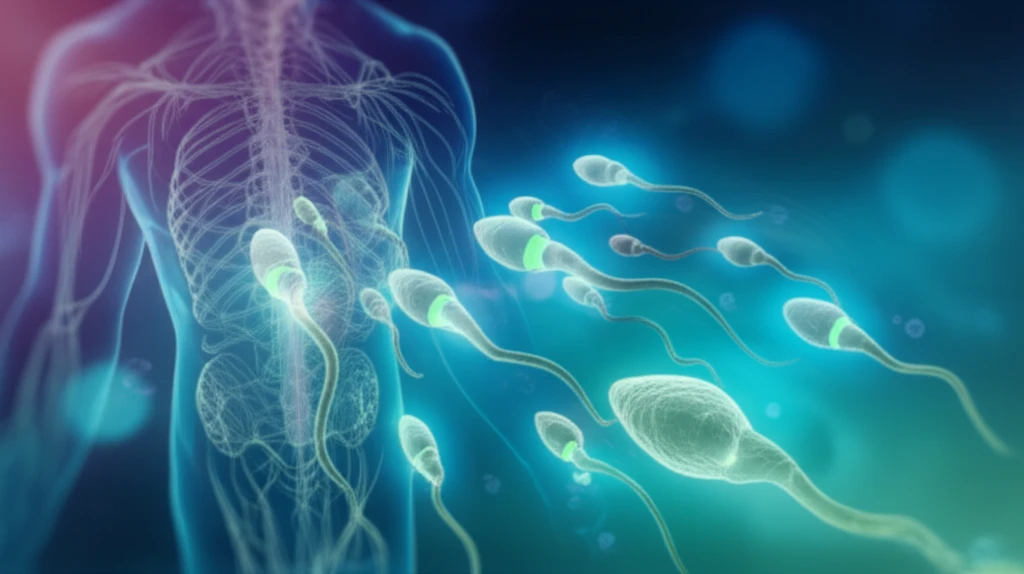
Microscopic view of germ cells transforming into sperm.

Unlocking Male Fertility: The Promise of Germ Cell Research

"Can germ cell transplants restore fertility after cancer treatments?"


Spermatogenesis, the continuous process of sperm production, relies on a small population of cells known as germ cells (CSG). These unique cells can both self-renew to maintain their population and differentiate into highly specialized spermatozoa. The functional activity of CSG has been demonstrated in mammals, opening doors for potential fertility treatments.

Unfortunately, cancer treatments like chemotherapy and radiation can severely damage CSG, leading to infertility. Testicular biopsies are now performed on pre-pubescent cancer patients to preserve CSG before treatment begins.

The possibility of using CSG in cellular therapy offers an exciting avenue for restoring male fertility. Animal models suggest that CSG, when transplanted back into the testes, can regenerate spermatogenesis, allowing for natural conception or through assisted reproductive technologies. However, using CSG in human therapy requires a deeper understanding of their molecular and functional characteristics.

Germ Cell Transplants: Restoring Fertility

Microscopic view of germ cells transforming into sperm.

CSG transplants could offer a solution for men who become infertile due to cancer treatments. By collecting and cryopreserving CSG before treatments known to damage these cells, doctors can potentially restore fertility later in life. The process involves transplanting the cells back into the testes, which can then regenerate sperm production. This has the potential to enable natural conception or fertility through assisted reproductive technologies.

Several research programs are underway to characterize the molecular and functional properties of CSG in order to improve their therapeutic use. These programs are investigating:

  • Identifying specific markers to isolate and characterize CSG populations.
  • Understanding the signals and factors that regulate CSG self-renewal and differentiation.
  • Developing methods to expand and culture CSG in vitro, creating a larger pool of cells for transplantation.
  • Testing the ability of transplanted CSG to restore spermatogenesis in animal models.
By answering these questions, scientists hope to develop effective and safe CSG-based therapies to treat male infertility. This would dramatically improve the quality of life for cancer survivors and others facing fertility challenges.

The Future of Male Fertility

Research into germ cells is rapidly advancing, offering new possibilities for treating male infertility. While challenges remain, the potential to restore fertility through CSG-based therapies is significant.

The development of effective and safe CSG therapies would have a profound impact on the lives of men who have undergone cancer treatments or face other fertility challenges. These therapies could enable them to have children and fulfill their dreams of parenthood.

Continued research and investment in germ cell biology are essential to realize the full potential of these therapies. By working together, scientists, clinicians, and patients can pave the way for a future where male infertility is no longer an insurmountable obstacle.

About this Article -

This article was crafted using a human-AI hybrid and collaborative approach. AI assisted our team with initial drafting, research insights, identifying key questions, and image generation. Our human editors guided topic selection, defined the angle, structured the content, ensured factual accuracy and relevance, refined the tone, and conducted thorough editing to deliver helpful, high-quality information.See our About page for more information.

Everything You Need To Know

1

How might germ cell transplants help restore fertility after cancer treatments?

Germ cell transplants, utilizing cells called CSG, offer a promising approach to restore fertility in men who have undergone cancer treatments. These treatments often damage CSG, which are essential for sperm production. By collecting and preserving CSG before cancer treatments, doctors can potentially transplant them back into the testes later, regenerating spermatogenesis. This could enable natural conception or fertility through assisted reproductive technologies.

2

What is spermatogenesis, and what role do germ cells (CSG) play in this process?

Spermatogenesis is the process of continuous sperm production, and it relies on specialized cells known as germ cells (CSG). These CSG have the unique ability to both self-renew, maintaining their population, and differentiate into spermatozoa. Because of these properties, CSG functional activity has been explored in mammals, making them a focal point for potential fertility treatments. Researchers aim to understand how CSG can be used to restore fertility in men who have experienced damage to these cells due to cancer treatments or other causes.

3

What research programs are currently underway to improve the therapeutic use of CSG?

Researchers are working to identify specific markers to isolate and characterize CSG populations. They also aim to understand the signals and factors that regulate CSG self-renewal and differentiation. Additionally, scientists are developing methods to expand and culture CSG in vitro, creating a larger pool of cells for transplantation. These advancements will enhance the therapeutic use of CSG in treating male infertility.

4

Can germ cell transplants offer a real solution for men dealing with infertility due to cancer treatments?

CSG transplants offer a potential solution for men facing infertility after cancer treatments that damage germ cells. By transplanting CSG back into the testes, the cells can regenerate sperm production. This can potentially lead to natural conception or fertility through assisted reproductive technologies. Current research programs are focused on characterizing the molecular and functional properties of CSG to improve their therapeutic use.

5

What is the outlook for male infertility treatment through germ cell research?

Research into germ cells is progressing rapidly, presenting new possibilities for treating male infertility. While challenges persist, the potential to restore fertility through CSG-based therapies is substantial. By addressing key questions and developing effective and safe CSG-based therapies, scientists aim to improve the quality of life for cancer survivors and others facing fertility challenges. The focus is on identifying how to effectively use CSG to regenerate sperm production and restore natural fertility.

Newsletter Subscribe

Subscribe to get the latest articles and insights directly in your inbox.