
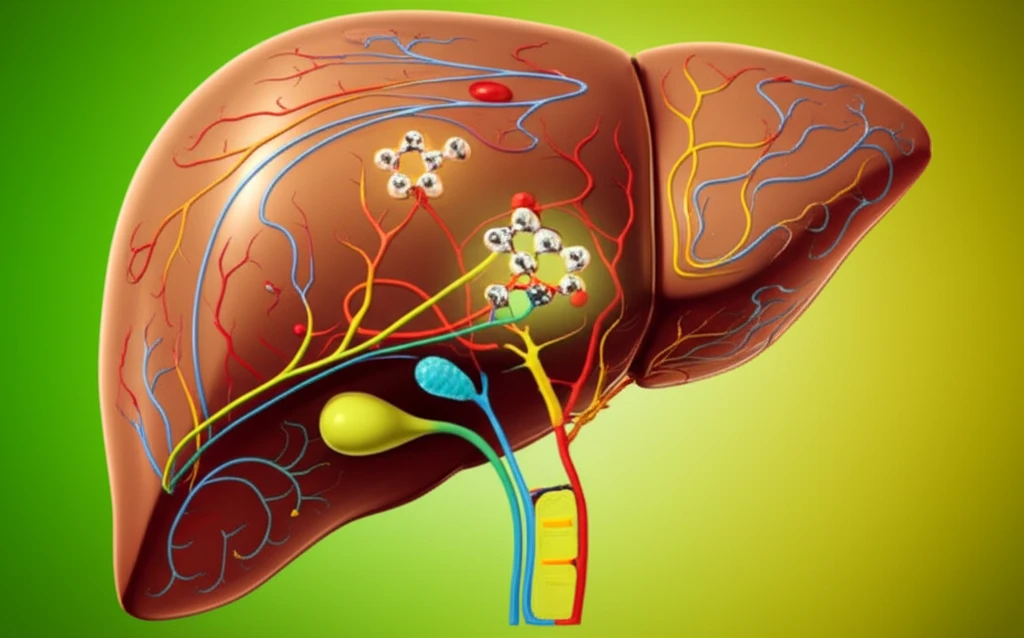
Illustration of liver metabolic pathways with Them2 enzyme highlighted.

Unlocking Liver Health: How This Enzyme Could Be The Key To Fighting Fatty Liver Disease

"New research spotlights the role of Thioesterase Superfamily Member 2 (Them2) in managing liver fat and its potential as a therapeutic target for NAFLD."


Non-alcoholic fatty liver disease (NAFLD) is a growing health concern, characterized by the accumulation of triglycerides within the liver. This occurs when the balance between fatty acid accrual and elimination is disrupted, leading to a range of metabolic complications.

Recent research has shed light on the crucial role of Thioesterase Superfamily Member 2 (Them2) in regulating liver fat metabolism. Them2 is an enzyme that influences how fatty acids are processed in the liver, specifically directing them towards triglyceride synthesis.

Them2 could be a key player in addressing NAFLD. This article explores how Them2 functions, its impact on liver health, and its potential as a target for future therapies.

Them2: A Closer Look at Its Role in Liver Fat Metabolism

Illustration of liver metabolic pathways with Them2 enzyme highlighted.

Them2, or Thioesterase Superfamily Member 2, is an enzyme that catalyzes the hydrolysis of fatty acyl-CoAs into free fatty acids. It's highly expressed not only in the liver but also in other oxidative tissues. Research indicates that Them2 plays a significant role in managing how the liver processes fats, influencing overall metabolic health.

To investigate Them2's function, scientists conducted studies using mice with a liver-specific deletion of the Them2 gene (L-Them2). The results revealed that these mice, while not protected against weight gain or glucose intolerance, exhibited notable decreases in plasma triglyceride and apolipoprotein B100 concentrations.

  • Decreased VLDL Secretion: L-Them2 mice showed reduced rates of VLDL (very low-density lipoprotein) secretion, indicating that Them2 influences the liver's ability to export fats into the bloodstream.
  • Compensatory Mechanisms: The absence of hepatic steatosis in L-Them2 mice was attributed to increased rates of fatty acid oxidation and decreased de novo lipogenesis (the creation of new fat) in high-fat-fed mice.
  • Increased Them2 in Human NAFLD: Consistent with its role in VLDL secretion, levels of THEM2 were found to be elevated in the livers of obese patients with NAFLD characterized by simple steatosis.
These findings suggest that Them2 directs fatty acids towards triglyceride synthesis for incorporation into VLDL particles, playing a crucial role in managing liver fat and overall lipid metabolism.

Them2: A Promising Target for Future Therapies

The research highlights Them2 as a potential therapeutic target for managing NAFLD and related metabolic disorders. By understanding how Them2 influences liver fat metabolism, scientists may develop targeted treatments to improve liver health and combat the growing epidemic of fatty liver disease.

About this Article -

This article was crafted using a human-AI hybrid and collaborative approach. AI assisted our team with initial drafting, research insights, identifying key questions, and image generation. Our human editors guided topic selection, defined the angle, structured the content, ensured factual accuracy and relevance, refined the tone, and conducted thorough editing to deliver helpful, high-quality information.See our About page for more information.

Everything You Need To Know

1

What is the primary function of Thioesterase Superfamily Member 2 (Them2) in the liver?

Them2's main role is to influence how fatty acids are processed in the liver. Specifically, Them2 directs these fatty acids towards triglyceride synthesis. This process is critical because it affects the accumulation of fat within the liver and its subsequent release into the bloodstream via very low-density lipoprotein (VLDL) particles, impacting overall lipid metabolism and the development of non-alcoholic fatty liver disease (NAFLD).

2

How does Them2's function relate to the development of Non-Alcoholic Fatty Liver Disease (NAFLD)?

Them2 is closely linked to NAFLD because it influences the balance of fat in the liver. By directing fatty acids towards triglyceride synthesis, Them2 can contribute to the accumulation of triglycerides within liver cells, a hallmark of NAFLD. Elevated levels of THEM2 were found in the livers of obese patients with NAFLD. This process disrupts the normal balance between fatty acid accrual and elimination, leading to the disease. If the liver is unable to handle the fat, it starts to accumulate, leading to metabolic complications associated with NAFLD.

3

What were the key findings when scientists studied mice with a liver-specific deletion of the Them2 gene (L-Them2)?

Studies on L-Them2 mice revealed several important findings. Although these mice were not protected against weight gain or glucose intolerance, they showed reduced rates of VLDL secretion, indicating that Them2 influences the liver's ability to export fats into the bloodstream. Also, it was noted that the absence of hepatic steatosis in L-Them2 mice was attributed to increased rates of fatty acid oxidation and decreased de novo lipogenesis (the creation of new fat) in high-fat-fed mice. This suggests that in the absence of Them2, the liver compensates by altering how it processes fats, leading to different metabolic outcomes.

4

Besides the liver, where else is Them2 expressed, and why is this significant?

Them2 is also highly expressed in other oxidative tissues. Although the text focuses on the liver, Them2’s presence in other tissues suggests its broader impact on metabolic processes. The significance lies in the potential for Them2 to affect fat metabolism across multiple organ systems, influencing overall health beyond just liver function. While the research in the text primarily focuses on the liver, understanding the broader impact of Them2 could reveal more about its overall physiological role and lead to therapies for a wider range of metabolic disorders.

5

In what ways could targeting Them2 be a therapeutic approach for NAFLD and related metabolic disorders?

Targeting Them2 offers a promising therapeutic strategy by influencing how the liver processes and manages fats. By modulating Them2 activity, scientists could potentially reduce the accumulation of triglycerides within the liver, a core feature of NAFLD. This could be achieved by either inhibiting Them2 to reduce triglyceride synthesis or by enhancing its activity in a controlled manner to alter fat metabolism. The key is to understand how Them2 influences VLDL secretion and the balance between fatty acid synthesis and oxidation, offering opportunities to develop treatments that improve liver health and address related metabolic issues.

Newsletter Subscribe

Subscribe to get the latest articles and insights directly in your inbox.