
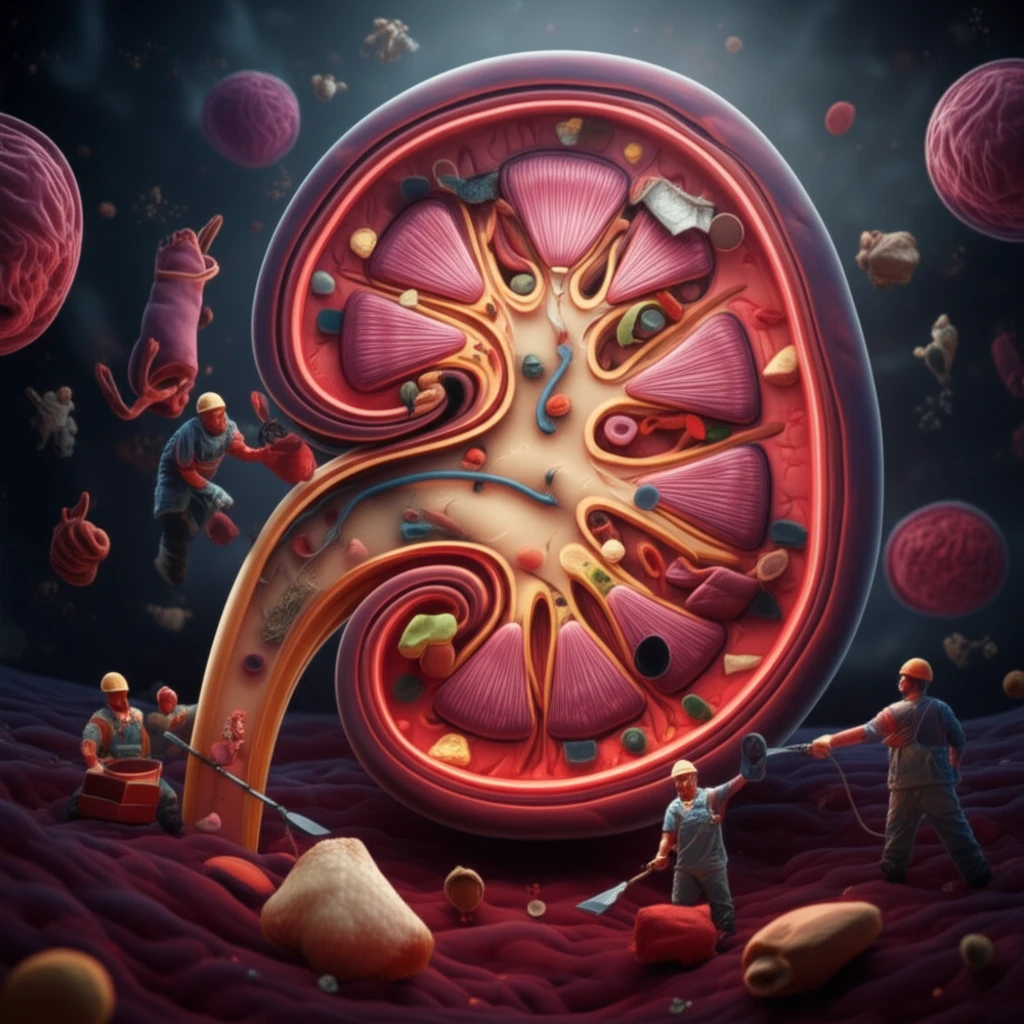
Illustration of autophagy process in a kidney cell.

Unlocking Kidney Health: How Autophagy Could Revolutionize Treatment

"New research highlights the protective role of autophagy in kidney fibrosis, offering potential pathways for future therapies."


Chronic kidney disease (CKD) is a global health challenge, often leading to end-stage renal disease. A primary culprit behind CKD is renal fibrosis, a process where the kidney's tissues become scarred and damaged, impairing its ability to function properly. Scientists are constantly seeking new ways to combat this condition, and recent research has illuminated a promising avenue: autophagy.

Autophagy, derived from the Greek words for "self-eating," is a fundamental cellular process responsible for removing damaged components and maintaining cellular health. It acts as a quality control system, ensuring that cells function optimally by clearing out misfolded proteins, dysfunctional organelles, and other cellular debris. When autophagy is disrupted, cells can accumulate harmful substances, leading to various diseases.

A groundbreaking study has shed light on the protective role of autophagy in a specific type of kidney cell known as FOXD1 stroma-derived cells. These cells play a critical role in the development of renal fibrosis, and the study's findings suggest that enhancing autophagy in these cells could prevent or even reverse kidney damage. This discovery opens up exciting new possibilities for treating CKD and improving kidney health.

Autophagy: Your Kidneys' Natural Defense System

Illustration of autophagy process in a kidney cell.

Imagine your kidneys as bustling cities, constantly working to filter waste and maintain balance in your body. Just like any city, your kidneys need a reliable waste management system to stay healthy. That's where autophagy comes in. It's the cellular equivalent of a sanitation department, diligently clearing out the trash and keeping everything running smoothly.

When autophagy functions properly, it helps protect the kidneys from damage and disease. However, when this process is impaired, harmful substances can accumulate, leading to renal fibrosis. This scarring process disrupts the kidney's delicate structure, hindering its ability to filter waste and ultimately leading to kidney failure.

  • Removing Damaged Components: Autophagy clears out damaged organelles, misfolded proteins, and other cellular debris that can contribute to fibrosis.
  • Maintaining Cellular Health: By removing these harmful substances, autophagy helps keep kidney cells healthy and functioning properly.
  • Preventing Scarring: Autophagy can prevent or even reverse the scarring process of renal fibrosis, protecting the kidney's structure and function.
The recent study focused on FOXD1 stroma-derived cells, a specific type of cell that contributes to renal fibrosis. The researchers discovered that enhancing autophagy in these cells could significantly reduce kidney damage, offering a promising new therapeutic target.

A Promising Future for Kidney Disease Treatment

The discovery of autophagy's protective role in FOXD1 stroma-derived cells represents a significant step forward in the fight against chronic kidney disease. By understanding how autophagy works and how to enhance it in these specific cells, researchers are paving the way for new therapies that could prevent or even reverse renal fibrosis. This could lead to a future where kidney disease is no longer a life-threatening condition, offering hope and improved quality of life for millions worldwide.

About this Article -

This article was crafted using a human-AI hybrid and collaborative approach. AI assisted our team with initial drafting, research insights, identifying key questions, and image generation. Our human editors guided topic selection, defined the angle, structured the content, ensured factual accuracy and relevance, refined the tone, and conducted thorough editing to deliver helpful, high-quality information.See our About page for more information.

Everything You Need To Know

1

What is autophagy, and how does it relate to kidney health?

Autophagy, derived from the Greek words for "self-eating," is a vital cellular process that acts as a quality control system within your kidneys. It's responsible for removing damaged components like misfolded proteins, dysfunctional organelles, and cellular debris. This process is crucial for maintaining the health of kidney cells and preventing the accumulation of harmful substances that can lead to disease. Specifically, in the context of kidney health, autophagy helps prevent or reverse renal fibrosis, a major cause of chronic kidney disease. When autophagy functions properly, it helps protect the kidneys from damage and disease.

2

What role does renal fibrosis play in chronic kidney disease (CKD)?

Renal fibrosis is a key contributor to chronic kidney disease (CKD). It's a process where the kidney's tissues become scarred and damaged. This scarring impairs the kidney's ability to function correctly, hindering its ability to filter waste and ultimately leading to kidney failure. If left unchecked, renal fibrosis can progress to end-stage renal disease, a serious and life-threatening condition. Autophagy's role in clearing away the cellular debris directly mitigates the development and progression of renal fibrosis, offering a potential therapeutic target.

3

How can enhancing autophagy in FOXD1 stroma-derived cells help treat kidney disease?

FOXD1 stroma-derived cells are a specific type of kidney cell that contributes to renal fibrosis. Research indicates that enhancing autophagy within these cells could significantly reduce kidney damage. By boosting autophagy, the cells become more efficient at clearing out the damaged components that contribute to fibrosis. This action potentially prevents or even reverses the scarring process, thereby protecting the kidney's structure and function. This discovery represents a significant step forward in the fight against chronic kidney disease, paving the way for new therapies.

4

Why is the discovery of autophagy's role in kidney health so significant?

The discovery of autophagy's protective role is a significant step because it offers a promising new avenue for treating and preventing chronic kidney disease. Autophagy provides a natural defense system for the kidneys. Understanding and enhancing autophagy in specific cells like FOXD1 stroma-derived cells opens the door to novel therapeutic strategies. This is crucial because it could lead to therapies that not only manage the symptoms of CKD but potentially reverse the damage caused by renal fibrosis. This represents a huge step towards improving the quality of life for millions worldwide.

5

What are the key benefits of autophagy in kidney health as described in the context?

The key benefits of autophagy in kidney health are threefold: First, autophagy actively removes damaged components, which include damaged organelles, misfolded proteins, and cellular debris. Second, it helps to maintain the overall cellular health of the kidney by eliminating harmful substances. Third, and most critically, autophagy can prevent or even reverse the scarring process of renal fibrosis, which is a leading cause of kidney damage and failure. By performing these functions, autophagy safeguards the kidneys' structure and function, helping to protect against CKD.

Newsletter Subscribe

Subscribe to get the latest articles and insights directly in your inbox.