
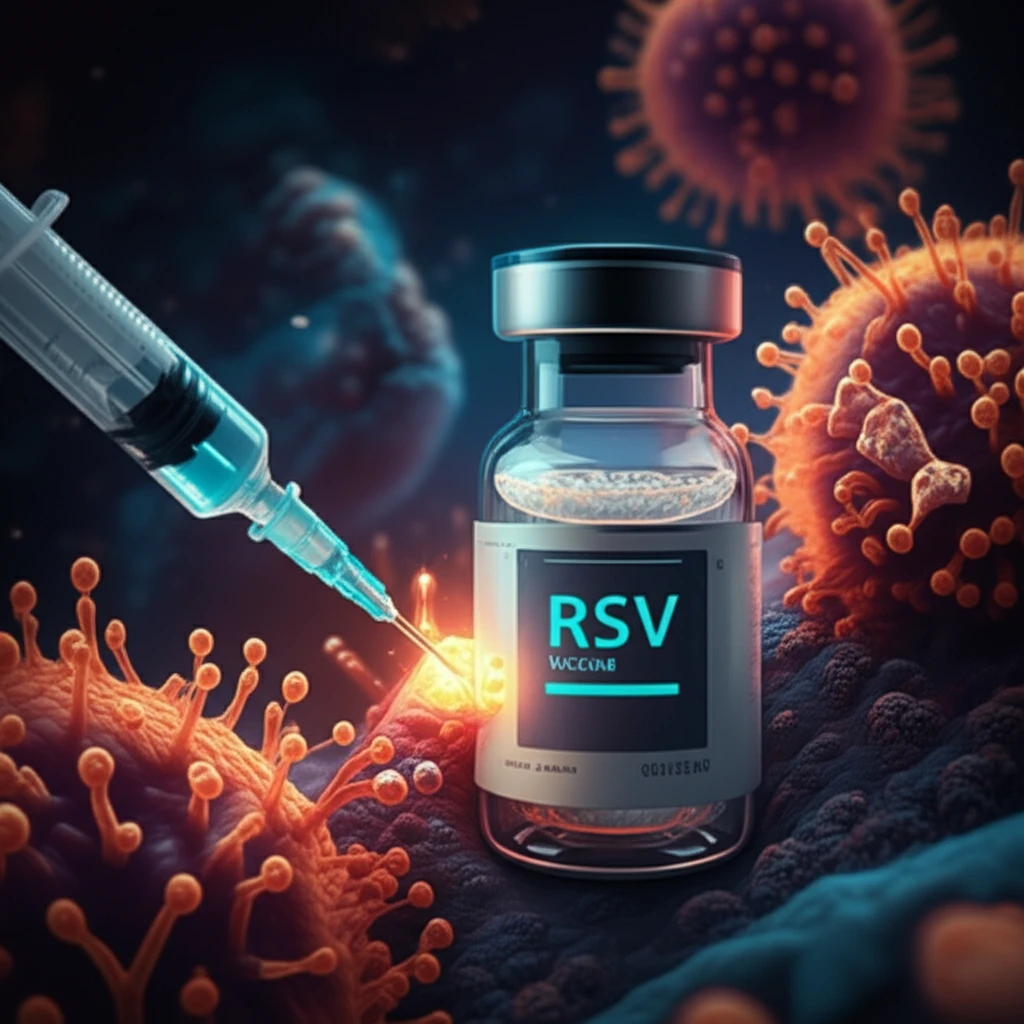
Illustration of a vaccine vial, representing the RSV vaccine, with a microscopic view of the virus and the vaccine

Unlocking Immunity: The Revolutionary RSV Vaccine and Its Promise for a Healthier Future

"Scientists have engineered a new vaccine to combat Respiratory Syncytial Virus (RSV), a common threat to infants and the elderly. This breakthrough offers hope with its improved stability and potential to revolutionize RSV prevention."


Respiratory Syncytial Virus (RSV) is a formidable foe, causing widespread respiratory infections that affect millions each year. From infants to the elderly, RSV poses a significant threat, leading to hospitalizations and severe health complications. Currently, there is no widely available vaccine to combat RSV, leaving a crucial gap in preventive care. However, recent scientific advancements have paved the way for a promising solution: a novel RSV vaccine.

The newly developed RSV vaccine represents a significant leap forward in vaccine technology. Unlike previous attempts, this vaccine is designed to target and neutralize the virus effectively, while also boasting enhanced stability. This stability is crucial for maintaining the vaccine's potency and efficacy, especially during storage and distribution, ensuring its accessibility and reliability for widespread use.

This article dives into the innovative science behind this groundbreaking vaccine, its development, and its potential to transform the fight against RSV. We'll explore how this new vaccine works, its benefits, and the impact it could have on public health. By understanding the science and the potential, we can appreciate the hope and opportunity this new vaccine offers for a healthier future.

The Science Behind the Breakthrough: How the RSV Vaccine Works

Illustration of a vaccine vial, representing the RSV vaccine, with a microscopic view of the virus and the vaccine

At the heart of this new RSV vaccine lies a clever understanding of how the virus operates. RSV, like many viruses, uses a fusion (F) glycoprotein to enter host cells, initiating infection. The vaccine capitalizes on this knowledge by targeting the F protein. Scientists have engineered this F protein to remain in a prefusion state, the form recognized by neutralizing antibodies, thus triggering a robust immune response.

The vaccine's design incorporates several key elements to enhance its effectiveness. The F protein is modified to maintain its prefusion conformation, crucial for eliciting a strong immune response. Furthermore, the vaccine includes mutations that boost the protein's stability, which enhances its shelf life and effectiveness. This targeted approach ensures that the vaccine effectively prepares the body to defend against RSV.

  • The vaccine targets the RSV fusion (F) glycoprotein, essential for viral entry.
  • Engineered F protein stays in its prefusion form, triggering a robust immune response.
  • The vaccine includes modifications to maintain the protein's stability.
  • These elements together ensure an effective and durable defense against RSV.
The key to the vaccine's effectiveness is the immune system's reaction. The engineered F protein in the vaccine prompts the body to produce antibodies that specifically target and neutralize RSV. These antibodies are designed to recognize the prefusion form of the F protein, which is the form present on the virus surface before it infects cells. This targeted approach ensures that the immune response is highly effective at preventing RSV infection and disease.

A Brighter Future: The Potential Impact of the RSV Vaccine

The development of this novel RSV vaccine marks a pivotal moment in the fight against respiratory illnesses. With its enhanced stability, targeted approach, and proven immunogenicity, this vaccine promises to be a powerful tool in protecting vulnerable populations. As research progresses and the vaccine becomes more widely available, we can anticipate a significant reduction in RSV-related hospitalizations and a healthier future for all.

About this Article -

This article was crafted using a human-AI hybrid and collaborative approach. AI assisted our team with initial drafting, research insights, identifying key questions, and image generation. Our human editors guided topic selection, defined the angle, structured the content, ensured factual accuracy and relevance, refined the tone, and conducted thorough editing to deliver helpful, high-quality information.See our About page for more information.

This article is based on research published under:

DOI-LINK: 10.1016/j.vaccine.2018.10.032, Alternate LINK

Title: Design And Characterization Of A Fusion Glycoprotein Vaccine For Respiratory Syncytial Virus With Improved Stability

Subject: Infectious Diseases

Journal: Vaccine

Publisher: Elsevier BV

Authors: Lan Zhang, Eberhard Durr, Jennifer D. Galli, Scott Cosmi, Pedro J. Cejas, Bin Luo, Sinoeun Touch, Paul Parmet, Arthur Fridman, Amy S. Espeseth, Andrew J. Bett

Published: 2018-12-01

Everything You Need To Know

1

What is Respiratory Syncytial Virus (RSV) and why is a vaccine needed?

Respiratory Syncytial Virus (RSV) is a widespread virus that causes respiratory infections, especially in infants and the elderly, leading to potential hospitalizations and severe health complications. A vaccine is crucial because currently, there is no widely available preventive measure to combat RSV, leaving a significant gap in protecting vulnerable populations from this illness.

2

How does the new RSV vaccine differ from previous attempts, and what makes it more promising?

The novel RSV vaccine distinguishes itself through its enhanced stability and targeted approach. Unlike previous attempts, this vaccine is designed to effectively target and neutralize the virus. Its improved stability ensures that the vaccine maintains its potency during storage and distribution, which is vital for broad accessibility and reliable use.

3

Can you explain the science behind how this new RSV vaccine works to protect against the virus?

The RSV vaccine leverages an understanding of how the virus infects cells. RSV uses a fusion (F) glycoprotein to enter host cells, initiating infection. The vaccine targets this F protein, specifically engineering it to remain in a prefusion state. This prefusion form is recognized by neutralizing antibodies, prompting a robust immune response. By presenting the F protein in its prefusion state, the vaccine ensures that the body produces antibodies that can effectively prevent the virus from infecting cells.

4

What role does the prefusion form of the F protein play in the effectiveness of the RSV vaccine, and why is it so important?

The prefusion form of the F protein is crucial for the RSV vaccine's effectiveness because it is the shape of the protein that the immune system recognizes most effectively to produce neutralizing antibodies. By engineering the F protein to remain in this prefusion state, the vaccine ensures that the antibodies generated will specifically target and neutralize the virus before it can infect cells. This targeted approach maximizes the vaccine's ability to prevent RSV infection.

5

What is the potential impact of the new RSV vaccine on public health, and who will benefit the most?

The RSV vaccine has the potential to significantly reduce RSV-related hospitalizations, particularly among vulnerable populations such as infants and the elderly. Its enhanced stability, targeted approach, and proven immunogenicity promise a powerful tool in combating respiratory illnesses. As the vaccine becomes more widely available, it could lead to a healthier future for all by minimizing the burden of RSV infections.

Newsletter Subscribe

Subscribe to get the latest articles and insights directly in your inbox.