
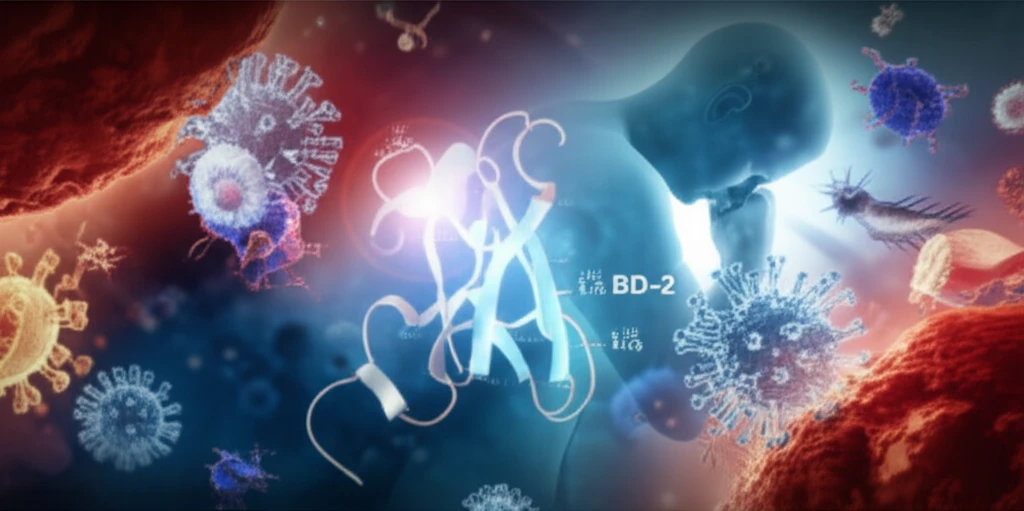
Unlocking Immunity: How a Tiny Protein Could Change the Fight Against Deadly Fevers

"Scientists are exploring the potential of a small protein, serum beta-defensin-2, to predict and improve outcomes for those battling severe viral infections like Crimean-Congo Hemorrhagic Fever (CCHF)."
In the realm of infectious diseases, where the invisible enemy wages war on human health, researchers are continually searching for new strategies to protect and heal. One such strategy involves understanding the intricate dance between the human body and invading pathogens. Recent studies have cast a spotlight on a small protein, serum beta-defensin-2 (BD-2), and its potential role in the fight against severe illnesses, including the deadly Crimean-Congo Hemorrhagic Fever (CCHF).
CCHF is a severe viral disease transmitted through ticks, often leading to hemorrhagic symptoms and a high mortality rate. The urgency of finding effective treatments and predicting patient outcomes has driven scientists to explore various aspects of the disease. Their attention has turned to BD-2, an antimicrobial peptide known for its role in the immune response. This research delves into how BD-2 levels might be linked to the severity and prognosis of CCHF, offering hope for improved patient care.
This article explores the relationship between serum beta-defensin-2 levels and the clinical course of CCHF. We will examine the research findings, their potential implications for treatment, and what this means for future research in infectious diseases. By understanding the role of BD-2, we may be one step closer to improving survival rates and developing targeted therapies for this devastating illness.
Deciphering BD-2: The Body's First Line of Defense
BD-2 is a type of antimicrobial peptide that plays a critical role in the body's innate immune system. Primarily produced by the skin, respiratory tract, and gastrointestinal system, BD-2 acts as a first line of defense against pathogens, including viruses. Its primary function is to neutralize or eliminate invading microorganisms, preventing them from causing harm. When faced with infections, the body ramps up the production of BD-2, which then combats the invaders through multiple mechanisms. For example, it compromises the viral envelope and prevents viral entry into cells.
- Antimicrobial Action: BD-2 directly targets and neutralizes pathogens.
- Immune Modulation: It can also influence the broader immune response to enhance the body's defense mechanisms.
- Cellular Signaling: BD-2 affects cellular signaling pathways involved in viral replication.
Looking Ahead: The Future of BD-2 in Disease Treatment
The study of serum beta-defensin-2 in CCHF offers a promising avenue for future research and treatment strategies. While further studies are needed to confirm these findings, the initial results suggest that BD-2 levels could play a crucial role in predicting disease severity and improving patient outcomes. This research underscores the importance of understanding the intricate ways our bodies respond to infections. As scientists continue to explore the potential of BD-2, it brings us closer to novel therapies. These could enhance the body's natural defenses and improve patient care in the face of severe diseases like CCHF.