
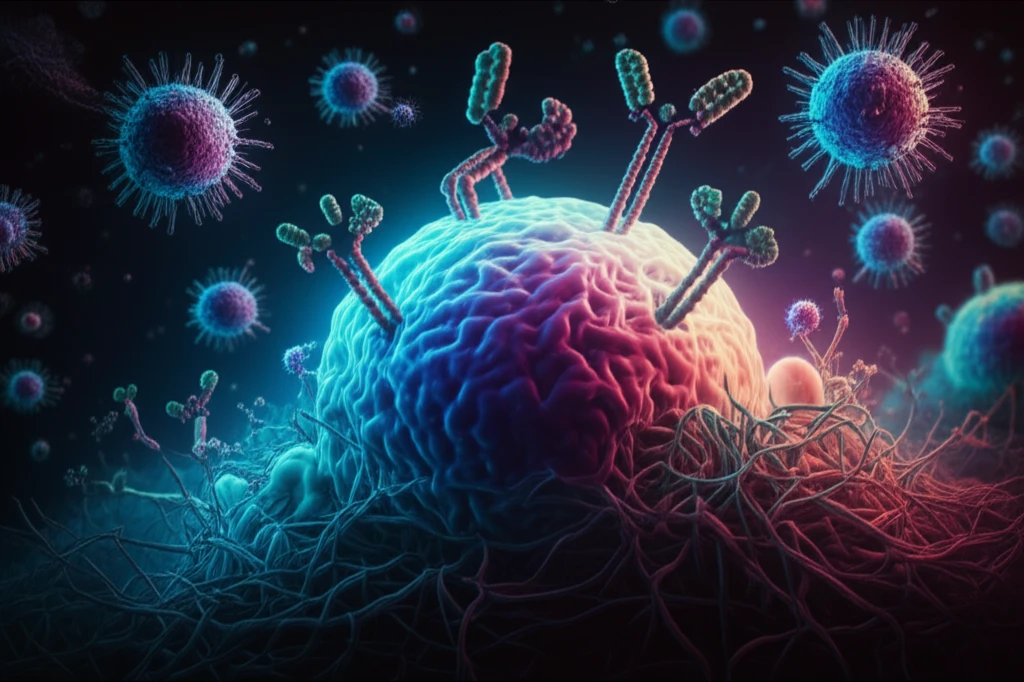
Illustration of a human cell being defended by the immune system against a virus.

Unlocking Immune Secrets: How Research is Fighting Viral Infections

"Discovering the Power of the Immune System: A Look at New Research and Potential Treatments"


In the ever-evolving world of medicine, the fight against viral infections remains a critical frontier. Researchers are constantly seeking new ways to understand how viruses affect our bodies and how we can effectively combat them. Recent studies have shed light on the complex interactions between viruses and our immune systems, offering promising avenues for innovative treatments. This article delves into some of the most recent and important research findings, highlighting the remarkable potential of the human immune system and the cutting-edge strategies being developed to enhance its power.

The human immune system is a highly sophisticated defense network, working tirelessly to protect us from various pathogens, including viruses. Understanding how viruses interact with this intricate system is key to developing effective therapies. Recent studies, like those focusing on cytomegalovirus (HCMV) and BK polyomavirus, provide valuable insights into how these viruses behave and the ways in which we can potentially interfere with their activity. Such insights are critical for developing targeted treatments and enhancing our overall defense mechanisms against these infectious agents.

This exploration will look at how research is helping to combat viral infections. We will look at specific studies, breaking down their methodologies and results. We will also discuss the implications of these findings for future treatments and preventative strategies. The goal is to provide a clear understanding of the ongoing efforts in antiviral research and the potential benefits for public health. This article is written to be accessible to a broad audience, with a focus on providing useful information and insights in a clear and engaging manner.

Deciphering Viral Behavior: The Fight Against HCMV and BK Virus

Illustration of a human cell being defended by the immune system against a virus.

One of the key areas of focus in recent research is understanding how specific viruses interact with the human body. Two notable examples are human cytomegalovirus (HCMV) and BK polyomavirus (BKV). HCMV, a widespread virus, often poses a significant threat to individuals with compromised immune systems. Meanwhile, BK virus can cause complications in transplant patients. Research into these viruses seeks to understand their mechanisms of infection, replication, and the ways in which the immune system responds. The goal is to identify vulnerabilities that can be exploited to develop targeted therapies.

HCMV infection is a widespread opportunistic pathogen, particularly dangerous for those with weakened immune systems. Research has shown that the virus can manipulate cellular processes to enhance its own replication. For instance, studies have shown that HCMV can interact with the host's cellular machinery to promote the production of chemokines like CCL5, which further boosts viral infection. Conversely, the research points to ways to combat HCMV infection by targeting these interactions, such as through the use of antiviral agents like tricin.

  • HCMV's Impact: HCMV can cause significant morbidity and mortality in immunocompromised individuals.
  • CCL5's Role: The chemokine CCL5 plays a critical role in facilitating HCMV replication.
  • Tricin's Potential: Tricin has shown promise as an antiviral agent by inhibiting HCMV replication.
Another key area of research focuses on BK polyomavirus (BKV). This virus can reactivate in individuals with weakened immune systems, particularly after hematopoietic stem cell transplants (HSCT). Recent studies have investigated the incidence and outcomes of BKV infections in transplant patients, looking for correlations with different symptoms and determining factors that might predict the development of BK viremia. The findings have underscored the importance of monitoring and managing BKV infections in transplant recipients, highlighting the need for effective strategies to reduce the associated risks and improve patient outcomes.

Future Prospects and Ongoing Research

The ongoing research in antiviral therapies and the immune system offers hope for improved treatment outcomes and preventative measures. The findings from the studies on HCMV and BK virus provide key insights, offering innovative approaches to fighting viral infections. By further exploring these complex interactions and developing targeted therapies, researchers can strive to better safeguard public health. As we move forward, the convergence of scientific innovation and human ingenuity will undoubtedly play a pivotal role in shaping the future of antiviral medicine and improving our ability to defend against infectious diseases.

About this Article -

This article was crafted using a human-AI hybrid and collaborative approach. AI assisted our team with initial drafting, research insights, identifying key questions, and image generation. Our human editors guided topic selection, defined the angle, structured the content, ensured factual accuracy and relevance, refined the tone, and conducted thorough editing to deliver helpful, high-quality information.See our About page for more information.

This article is based on research published under:

DOI-LINK: 10.1016/j.ijid.2018.04.4267, Alternate LINK

Title: Ccl5-Dependent Replication Of Human Cytomegalovirus Is Inhibited By Tricin In Vitro

Subject: Infectious Diseases

Journal: International Journal of Infectious Diseases

Publisher: Elsevier BV

Authors: T. Murayama, H. Sadanari, M. Takemoto, T. Daikoku

Published: 2018-08-01

Everything You Need To Know

1

Why is understanding the human immune system crucial for fighting viral infections?

The human immune system is the body's primary defense against pathogens, including viruses. Understanding how viruses interact with this intricate network is key to developing effective therapies. For example, research into cytomegalovirus (HCMV) and BK polyomavirus (BKV) provides insights into viral behavior and potential targets for intervention. Without understanding the specific immune responses, developing targeted and effective antiviral strategies would be impossible, leaving us vulnerable to a wide range of viral threats. Further study includes how our bodies produce antibodies and T-cells when exposed to specific viral threats.

2

How does human cytomegalovirus (HCMV) affect individuals with weakened immune systems, and what potential treatments are being explored?

Human cytomegalovirus (HCMV) is an opportunistic pathogen that poses a significant threat to individuals with compromised immune systems. Research has revealed that HCMV can manipulate cellular processes to enhance its replication, such as by interacting with the host's cellular machinery to promote the production of chemokines like CCL5, which further boosts viral infection. Potential treatments being explored include antiviral agents like tricin, which has shown promise in inhibiting HCMV replication. Further research must explore the drug's efficacy in clinical trials.

3

What role does CCL5 play in HCMV infections, and how could this be targeted for therapeutic intervention?

CCL5 is a chemokine that plays a critical role in facilitating HCMV replication. Studies have shown that HCMV promotes the production of CCL5, which in turn enhances viral infection. Targeting this interaction could be a viable therapeutic strategy. For instance, inhibiting CCL5 production or blocking its interaction with its receptors could potentially reduce HCMV replication and disease severity. Agents like tricin may exert their antiviral effects, in part, by interfering with this pathway. However, more research is needed to fully elucidate the mechanisms involved and develop targeted CCL5 inhibitors for HCMV treatment.

4

Why are hematopoietic stem cell transplant (HSCT) recipients particularly vulnerable to BK polyomavirus (BKV) infections, and what measures are needed?

Hematopoietic stem cell transplant (HSCT) recipients are particularly vulnerable to BK polyomavirus (BKV) infections because their immune systems are often weakened or suppressed as a result of the transplant procedure. This allows the virus to reactivate and cause complications. Monitoring and managing BKV infections in transplant recipients are crucial. Effective strategies are needed to reduce the associated risks and improve patient outcomes. These strategies may include regular screening for BKV viremia and preemptive antiviral therapy.

5

What future research directions hold promise for improving antiviral treatments and preventing viral infections, based on current studies?

Based on current studies, future research directions that hold promise for improving antiviral treatments include further exploring the complex interactions between viruses like HCMV and BKV and the human immune system. Developing targeted therapies based on these insights, such as agents that interfere with specific viral mechanisms or enhance immune responses, is critical. Additionally, continued investigation into the incidence and outcomes of viral infections in vulnerable populations, such as transplant recipients, is needed to refine monitoring and management strategies. The convergence of scientific innovation and human ingenuity will undoubtedly play a pivotal role in shaping the future of antiviral medicine and improving our ability to defend against infectious diseases, it is necessary to perform in-vitro studies to fully understand drug mechanisms.

Newsletter Subscribe

Subscribe to get the latest articles and insights directly in your inbox.