
Unlocking Hope: How Cutting-Edge Research is Revolutionizing Colorectal Cancer Treatment

"New Study Reveals Promising Role of Immune Cells in Fighting Colorectal Cancer and Boosting Survival Rates"
Colorectal cancer (CRC), a disease affecting millions worldwide, continues to pose a significant health challenge. However, recent advances in medical research are bringing new hope to patients and their families. A groundbreaking study has unveiled a critical role for certain immune cells in combating CRC, offering promising avenues for treatment and improved survival rates.
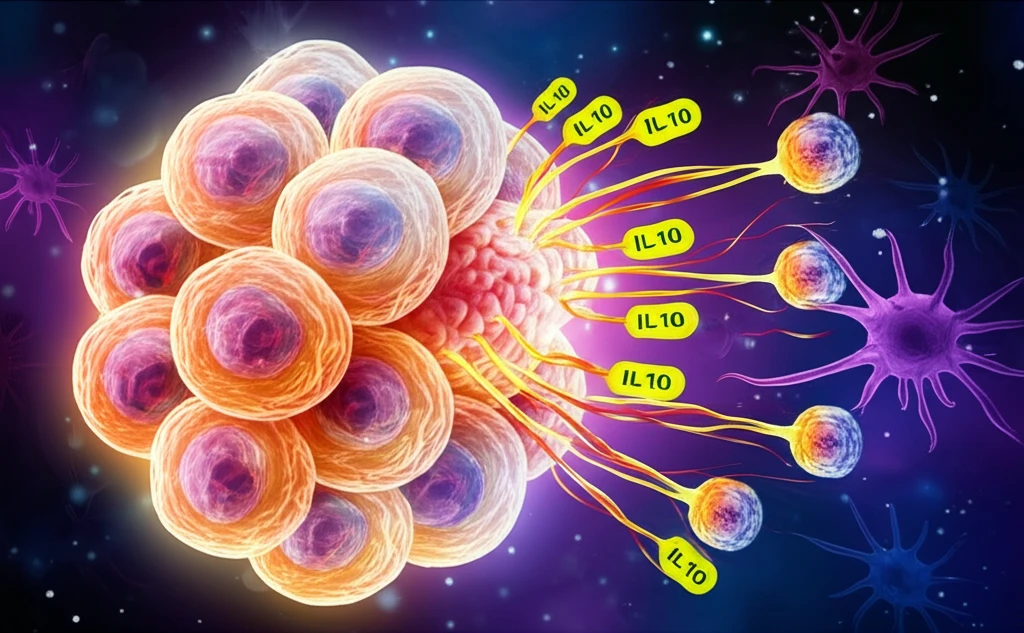
This exciting research focuses on a specific type of immune cell called CD19⁺CD27hi plasmablasts. These cells, previously linked to improved outcomes in CRC, have now been shown to possess remarkable abilities to suppress harmful inflammation within the tumor environment. This discovery is significant because chronic inflammation is a known driver of cancer progression.
This article delves into the details of this study, explaining the mechanisms behind the plasmablasts' activity and how they contribute to better outcomes for CRC patients. We'll explore the potential implications of these findings for future treatments and the overall fight against this prevalent disease.
The Power of Plasmablasts: Understanding Their Role in Colorectal Cancer
The study, published in a leading scientific journal, examined the behavior of CD19⁺CD27hi plasmablasts in the context of CRC. Researchers found that these plasmablasts, which are a type of B cell, are naturally enriched in tumors and play a crucial role in regulating the immune response. Specifically, they suppress the activity of Th17 cells, a type of immune cell that promotes inflammation.
- CD19⁺CD27hi plasmablasts are enriched in colorectal tumors.
- They suppress Th17 inflammation, a driver of cancer progression.
- This suppression is mediated by the production of interleukin-10 (IL-10).
- Patients with high levels of these plasmablasts show improved survival.
Looking Ahead: The Future of CRC Treatment
The research on CD19⁺CD27hi plasmablasts offers a beacon of hope for CRC patients. By understanding the role of these immune cells, researchers can now explore new therapeutic strategies. This could include ways to boost the number or activity of these plasmablasts within tumors, thereby harnessing the body's own defenses to fight the disease. As research progresses, we can expect to see even more effective and personalized treatments for colorectal cancer, ultimately improving the lives of countless individuals.