
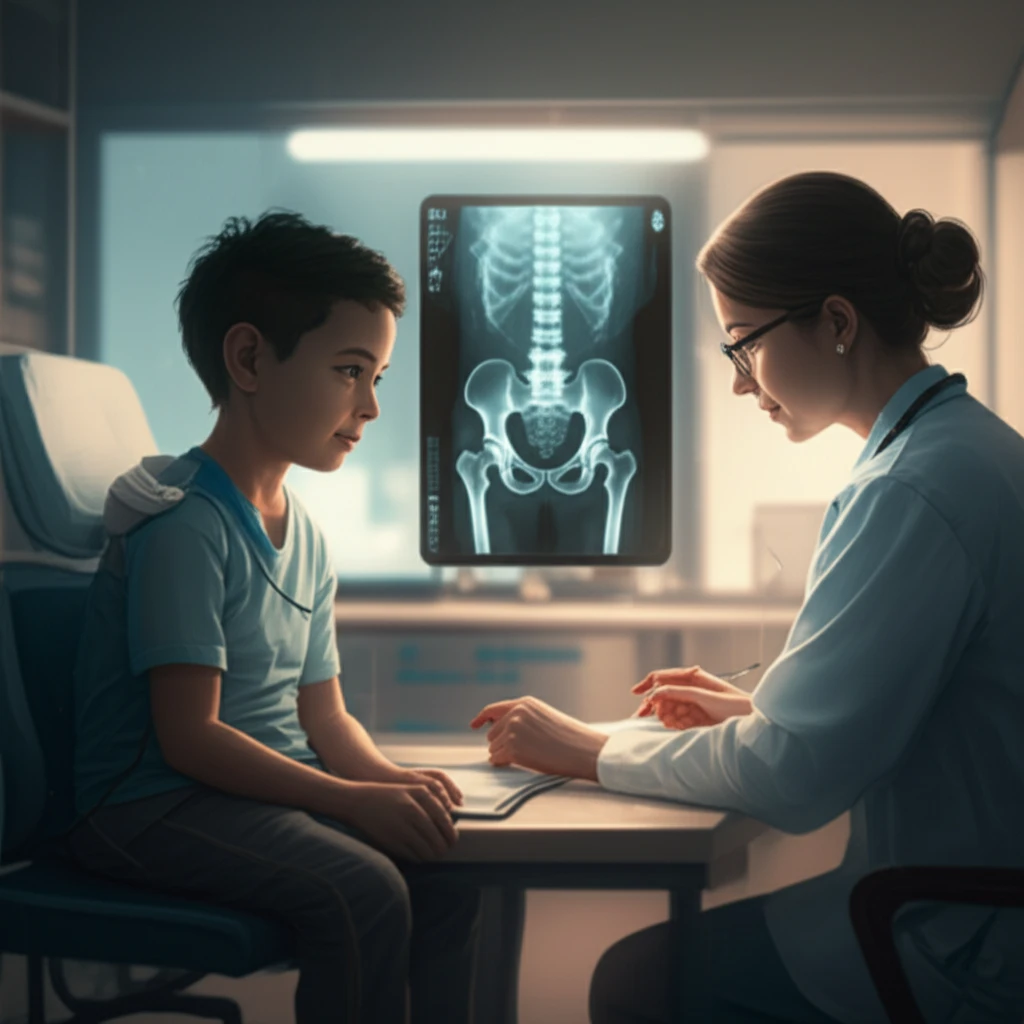
Illustration of a child with cerebral palsy undergoing hip surveillance, emphasizing care and hope.

Unlocking Hope: A Guide to Hip Surveillance for Children with Cerebral Palsy

"Early Detection and Intervention: Understanding the Importance of Hip Surveillance and How It's Changing Lives."


Cerebral palsy (CP), a group of neurological disorders affecting body movement, posture, and muscle coordination, presents unique challenges for children and their families. While CP manifests differently in each child, one potential complication is hip displacement, which can lead to pain, limited mobility, and reduced quality of life. Fortunately, advancements in medical care have led to the development of hip surveillance programs, designed to detect and manage hip issues early on.

This article delves into the world of hip surveillance for children with CP. We'll explore what hip surveillance is, why it's crucial, and how it's implemented. You'll learn about the latest guidelines, the benefits of early detection, and the importance of a proactive approach to your child's health. This information empowers parents, caregivers, and healthcare professionals to make informed decisions and provide the best possible care for children with CP.

The information within this article is not a substitute for professional medical advice. Always consult with a qualified healthcare provider for any questions you may have regarding your child's condition or treatment.

The Core of the Matter: Understanding Hip Surveillance

Illustration of a child with cerebral palsy undergoing hip surveillance, emphasizing care and hope.

Hip surveillance is a proactive, systematic approach to monitoring the development of the hips in children with CP. It involves a series of regular examinations, including physical assessments and radiographic imaging (X-rays), to identify any signs of hip displacement. The primary goal is to detect problems early, allowing for timely intervention that can prevent more severe complications.

The benefits of hip surveillance are numerous. Early detection allows for interventions like physical therapy, bracing, or, in some cases, surgery. These interventions can help prevent hip dislocation, reduce pain, improve mobility, and enhance the child's overall quality of life. Without surveillance, hip problems might go unnoticed until they become more severe and difficult to manage.

  • Early Detection: Regular monitoring allows for the identification of hip issues at the earliest stages.
  • Preventative Measures: Enables timely interventions to prevent hip dislocation and associated complications.
  • Improved Mobility: Helps maintain and improve the child's ability to move and participate in daily activities.
  • Reduced Pain: Addresses potential sources of pain related to hip displacement.
  • Enhanced Quality of Life: Supports the child's overall well-being and ability to live a fulfilling life.
Hip surveillance is not just about identifying problems; it's about providing the best possible care for children with CP. By taking a proactive approach, healthcare professionals and families can work together to ensure that these children have the opportunity to reach their full potential.

Looking Ahead: The Future of Hip Surveillance

Hip surveillance for children with cerebral palsy represents a significant step forward in ensuring their long-term health and well-being. As research advances and guidelines are refined, the focus will continue to be on early detection, timely intervention, and maximizing the quality of life for these children. By staying informed and proactive, parents, caregivers, and healthcare professionals can make a real difference in the lives of children with cerebral palsy, empowering them to live active, fulfilling lives. As the American Academy of Cerebral Palsy and Developmental Medicine develops new clinical care pathways, the future of hip surveillance looks brighter than ever.

About this Article -

This article was crafted using a human-AI hybrid and collaborative approach. AI assisted our team with initial drafting, research insights, identifying key questions, and image generation. Our human editors guided topic selection, defined the angle, structured the content, ensured factual accuracy and relevance, refined the tone, and conducted thorough editing to deliver helpful, high-quality information.See our About page for more information.

This article is based on research published under:

DOI-LINK: 10.1097/bpo.0000000000001050, Alternate LINK

Title: Hip Surveillance For Children With Cerebral Palsy: A Survey Of The Posna Membership

Subject: Orthopedics and Sports Medicine

Journal: Journal of Pediatric Orthopaedics

Publisher: Ovid Technologies (Wolters Kluwer Health)

Authors: Benjamin J. Shore, Michael W. Shrader, Unni Narayanan, Freeman Miller, H. Kerr Graham, Kishore Mulpuri

Published: 2017-10-01

Everything You Need To Know

1

What exactly is hip surveillance for children diagnosed with cerebral palsy, and how does it work?

Hip surveillance is a proactive and systematic process designed to monitor the development of the hips in children with cerebral palsy. It involves regular examinations, including physical assessments and radiographic imaging, specifically X-rays, to detect any early signs of hip displacement. The core aim is to identify potential problems at an early stage, which allows for timely interventions. These interventions might encompass physical therapy, bracing, or, in some cases, surgical procedures. By detecting and addressing these issues early, hip surveillance seeks to prevent more severe complications that can arise from hip displacement.

2

Why is hip surveillance so important for children with cerebral palsy?

Hip surveillance is critical for children with cerebral palsy because they are at a higher risk of developing hip displacement, which can lead to pain, limited mobility, and a reduced quality of life. Hip surveillance enables early detection of hip issues, allowing for interventions such as physical therapy, bracing, or surgery. These actions can help prevent hip dislocation, reduce pain, improve mobility, and enhance the child's overall well-being. Without hip surveillance, problems may go unnoticed until they become severe and more difficult to manage, potentially leading to more invasive treatments and a greater impact on the child's development.

3

What are the potential benefits of undergoing hip surveillance for my child with cerebral palsy?

The benefits of hip surveillance are numerous and significantly contribute to a child's well-being. Early detection is paramount, as regular monitoring allows for identifying hip issues at the earliest stages. This early detection enables preventative measures, facilitating timely interventions to prevent hip dislocation and associated complications. Hip surveillance also supports improved mobility, helping maintain and improve the child's ability to move and participate in daily activities. Moreover, it addresses potential sources of pain related to hip displacement, reducing discomfort and enhancing the child's overall quality of life. By taking a proactive approach through hip surveillance, healthcare professionals and families can work together to ensure that children with cerebral palsy have the opportunity to reach their full potential.

4

Can you describe the role of the American Academy of Cerebral Palsy and Developmental Medicine in advancing hip surveillance practices?

The American Academy of Cerebral Palsy and Developmental Medicine plays a vital role in advancing hip surveillance practices. It does so by developing new clinical care pathways that guide healthcare professionals in the early detection, timely intervention, and overall management of hip health in children with cerebral palsy. These clinical care pathways, informed by research and clinical expertise, provide a structured approach to hip surveillance, ensuring that children receive the best possible care. This will help maximize the quality of life for these children, empowering them to live active, fulfilling lives.

5

What specific interventions might be recommended following the detection of hip displacement through hip surveillance, and what factors influence these choices?

Following the detection of hip displacement, several interventions may be recommended, including physical therapy to strengthen muscles and improve hip alignment, bracing to provide support and prevent further displacement, or, in some cases, surgery to correct the alignment of the hip joint. The specific intervention chosen depends on various factors, such as the severity of the displacement, the child's age and overall health, and the presence of other medical conditions. Healthcare professionals consider these factors to create a tailored treatment plan that addresses the child's unique needs and maximizes the potential for a positive outcome. Regular monitoring and collaboration between healthcare providers and families are essential to ensure the chosen intervention is effective and contributes to the child's long-term hip health and quality of life.

Newsletter Subscribe

Subscribe to get the latest articles and insights directly in your inbox.