
Unlocking History: How Astrolabe Mountings Reveal Hidden Dimensions

"Delving into the meticulous art of preserving historical artifacts, and turning challenges into innovative solutions that bridge the gap between the past and present."
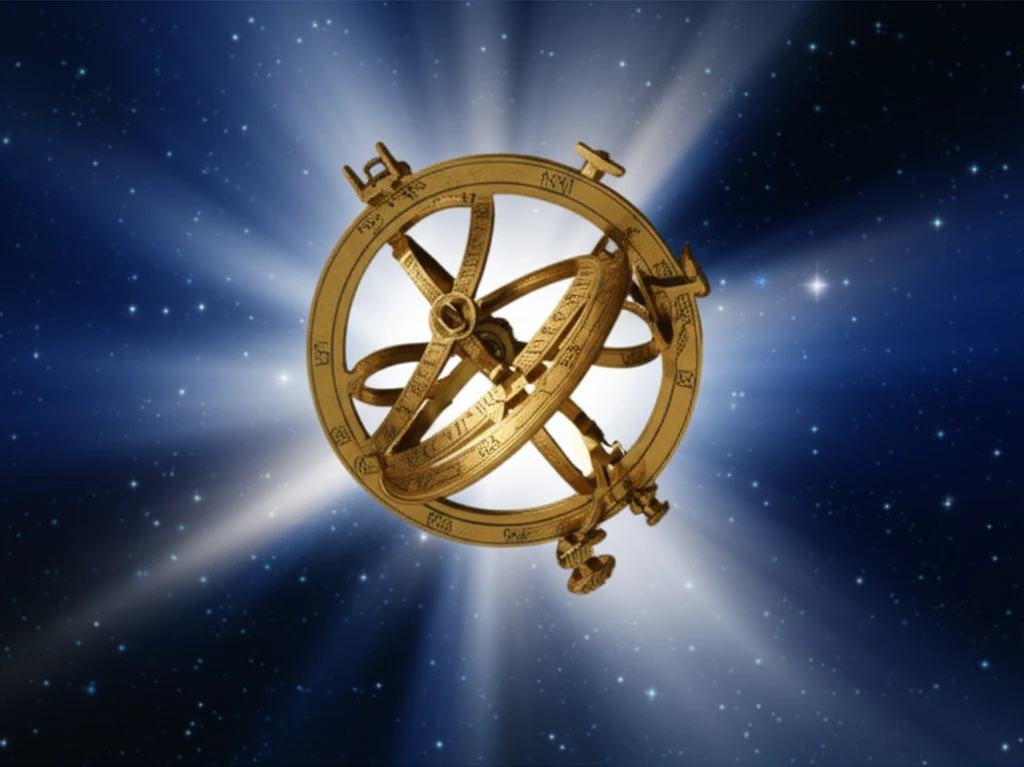
Imagine holding a piece of the night sky in your hands – an instrument that not only maps the stars but also embodies centuries of human ingenuity. This is the allure of the astrolabe, an ancient astronomical device that has fascinated scholars and stargazers alike. However, preserving and displaying these delicate objects presents a unique set of challenges.
One such challenge was faced by the Staatsbibliothek zu Berlin, which houses two rare astrolabes designed and printed in 1575 by Leonhardt Thurneysser zum Thurn. These aren't just any astrolabes; they're part of a codex, a book-like format that includes complex, turnable cut-outs. When the library decided to exhibit one of these treasures in 2013, the question arose: How do you showcase such an intricate, three-dimensional object in a way that allows viewers to appreciate all its components?
This article explores the innovative solution devised by conservators to mount and display Thurneysser's astrolabe, offering insights into the meticulous process of preserving historical artifacts while making them accessible to the public. The intent is to provide readers with an understanding of the challenges and creative problem-solving involved in bringing history to life.
The Challenge: Displaying a Three-Dimensional Astrolabe
The primary challenge was to display the astrolabe in a way that allowed viewers to see all its components, including the delicate, moveable parts. The astrolabe consists of printed astrological plates, each featuring intricate paper hands and discs that rotate to represent the positions of celestial bodies. These elements are connected by a string, allowing them to move in a manner similar to clockwork.
- Problem: Delicate, moveable paper elements needed protection.
- Constraint: Original string needed to be removable without damage.
- Goal: Create a stable, visually appealing display.
A Window into the Past
The successful mounting of the astrolabe allowed for the exhibition of a complex historical artifact in a way that was both visually appealing and respectful of its delicate nature. By using a tiered acrylic stand, the conservators were able to showcase all the components of the astrolabe, providing viewers with a unique opportunity to study and appreciate its intricate design.
The project highlights the importance of creative problem-solving in the field of conservation. It also demonstrates how modern materials and techniques can be used to preserve and display historical objects, ensuring that they remain accessible to future generations.
Furthermore, the astrolabe mounting serves as a reminder of the human desire to understand and map the cosmos. It is a testament to the ingenuity of past scholars and artisans, as well as the dedication of modern-day conservators who work to preserve their legacy.