
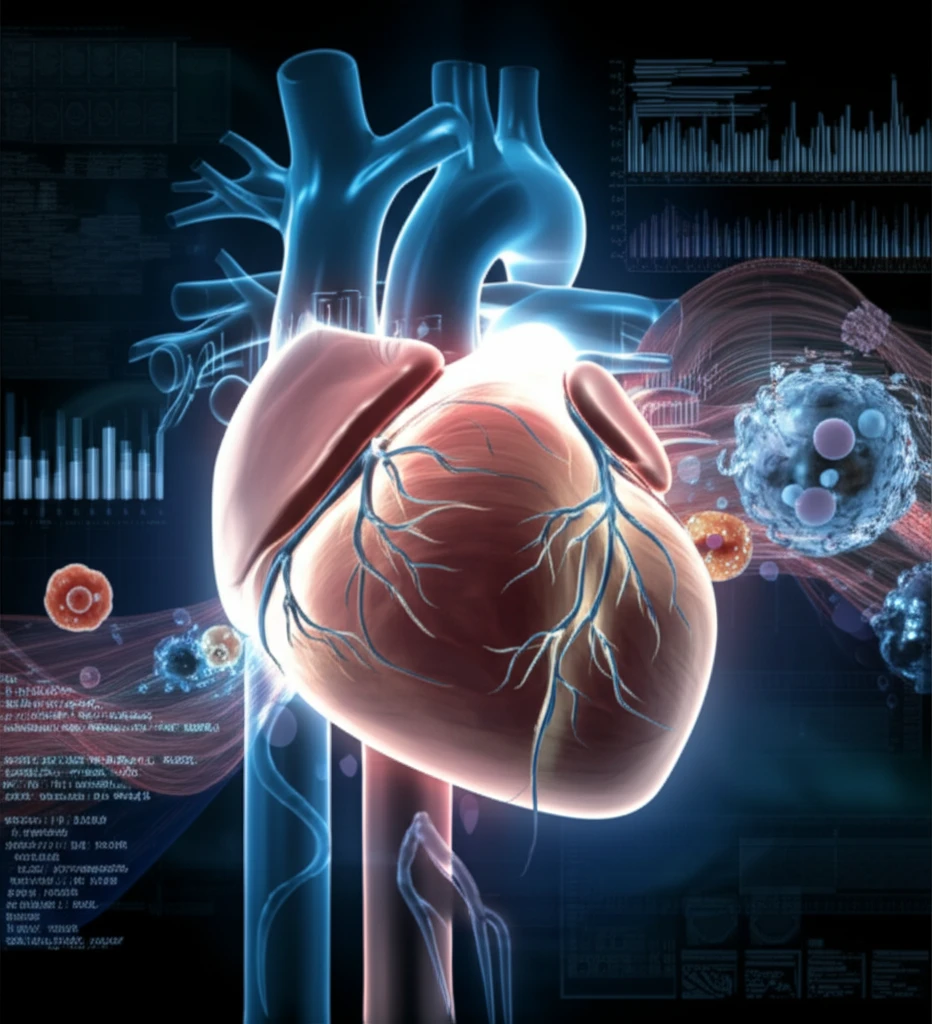
Illustration of a heart surrounded by scientific data, cholesterol molecules, and inflammatory cells, symbolizing cardiovascular health research.

Unlocking Heart Health: How Cutting-Edge Research Reveals the Secrets of Cholesterol and Inflammation

"Dive into the latest scientific discoveries on cholesterol, inflammation, and their impact on cardiovascular health."


In the realm of health, few topics command as much attention as heart health. Cardiovascular diseases (CVDs), encompassing a spectrum of conditions from heart attacks to strokes, remain a leading cause of mortality globally. Understanding the underlying mechanisms of these diseases, particularly the roles of cholesterol and inflammation, is crucial for prevention and effective treatment. Recent advancements in medical research have illuminated these complex interactions, offering new hope and strategies for maintaining a healthy heart.

This article delves into the groundbreaking research that is reshaping our understanding of heart health. We explore the latest findings on cholesterol metabolism, the inflammatory processes that drive CVDs, and the innovative approaches being developed to mitigate these risks. Our goal is to provide a clear, accessible overview of the science, empowering you with knowledge and practical insights to make informed decisions about your cardiovascular well-being.

The landscape of heart health is constantly evolving, with new discoveries emerging regularly. This article aims to bring you up-to-date on the most significant developments, offering a comprehensive look at the current state of research and its implications for your health. Whether you're a healthcare professional, a patient, or simply someone interested in living a longer, healthier life, this information is designed to provide valuable insights.

Decoding Cholesterol's Role in Heart Health: Beyond Good and Bad

Illustration of a heart surrounded by scientific data, cholesterol molecules, and inflammatory cells, symbolizing cardiovascular health research.

Cholesterol, often portrayed as a simple entity of 'good' and 'bad', is far more nuanced. It is a waxy, fat-like substance essential for building healthy cells. The human body produces cholesterol, and it can also be found in certain foods. The key to understanding cholesterol's role in heart health lies in the different types of cholesterol and how they interact within the body. Low-density lipoprotein (LDL), often referred to as 'bad' cholesterol, can build up in the arteries, forming plaques that narrow the vessels and restrict blood flow. High-density lipoprotein (HDL), or 'good' cholesterol, helps remove LDL from the arteries, reducing the risk of plaque formation. Recent research has expanded our understanding beyond these basic classifications, identifying various subtypes of LDL and HDL that carry different risks.

New studies are examining the impact of cholesterol particle size and density on cardiovascular health. Smaller, denser LDL particles are more likely to penetrate the arterial walls and contribute to plaque buildup. Conversely, larger, 'fluffy' LDL particles are less harmful. Advanced lipid testing, such as NMR (Nuclear Magnetic Resonance) spectroscopy, is providing more detailed insights into the composition and characteristics of cholesterol particles. These tests are enabling healthcare professionals to assess an individual's cardiovascular risk more accurately, moving beyond traditional cholesterol measurements.

  • LDL Cholesterol: 'Bad' cholesterol that contributes to plaque buildup in arteries.
  • HDL Cholesterol: 'Good' cholesterol that helps remove LDL from arteries.
  • Cholesterol Particle Size: Smaller, denser LDL particles are more harmful; larger particles are less so.
  • Advanced Lipid Testing: Techniques like NMR spectroscopy provide detailed cholesterol profiles.
The balance between LDL and HDL, along with factors like particle size and density, significantly influences heart health. Lifestyle choices, including diet, exercise, and stress management, play a critical role in maintaining a healthy cholesterol profile. Medications, such as statins, are often prescribed to lower LDL cholesterol levels and reduce the risk of heart disease. However, recent research also highlights the importance of addressing inflammation, which often accompanies high cholesterol levels, for comprehensive cardiovascular protection.

Empowering Your Heart Health Journey

The path to a healthy heart is paved with knowledge and proactive choices. By understanding the intricate relationship between cholesterol, inflammation, and lifestyle factors, you can take meaningful steps to reduce your risk of cardiovascular diseases. Regular check-ups, healthy dietary habits, consistent physical activity, and effective stress management are essential components of a heart-healthy lifestyle. Stay informed about the latest research and consult with your healthcare provider to develop a personalized plan. With the right approach, you can not only protect your heart but also enhance your overall well-being and enjoy a vibrant, fulfilling life.

About this Article -

This article was crafted using a human-AI hybrid and collaborative approach. AI assisted our team with initial drafting, research insights, identifying key questions, and image generation. Our human editors guided topic selection, defined the angle, structured the content, ensured factual accuracy and relevance, refined the tone, and conducted thorough editing to deliver helpful, high-quality information.See our About page for more information.

Everything You Need To Know

1

What is the primary difference between LDL and HDL cholesterol, and why is this distinction important for understanding heart health?

The primary difference lies in their function. LDL, or low-density lipoprotein, is often termed 'bad' cholesterol because it can contribute to plaque buildup in the arteries, narrowing them and restricting blood flow. HDL, or high-density lipoprotein, is known as 'good' cholesterol because it helps remove LDL from the arteries, reducing the risk of plaque formation. Understanding this distinction is crucial because the balance between LDL and HDL significantly influences the risk of cardiovascular diseases. While total cholesterol levels are important, the ratio of LDL to HDL provides a more nuanced view of cardiovascular risk. Ignoring other factors like inflammation may leave one at risk.

2

How has recent research changed our understanding of cholesterol beyond the simple 'good' versus 'bad' classification?

Recent research has moved beyond the basic classifications of LDL and HDL, identifying various subtypes that carry different cardiovascular risks. Studies are now examining the impact of cholesterol particle size and density. Smaller, denser LDL particles are more likely to penetrate arterial walls and contribute to plaque buildup, while larger, 'fluffy' LDL particles are considered less harmful. Advanced lipid testing, such as NMR (Nuclear Magnetic Resonance) spectroscopy, provides detailed insights into the composition and characteristics of cholesterol particles, allowing healthcare professionals to assess cardiovascular risk more accurately than traditional cholesterol measurements alone. The impact of inflammation is not measured by these tests.

3

What role does inflammation play in cardiovascular health, and how does it interact with cholesterol levels?

Inflammation plays a significant role in cardiovascular health by contributing to the development and progression of cardiovascular diseases. It often accompanies high cholesterol levels and can exacerbate the buildup of plaque in the arteries. Inflammatory processes can damage the inner lining of blood vessels, making them more susceptible to cholesterol deposition. Addressing inflammation is crucial for comprehensive cardiovascular protection, as it can help stabilize plaques and reduce the risk of rupture, which can lead to heart attacks and strokes. While cholesterol management is essential, strategies to reduce inflammation, such as lifestyle changes and specific medications, are increasingly recognized as vital components of heart health management.

4

What are some practical lifestyle changes someone can implement to manage their cholesterol levels and reduce the risk of heart disease?

Several lifestyle changes can significantly impact cholesterol levels and reduce the risk of heart disease. These include adopting healthy dietary habits, such as reducing saturated and trans fats while increasing fiber intake; engaging in consistent physical activity, which helps raise HDL cholesterol levels; managing stress effectively through techniques like meditation or yoga; and maintaining a healthy weight. Regular check-ups with a healthcare provider are also essential to monitor cholesterol levels and assess overall cardiovascular risk. In some cases, medications like statins may be prescribed to lower LDL cholesterol levels, but lifestyle changes remain a cornerstone of heart health management.

5

How can advanced lipid testing, like NMR spectroscopy, provide a more detailed assessment of cardiovascular risk compared to traditional cholesterol tests?

Advanced lipid testing, such as NMR (Nuclear Magnetic Resonance) spectroscopy, offers a more comprehensive assessment of cardiovascular risk by providing detailed insights into the composition and characteristics of cholesterol particles. Unlike traditional tests that primarily measure total cholesterol, LDL, and HDL levels, NMR spectroscopy analyzes the size and density of LDL and HDL particles. This information is valuable because smaller, denser LDL particles are more atherogenic (plaque-forming) than larger, 'fluffy' LDL particles. By identifying the specific types and concentrations of different lipoprotein particles, healthcare professionals can better assess an individual's risk of developing cardiovascular diseases and tailor treatment strategies accordingly. This approach moves beyond simply targeting LDL levels to addressing the underlying factors that contribute to plaque buildup and arterial damage, however NMR Spectroscopy does not provide a complete picture as it doesn't directly measure inflammation, another key risk factor.

Newsletter Subscribe

Subscribe to get the latest articles and insights directly in your inbox.