
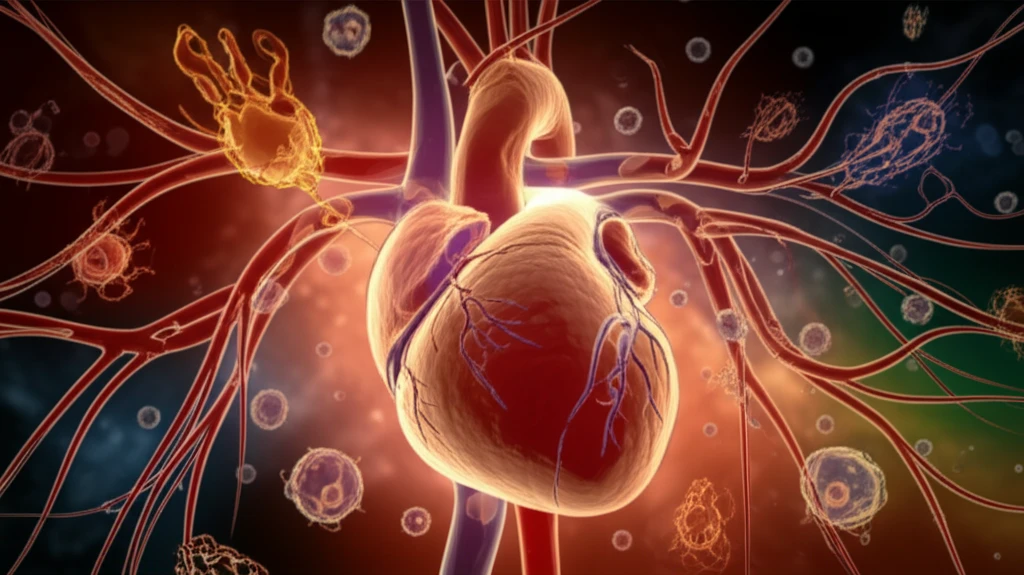
Illustration of a heart with blood vessels, and a visual representation of immune cells and TLR3 receptors.

Unlocking Heart Health: How a Common Immune Response Could Change Everything

"New research reveals surprising connections between the immune system and blood vessel function, offering fresh insights into preventing heart disease."


The heart, a tireless engine of life, is often at the forefront of our health concerns. Cardiovascular diseases, encompassing a range of conditions like heart attacks and strokes, remain a leading cause of mortality globally. While factors like diet, exercise, and genetics are well-known contributors, a new frontier in heart health is emerging: the intricate relationship between our immune system and the health of our blood vessels.

Recent studies have illuminated the crucial role the immune system plays in vascular function. One area of particular interest involves the body's response to perceived threats, like viral infections. This response, mediated by the immune system, can trigger inflammatory processes. However, excessive or chronic inflammation can wreak havoc on our blood vessels, contributing to conditions like atherosclerosis, where arteries become clogged with plaque.

This article explores a fascinating study that uncovers a surprising connection between the immune response and the ability of blood vessels to relax. We will explore how a specific immune pathway, often activated during infections, impacts the crucial process of blood vessel relaxation, which is essential for maintaining healthy blood flow. By understanding this connection, we can gain valuable insights into how to protect our cardiovascular health.

The Immune System's Role in Vascular Health: A Deep Dive

Illustration of a heart with blood vessels, and a visual representation of immune cells and TLR3 receptors.

To grasp the impact of immune responses on blood vessels, consider the example of a common immune pathway triggered by substances like viral double-stranded RNA (dsRNA). The body recognizes these dsRNAs through receptors like TLR3. This recognition sets off a chain reaction, prompting the release of inflammatory signals and the activation of immune cells. This process, while protective in the face of infection, can sometimes go awry, leading to vascular dysfunction.

A key aspect of blood vessel health is their ability to relax and expand. This process, known as vasodilation, is crucial for ensuring adequate blood flow to our tissues. The study found that dsRNA exposure, through TLR3, can impair this relaxation response. In essence, it reduces the blood vessels' ability to widen, which is a critical function in cardiovascular health.

  • Vascular Dysfunction: dsRNA exposure leads to a decrease in the blood vessels' ability to widen, which contributes to the formation of cardiovascular diseases.
  • Inflammation and Blood Vessels: Excessive or chronic inflammation can wreak havoc on our blood vessels, contributing to conditions like atherosclerosis, where arteries become clogged with plaque.
  • Immune Response: The body recognizes these dsRNAs through receptors like TLR3. This recognition sets off a chain reaction, prompting the release of inflammatory signals and the activation of immune cells.
The study's findings provide clues on how the immune response affects blood vessel health. The research suggests that the excessive activation of a specific immune pathway, driven by dsRNA, leads to the overproduction of nitric oxide (NO). This increased NO, paradoxically, hinders blood vessel relaxation. This disruption in NO signaling is a major contributor to the impairment of vasodilation and vascular health, highlighting the importance of the immune-vascular interplay.

Implications and Future Directions

The study's findings open doors to potential therapeutic strategies. By understanding how the immune response impacts blood vessel function, researchers can explore ways to modulate these pathways and protect against cardiovascular disease. This includes investigating targeted therapies that can either dampen excessive inflammation or restore normal NO signaling. The knowledge gained from this research not only improves our understanding of heart health but also paves the way for innovative preventive and therapeutic measures in the future. The interplay between our immune system and vascular health is a critical area for protecting our cardiovascular health.

About this Article -

This article was crafted using a human-AI hybrid and collaborative approach. AI assisted our team with initial drafting, research insights, identifying key questions, and image generation. Our human editors guided topic selection, defined the angle, structured the content, ensured factual accuracy and relevance, refined the tone, and conducted thorough editing to deliver helpful, high-quality information.See our About page for more information.

Everything You Need To Know

1

What is the primary focus of the recent research regarding heart health?

The research explores the intricate relationship between the immune system and blood vessel function. Specifically, it investigates how a common immune response, triggered by substances like viral dsRNA and mediated by receptors like TLR3, impacts the ability of blood vessels to relax (vasodilation), a critical function for cardiovascular health.

2

How does the immune system's response to dsRNA affect blood vessels?

When the body encounters dsRNA, it activates the immune system through receptors like TLR3. This activation triggers a cascade of events, including the release of inflammatory signals and the activation of immune cells. The research indicates that this immune pathway, driven by dsRNA, leads to the overproduction of nitric oxide (NO), which paradoxically impairs blood vessel relaxation (vasodilation) and contributes to vascular dysfunction.

3

What is the significance of blood vessel relaxation (vasodilation) in maintaining cardiovascular health, and what happens when it's impaired?

Vasodilation, the ability of blood vessels to widen and expand, is crucial for ensuring adequate blood flow to tissues. When vasodilation is impaired, as seen with excessive activation of the immune response and NO overproduction, blood vessels can't function correctly. This impairment contributes to vascular dysfunction and can lead to the development of cardiovascular diseases like atherosclerosis, where arteries become clogged with plaque, restricting blood flow and increasing the risk of heart attacks and strokes.

4

What are the implications of the research findings for potential therapeutic strategies related to heart health?

The research findings suggest that modulating the immune response pathway triggered by dsRNA, particularly by targeting excessive inflammation or restoring normal NO signaling, could be a viable therapeutic strategy. By dampening excessive inflammation or restoring normal NO signaling, it might be possible to protect against cardiovascular disease. This opens avenues for targeted therapies aimed at preventing or treating conditions where vascular dysfunction is a factor, offering new hope for improved heart health.

5

Can you explain the role of TLR3 and NO in the context of the immune response and its impact on vascular health?

TLR3 is a receptor that recognizes dsRNA, a substance often associated with viral infections. When TLR3 is activated, it initiates a chain reaction, setting off inflammatory signals and activating immune cells. This activation leads to the overproduction of nitric oxide (NO). While NO usually promotes vasodilation, in this scenario, the excess NO paradoxically hinders blood vessel relaxation (vasodilation), contributing to vascular dysfunction. This imbalance highlights the complex interplay between the immune system, specific signaling molecules, and blood vessel health, underscoring the importance of maintaining a healthy immune response to protect cardiovascular health.

Newsletter Subscribe

Subscribe to get the latest articles and insights directly in your inbox.