
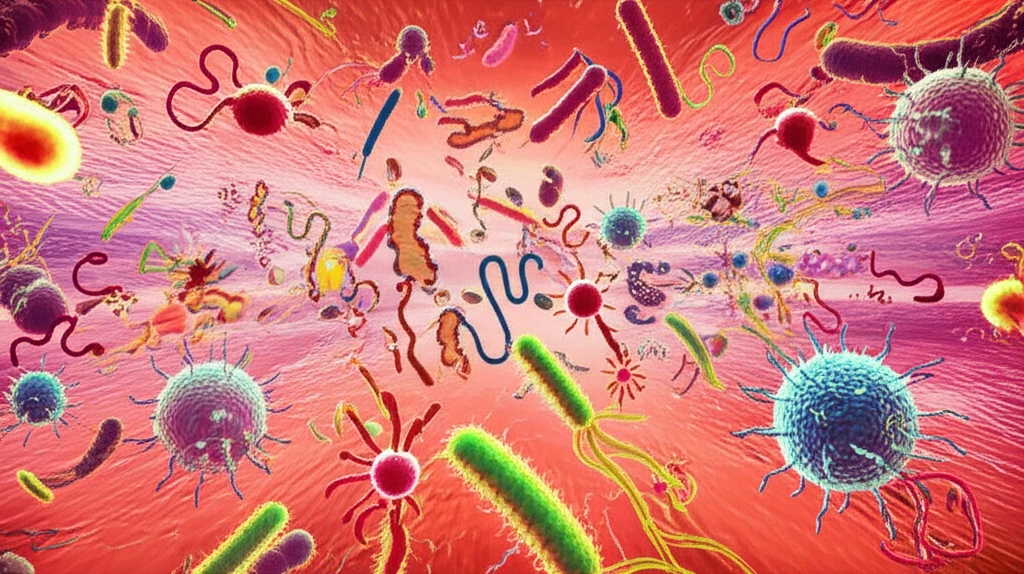
Illustration depicting the gut microbiome interacting with immune cells.

Unlocking Health's Secrets: How Your Gut and Immune System Work Together

"Explore the groundbreaking connection between your gut microbiome and your immune health. Discover practical insights and expert perspectives on optimizing your well-being."


In the ever-evolving landscape of health and wellness, one connection has emerged as a central focus: the intricate relationship between your gut and your immune system. Often referred to as the 'second brain,' the gut is far more than just a digestive organ. It's a dynamic ecosystem teeming with trillions of microorganisms that profoundly influence your overall health.

This article delves into the groundbreaking science behind this gut-immune connection. We will explore how your gut microbiome—the collection of bacteria, fungi, viruses, and other microbes in your gut—communicates with and shapes your immune system. From enhancing your body's defenses against disease to influencing your mental state, the implications of a healthy gut are vast and significant.

Whether you're looking to improve your general health, manage specific conditions, or simply gain a deeper understanding of your body, this article offers valuable insights and actionable advice. Join us as we uncover the secrets to a thriving gut and, in turn, a stronger, more resilient immune system.

The Gut-Immune Connection: A Deep Dive

Illustration depicting the gut microbiome interacting with immune cells.

At the heart of this connection lies the gut microbiome, a complex community that resides within your digestive tract. This community plays a crucial role in your health. The gut microbiome influences various physiological processes, including digestion, nutrient absorption, and, crucially, the development and function of your immune system.

The gut barrier, a single layer of cells lining your intestines, acts as a gatekeeper. It allows the passage of nutrients while preventing harmful substances, such as toxins and pathogens, from entering your bloodstream. A healthy gut microbiome supports this barrier, strengthening its protective functions. It aids in producing short-chain fatty acids (SCFAs), like butyrate, which nourish the cells lining the gut and reinforce the barrier's integrity.

  • Immune Cell Development: The gut microbiome is essential for training your immune system. It helps the immune system differentiate between friend and foe, allowing it to react appropriately to threats.
  • Inflammation Regulation: A balanced gut microbiome helps to regulate inflammation throughout the body. Chronic inflammation is linked to many diseases, and a healthy gut can help keep inflammation in check.
  • Nutrient Absorption and Metabolism: The gut microbiome affects how nutrients are absorbed. It helps break down food, making essential nutrients available for your immune system.
When this balance is disrupted, either by diet, medications, or other factors, it can lead to dysbiosis – an imbalance in the gut microbiome. Dysbiosis can compromise the gut barrier, increase inflammation, and disrupt immune function, potentially paving the way for various health issues, from autoimmune diseases to chronic illnesses.

Empowering Your Health: Actionable Steps for a Healthier Gut and Immune System

The journey towards a healthier gut and a robust immune system is an ongoing process. By making informed choices and embracing lifestyle changes, you can optimize your well-being. Prioritize a balanced diet rich in fiber, prebiotics, and probiotics; manage stress through mindfulness, meditation, or other relaxing activities; and consult with healthcare professionals to address any concerns or underlying health issues. Remember, the connection between your gut and your immune system is powerful. By nurturing your gut, you are investing in a healthier, more resilient future.

About this Article -

This article was crafted using a human-AI hybrid and collaborative approach. AI assisted our team with initial drafting, research insights, identifying key questions, and image generation. Our human editors guided topic selection, defined the angle, structured the content, ensured factual accuracy and relevance, refined the tone, and conducted thorough editing to deliver helpful, high-quality information.See our About page for more information.

This article is based on research published under:

DOI-LINK: 10.1016/j.molimm.2018.06.140, Alternate LINK

Title: Alternative Complement Pathway Activation Associated With Vascular Lesions Of Pulmonary Hypertension Combined Lupus Nephritis

Subject: Molecular Biology

Journal: Molecular Immunology

Publisher: Elsevier BV

Authors: Qiu-Yu Li, Hai-Yun Li, Feng Yu, Pei He

Published: 2018-10-01

Everything You Need To Know

1

What is the primary relationship between my gut and my immune system?

The gut, often called the 'second brain,' is a dynamic ecosystem filled with microorganisms that profoundly influence overall health, including the immune system. The gut microbiome communicates with and shapes the immune system, enhancing defenses against disease and influencing mental state. A healthy gut contributes to a stronger, more resilient immune system. This connection is central to overall well-being.

2

How does the gut microbiome directly affect my immune system's ability to protect me?

The gut microbiome plays a crucial role in training the immune system to differentiate between beneficial elements and threats. It also aids in regulating inflammation throughout the body, as chronic inflammation is linked to many diseases. Additionally, the gut microbiome affects how nutrients are absorbed, making essential nutrients available for the immune system. The production of short-chain fatty acids (SCFAs), like butyrate, nourish the cells lining the gut and reinforce the gut barrier's integrity.

3

What is dysbiosis, and how does it impact my health according to this information?

Dysbiosis is an imbalance in the gut microbiome, often caused by factors such as diet or medications. It can compromise the gut barrier, increase inflammation, and disrupt immune function. This disruption can lead to various health issues, including autoimmune diseases and chronic illnesses. Maintaining a balanced gut microbiome is essential to prevent dysbiosis and its associated health problems.

4

What actionable steps can I take to improve my gut health and strengthen my immune system?

To promote a healthier gut and a robust immune system, prioritize a balanced diet rich in fiber, prebiotics, and probiotics. Manage stress through mindfulness, meditation, or other relaxing activities. Consult with healthcare professionals to address any concerns or underlying health issues. These lifestyle changes can optimize your well-being by nurturing your gut.

5

How does the gut barrier function, and what role do short-chain fatty acids (SCFAs) like butyrate play in maintaining it?

The gut barrier, a single layer of cells lining the intestines, acts as a gatekeeper. It allows the passage of nutrients while preventing harmful substances, such as toxins and pathogens, from entering your bloodstream. A healthy gut microbiome supports this barrier, strengthening its protective functions. It aids in producing short-chain fatty acids (SCFAs), like butyrate, which nourish the cells lining the gut and reinforce the barrier's integrity. This helps maintain the gut's protective function.

Newsletter Subscribe

Subscribe to get the latest articles and insights directly in your inbox.