
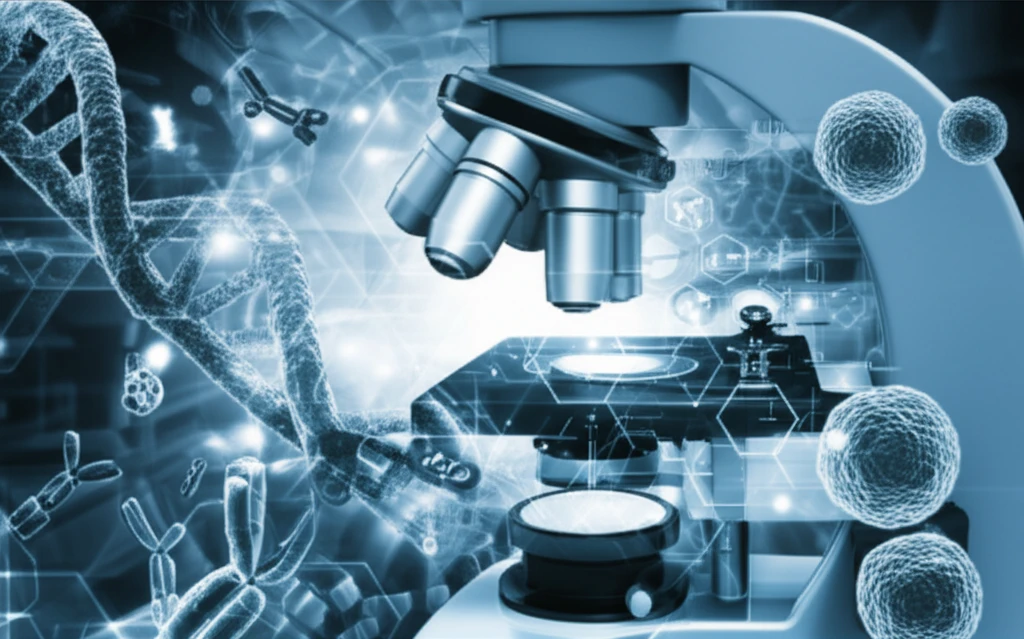
Digital illustration of medical research breakthroughs

Unlocking Health's Mysteries: How Cutting-Edge Research Is Changing the Game

"From rare diseases to everyday wellness, discover the latest breakthroughs and what they mean for your health."


The world of health and wellness is constantly evolving, with new discoveries emerging at an unprecedented rate. Cutting-edge research is not just about finding cures; it's about understanding the intricate mechanisms that govern our bodies and developing innovative ways to improve our well-being. This article delves into the latest advancements in medical science, providing a comprehensive overview of how these breakthroughs are transforming healthcare.

We'll explore several key areas, including the intricate world of immunology, the role of genetics in disease, and novel approaches to treatment. By examining the work of leading researchers, we aim to demystify complex scientific concepts and explain how they translate into practical benefits for individuals and communities. This exploration aims to empower you with knowledge and encourage a proactive approach to health.

The focus is on making complex information accessible, relevant, and actionable. Whether you're a health enthusiast, a patient, or simply curious about the future of medicine, this guide offers valuable insights into the groundbreaking research shaping our health landscape. Join us as we uncover the secrets of a healthier tomorrow.

Deciphering Disease: Exploring the Frontiers of Medical Research

Digital illustration of medical research breakthroughs

At the heart of many medical advancements lies a deep understanding of the mechanisms behind diseases. Recent studies have focused on conditions ranging from rare genetic disorders to common ailments, uncovering critical insights into their origins and progression. One significant area of research involves the lectin pathway and its role in various diseases. The activation of this pathway, as highlighted in recent studies, provides a better understanding of immune responses and their dysregulation in diseases such as atypical hemolytic uremic syndrome (aHUS).

Research into atypical hemolytic uremic syndrome (aHUS) and related conditions, has led to the development of targeted therapies. The investigation of complement pathways, specifically the role of MASP-3, has illuminated new therapeutic targets. Understanding the intricate interactions within the complement system is essential for developing effective treatments and improving patient outcomes. Key takeaways from this research emphasize the need for more in-depth analysis of complement system dysregulation for improved patient care.

  • Targeted Therapies: Advancements have led to therapies that specifically address the underlying causes of diseases.
  • Improved Understanding: The increased understanding of disease mechanisms is key.
  • Patient Outcomes: The focus is on enhancing therapeutic strategies and improving overall patient care.
Furthermore, the study of MASP-3's activation mechanism has been crucial in this. These insights are paving the way for tailored treatment plans. These studies often use cutting-edge techniques such as Western blotting and enzyme kinetics to understand processes at the cellular level. This research is not just theoretical; it has practical applications for diagnostic tools and therapeutic interventions. This approach helps in precision medicine, enabling personalized healthcare strategies.

The Future of Health: A Horizon of Discovery and Hope

The rapid pace of medical research gives hope for a future where diseases are better understood and more effectively treated. By continuing to support and invest in research, we can unlock further advancements that enhance health and quality of life. The findings highlighted in the articles are not just isolated incidents, but components of a wider movement. This collaborative spirit will guide the field and shape the landscape of medicine. As we move forward, the synergy between science, medicine, and patient care promises a future where good health is a reality for all.

About this Article -

This article was crafted using a human-AI hybrid and collaborative approach. AI assisted our team with initial drafting, research insights, identifying key questions, and image generation. Our human editors guided topic selection, defined the angle, structured the content, ensured factual accuracy and relevance, refined the tone, and conducted thorough editing to deliver helpful, high-quality information.See our About page for more information.

This article is based on research published under:

DOI-LINK: 10.1016/j.molimm.2018.06.053, Alternate LINK

Title: Toward Understanding The Activation Mechanism Of Mannose-Binding Lectin-Associated Serine Protease 3 (Masp-3)

Subject: Molecular Biology

Journal: Molecular Immunology

Publisher: Elsevier BV

Authors: Gábor Oroszlán, Péter Závodszky, Péter Gál, József Dobó

Published: 2018-10-01

Everything You Need To Know

1

What is the significance of researching the lectin pathway in disease?

Researching the lectin pathway is significant because it provides a better understanding of immune responses and their dysregulation in diseases like atypical hemolytic uremic syndrome (aHUS). Understanding how this pathway functions and malfunctions can lead to the development of targeted therapies and improved diagnostic tools. Without this knowledge, treatments might be less effective in addressing the underlying causes of such diseases.

2

How does understanding the complement system, particularly MASP-3, contribute to treating diseases like atypical hemolytic uremic syndrome (aHUS)?

Understanding the complement system, and specifically the role of MASP-3, is crucial for developing effective treatments for diseases like atypical hemolytic uremic syndrome (aHUS). Research into MASP-3’s activation mechanism illuminates new therapeutic targets within the complement pathways. This in-depth analysis of complement system dysregulation enables the creation of tailored treatment plans and improves patient outcomes by addressing the root causes of the disease, rather than just managing the symptoms. Without this understanding, therapies might not be as targeted or effective.

3

What are some cutting-edge techniques used to study disease mechanisms at the cellular level, and why are they important?

Cutting-edge techniques like Western blotting and enzyme kinetics are used to study disease mechanisms at the cellular level. These techniques allow researchers to understand processes at a microscopic level, providing detailed insights into how diseases originate and progress. This information is essential for developing precision medicine approaches, where healthcare strategies are personalized based on an individual's unique characteristics. Without these techniques, the understanding of cellular processes would be limited, hindering the development of targeted therapies.

4

How do targeted therapies improve patient outcomes in diseases like atypical hemolytic uremic syndrome (aHUS), and what makes them different from traditional treatments?

Targeted therapies improve patient outcomes in diseases like atypical hemolytic uremic syndrome (aHUS) by specifically addressing the underlying causes of the disease, such as dysregulation in the complement system. Unlike traditional treatments that might only manage symptoms, targeted therapies aim to correct the root problem. For instance, understanding the role of MASP-3 and the lectin pathway allows for the development of therapies that modulate these specific components. This approach leads to more effective and personalized treatments, improving overall patient care and potentially preventing disease progression. In the absence of targeted therapies, treatment options would be limited to managing symptoms and potentially less effective in the long run.

5

What implications does the increasing focus on understanding disease mechanisms and genetics have for the future of personalized healthcare?

The increasing focus on understanding disease mechanisms and genetics has significant implications for the future of personalized healthcare. By deciphering the intricate details of how diseases originate and progress, and by understanding individual genetic predispositions, healthcare can become highly tailored. This approach, known as precision medicine, allows for the development of personalized treatment plans that address the specific needs of each patient. For example, therapies can be designed to target specific genetic mutations or dysregulated pathways identified through research, leading to more effective and efficient treatments. This shift towards personalized healthcare promises to improve patient outcomes, reduce adverse effects, and ultimately create a healthier future for all. The absence of this understanding would limit healthcare to more generalized approaches, potentially missing opportunities for more effective and tailored interventions.

Newsletter Subscribe

Subscribe to get the latest articles and insights directly in your inbox.