
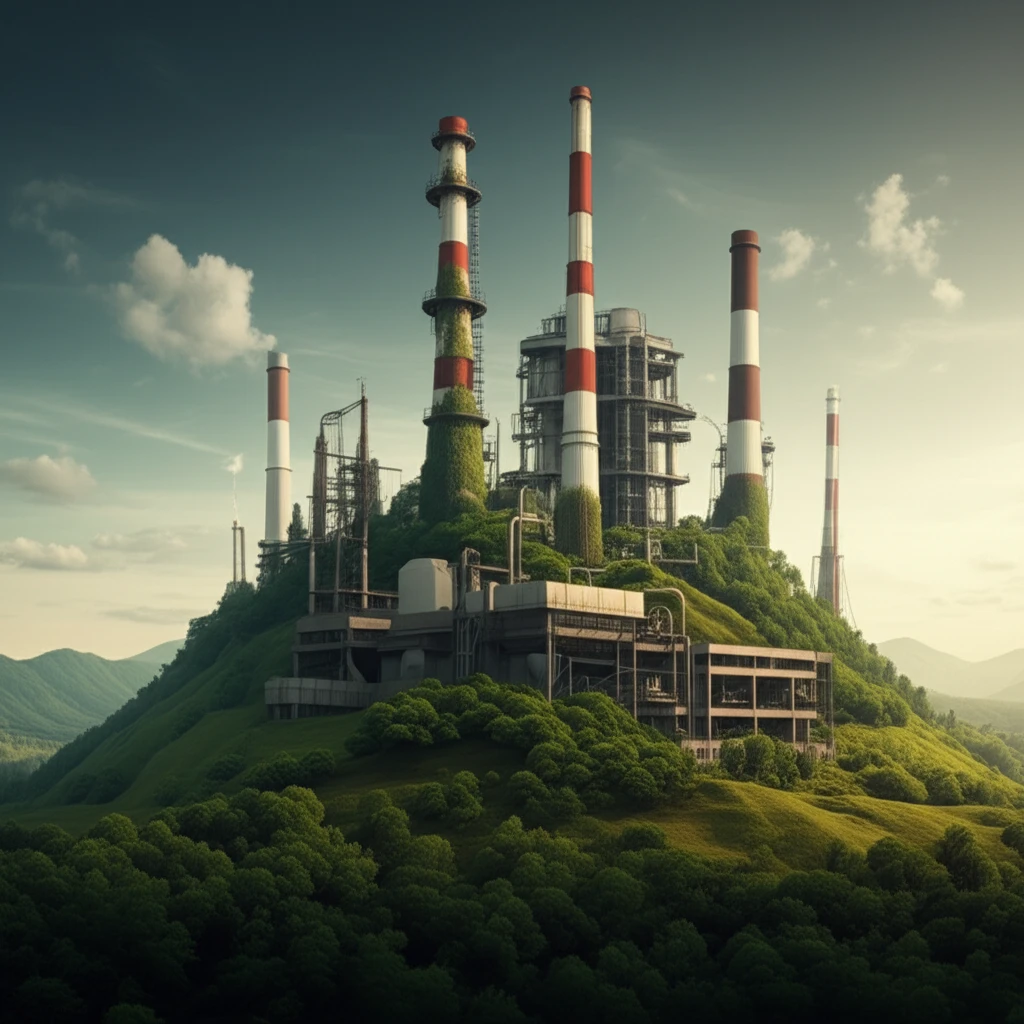
Sustainable factory seamlessly integrated into a green landscape, representing Industrial CO2 Emission Efficiency.

Unlocking Green Growth: How Industrial Efficiency Can Save the Planet and Boost Your Business

"Dive into the surprising ways improving industrial CO2 emission efficiency can create a win-win for the environment and your bottom line."


Global warming is no longer a distant threat; it's a clear and present danger demanding immediate action. With carbon dioxide (CO2) emissions recognized as a primary culprit, industries worldwide face mounting pressure to clean up their act. China, as the world’s largest CO2 emitter, is at the forefront of this challenge, setting ambitious targets to slash carbon intensity—the amount of CO2 emitted per unit of GDP.

But here's the good news: reducing emissions doesn't have to mean sacrificing economic growth. In fact, boosting industrial CO2 emission efficiency (ICEE) is one of the most cost-effective strategies for achieving both environmental and economic sustainability. For businesses, this means embracing innovative technologies and processes that minimize waste and maximize resource utilization.

Nowhere is this more critical than in the Yangtze River Delta (YRD), one of China's economic powerhouses. As this region undergoes rapid industrialization and urbanization, managing its environmental impact is paramount. By studying ICEE at the city level within the YRD, we can uncover valuable insights and best practices that can be applied globally.

Why Does Industrial CO2 Emission Efficiency Matter for Your Business?

Sustainable factory seamlessly integrated into a green landscape, representing Industrial CO2 Emission Efficiency.

For businesses, particularly those in industrial sectors, understanding and improving ICEE is essential for several reasons. It’s not just about compliance; it’s about gaining a competitive edge in a rapidly changing world. Here's how:

Improving ICEE isn't just an environmental imperative; it's a strategic business move that can drive innovation, reduce costs, and enhance competitiveness in a world increasingly focused on sustainability.

  • Cost Reduction: By using resources more efficiently and reducing waste, companies can significantly lower their operating costs.
  • Regulatory Compliance: Governments worldwide are tightening environmental regulations, and improving ICEE ensures businesses stay ahead of the curve, avoiding costly penalties.
  • Enhanced Reputation: Consumers and investors increasingly favor companies with strong environmental credentials, boosting brand value and attracting investment.
  • Innovation Opportunities: The push for greater efficiency drives innovation in processes and technologies, creating new market opportunities and revenue streams.
  • Access to Green Financing: Many financial institutions now offer preferential terms for businesses demonstrating a commitment to sustainability, making green investments more accessible.
A recent study focused on the Yangtze River Delta (YRD) in China, a region experiencing rapid industrial growth, highlights the critical importance of ICEE. The study, which evaluated 26 cities within the YRD, revealed significant disparities in ICEE levels, indicating substantial opportunities for improvement.

Ready to Transform Your Business with ICEE?

The journey toward improved industrial CO2 emission efficiency is a continuous process of assessment, innovation, and adaptation. By embracing this challenge, businesses can not only reduce their environmental impact but also unlock new opportunities for growth and prosperity. Let's work together to build a greener, more sustainable future, one efficient factory at a time.

About this Article -

This article was crafted using a human-AI hybrid and collaborative approach. AI assisted our team with initial drafting, research insights, identifying key questions, and image generation. Our human editors guided topic selection, defined the angle, structured the content, ensured factual accuracy and relevance, refined the tone, and conducted thorough editing to deliver helpful, high-quality information.See our About page for more information.

Everything You Need To Know

1

What exactly is Industrial CO2 Emission Efficiency (ICEE), and why should it be a priority?

Industrial CO2 Emission Efficiency (ICEE) refers to the optimization of processes and technologies within industrial operations to minimize the amount of carbon dioxide emitted per unit of output or economic activity. It's about achieving more with less, reducing the carbon footprint of industrial processes while maintaining or increasing productivity. It's important because it directly addresses the urgent need to mitigate global warming by reducing CO2 emissions, a primary driver of climate change. Improving ICEE enables businesses to comply with environmental regulations, enhance their reputation, access green financing, and drive innovation. It also contributes to broader sustainability goals and a greener economy.

2

What are the main advantages for a business that actively works to improve its Industrial CO2 Emission Efficiency (ICEE)?

Focusing on Industrial CO2 Emission Efficiency (ICEE) can lead to significant cost reductions for a business through more efficient resource utilization and waste reduction. It also ensures regulatory compliance, helping businesses avoid penalties associated with exceeding emission limits. Furthermore, a commitment to ICEE enhances a company's reputation, attracting environmentally conscious consumers and investors. Finally, the pursuit of ICEE fosters innovation, creating new market opportunities and access to green financing options.

3

Why is the Yangtze River Delta (YRD) specifically mentioned as an important region in the context of Industrial CO2 Emission Efficiency (ICEE)?

The Yangtze River Delta (YRD) region is a significant area to study Industrial CO2 Emission Efficiency (ICEE) because it is a major economic hub in China undergoing rapid industrialization and urbanization. This makes it a critical area for managing environmental impact and reducing carbon emissions. Analyzing ICEE at the city level within the YRD can reveal valuable insights and best practices that can be applied more broadly to other regions facing similar challenges. The YRD serves as a case study for balancing economic growth with environmental sustainability.

4

What does it mean to reduce carbon intensity, and why is that important?

Carbon intensity is the amount of carbon dioxide emitted per unit of Gross Domestic Product (GDP). Reducing carbon intensity means decreasing the amount of CO2 released for every unit of economic value created. This is important because it allows for economic growth without a proportional increase in carbon emissions, decoupling economic activity from environmental impact. Strategies to reduce carbon intensity often involve improving energy efficiency, transitioning to cleaner energy sources, and adopting more sustainable industrial practices.

5

What is green financing, and why is it important in improving Industrial CO2 Emission Efficiency (ICEE)?

Green financing refers to financial investments that support environmentally sustainable projects and initiatives. It is important because it provides businesses with the capital needed to implement Industrial CO2 Emission Efficiency (ICEE) improvements, such as upgrading to cleaner technologies, adopting more efficient processes, and investing in renewable energy. Access to green financing can make these investments more accessible and affordable, accelerating the transition to a greener economy. Financial institutions often offer preferential terms for businesses demonstrating a commitment to sustainability, making green financing a valuable tool for driving environmental progress.

Newsletter Subscribe

Subscribe to get the latest articles and insights directly in your inbox.